
Vitamin C Serum for Dark Skin: 7 Proven Tips for Radiance
If you have a deeper skin tone, a vitamin C serum for dark skin can be a gentle, everyday way to work on the dark spots that seem to hang around long after a pimple, a scratch, or a summer outdoors. Many of us over 40 know the feeling: one spot finally fades, and a new one shows up right beside it.
You’re far from alone. The American Academy of Dermatology (AAD) says dark spots and patches rank as one of the most common reasons people with darker skin tones see a dermatologist.
The good news? A few smart habits can help. Let’s look at why these marks linger, what a vitamin C serum for dark skin can realistically do, and how to use one without irritating your skin.
Table of Contents
Why Dark Spots Linger Longer on Deeper Skin Tones
Melanin gives your skin its beautiful color. The AAD notes that many everyday things can trigger extra melanin in darker skin tones, so a small blemish can leave a mark that outlasts the blemish itself.
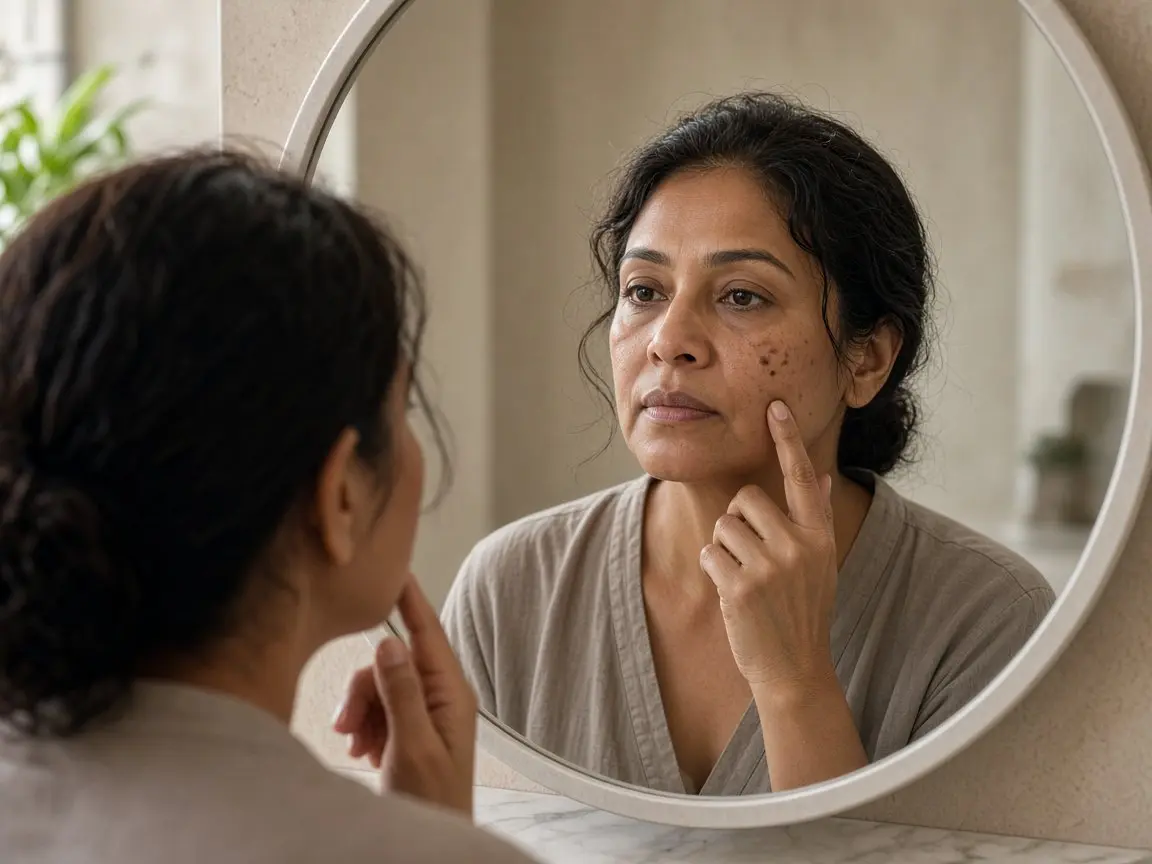
What post-inflammatory hyperpigmentation is
The AAD explains that people with medium to dark skin tones get dark spots and patches when something triggers the skin to make extra melanin. The medical name for one common cause is post-inflammatory hyperpigmentation, or PIH.
According to the AAD’s guide to fading dark spots in darker skin tones, these spots often appear after a pimple clears, a cut or bug bite heals, or a skin or hair product irritates your skin. Hormonal changes and certain medications can play a part, too.
Why it’s more common in skin of color
A dermatology review of PIH in skin of color notes that it tends to affect darker-skinned patients with greater frequency and severity. The authors also say treatment starts with managing the original inflammation, plus sun protection.
That’s the honest framing for any vitamin C serum for dark skin. It’s a supporting player, not the whole plan.
Sun and visible light play a role, too
Ordinary daylight matters more than many of us realize. In a small study that exposed the lower backs of 20 volunteers with skin types IV to VI to light, visible light induced pigmentation that was darker and more sustained than the pigmentation from long-wave UVA.
The same light caused no pigmentation in the lighter skin type tested. It’s one reason dermatologists talk so much about tinted sunscreen for deeper skin tones.
Can a Vitamin C Serum for Dark Skin Really Help?
Here’s the encouraging part. The AAD lists vitamin C among the ingredients in nonprescription products that can fade existing dark spots, alongside azelaic acid, glycolic acid, kojic acid, and retinoids.
How vitamin C works on pigment
A review of topical vitamin C by two consultant dermatologists says vitamin C decreases melanin formation, which reduces pigmentation. It’s also an antioxidant that has been shown to help protect against photoaging.
That’s the main reason a vitamin C serum for dark skin gets so much attention. It aims at the extra pigment behind uneven tone.
What one small study found
In a double-blind trial of 16 women with melasma, each woman used 5% ascorbic acid cream on one side of her face and 4% hydroquinone cream on the other for 16 weeks, with daily sunscreen. Women rated the hydroquinone side better, though color measurements showed no statistical difference between the two sides.
Side effects told a different story: 68.7% had them with hydroquinone, compared with 6.2% with ascorbic acid. The authors concluded vitamin C may play a role in melasma care because it’s almost free of side effects.
That study used a specific cream, not our serum or any particular vitamin C serum for dark skin. It was also small, so treat it as a hopeful sign rather than a promise.
Keeping expectations real
Let’s be honest: no vitamin C serum for dark skin works overnight. The vitamin C review says clinical studies on topical formulas remain limited, and finding the most stable, skin-friendly formula is still a challenge.
If you’d like a deeper look at one stubborn type of pigment, our guide to vitamin C serum for melasma covers it in more detail.
7 Proven Tips for Using Vitamin C Serum for Dark Skin
These tips come from dermatology guidance and a bit of real-life common sense. They’ll help you get the most from every pump while keeping irritation, and the new spots it can bring, to a minimum.
1. Find the trigger first
The AAD says getting rid of hyperpigmentation begins with finding out why you get it. If you eliminate the cause, many spots will clear on their own, and you can prevent new ones.
If breakouts are behind your marks, treat the acne first. Our guide to vitamin C serum for acne scars explains how it fits around post-acne marks.
2. Choose a gentle vitamin C serum for dark skin
The AAD notes that products gentle on the skin are often labeled “for sensitive skin” or “fragrance-free,” and they’re less likely to irritate.
When your skin is no longer irritated, the AAD says new dark spots tend to stop appearing. That makes a fragrance-free vitamin C serum for dark skin a sensible place to start.
3. Ease in and watch for stinging
Irritation can backfire on deeper skin tones. The PIH review cautions that all treatments should be used carefully to prevent irritation and worsening of hyperpigmentation.
You might use your vitamin C serum for dark skin every other morning for the first week or two. The AAD’s advice is simple: if a product burns or stings when you apply it, stop using it.
4. Apply 1–2 pumps to clean, dry skin
Wash with a mild cleanser and pat your face dry. With our serum, 1–2 pumps is the usual amount for one use.
Press it gently over your whole face rather than dabbing only on the spots. Then let it settle for a moment before your next step.
5. Pair vitamin C with niacinamide
Niacinamide is another ingredient worth knowing. In a study of Japanese women, niacinamide significantly decreased hyperpigmentation compared with a plain moisturizer after 4 weeks, and lab work suggested it reduces melanosome transfer to skin cells.
That research came from scientists at a consumer products company, and it didn’t test vitamin C alongside niacinamide. Still, many people pair the two, and we unpack the science in niacinamide and vitamin C.
6. Wear tinted sunscreen with iron oxide every day
This one matters most. The AAD says effective treatment for dark spots begins with sunscreen, and it recommends a tinted formula with iron oxide to help protect against the sun’s visible light.
Look for SPF 30 or higher, broad-spectrum, water-resistant, and a shade that blends with your skin tone so you avoid a white cast. Reapply every two hours, and after swimming or sweating.
Your vitamin C serum for dark skin and your sunscreen are partners, not substitutes. We explain the order in our guide to vitamin C serum and sunscreen.
7. Be patient and consistent
Fading takes time. The AAD says a spot a few shades darker than your natural color usually fades within 6 to 12 months once its cause is found and stopped, and deeper discoloration can take years.
Treatment can speed that up. Snap a photo in the same light today, and keep using your vitamin C serum for dark skin most mornings so you can compare in a few months.

A Simple Morning Routine for Deeper Skin Tones
Here’s an easy routine you can do in about five minutes:
- Cleanse gently with a mild cleanser and pat dry.
- Smooth 1–2 pumps of vitamin C serum over your face and neck.
- Follow with your favorite moisturizer.
- Finish with a tinted, broad-spectrum SPF 30 or higher that contains iron oxide.
When you’re outdoors, the AAD also suggests a wide-brimmed hat. A vitamin C serum for dark skin does its best work when the sun can’t keep undoing it.
Choosing the Best Vitamin C Serum for Dark Skin
Not every formula is a good fit for skin that’s quick to darken. Here’s what to look for.
A stable form of vitamin C
Classic L-ascorbic acid is well studied, but researchers describe it as unstable, readily oxidizing on exposure to air. That’s one reason many brands use stable derivatives.
One of these is 3-O Ethyl Ascorbic Acid. A lab study on 3-O-ethyl-L-ascorbic acid describes it as a stable vitamin C derivative used in topical products. Using pig skin in the lab, researchers found it got into the skin from several common cosmetic solvents.
Skip harsh extras
The AAD warns that some imported fading products have contained hidden steroids or mercury, and that you should never apply liquid bleach to your skin. A simple, clearly labeled vitamin C serum for dark skin is a much kinder choice.
Our Pick: Trendy Blends 18% Vitamin C Serum
If you want one vitamin C serum for dark skin that keeps things simple, we made our Trendy Blends 18% Vitamin C Serum with mature skin in mind. It’s built around 18% 3-O Ethyl Ascorbic Acid, with niacinamide, hyaluronic acid, aloe, and cucumber, and it’s fragrance-free.
It comes in a 1 oz airless pump, so 1–2 pumps per use is all it takes. It’s $24.99 with free shipping in 3–4 business days, and it’s backed by our 60-Day Glow Guarantee with free returns.
When to See a Dermatologist
A serum is a lovely everyday step, but it has limits. The AAD says some dark spots need a prescription-strength treatment, and a dermatologist can safely combine treatments for the best results.
Dark marks aren’t always just marks. The AAD’s page on skin cancer in darker skin tones says to watch for any spot that’s growing, bleeding, itching, or changing, plus color changes, especially skin darkening.
Think of a vitamin C serum for dark skin as daily maintenance, not a replacement for a skin check.
FAQs
Is vitamin C serum good for dark skin?
It can be a helpful part of a routine. The AAD lists vitamin C among nonprescription ingredients that can fade dark spots, as long as you choose a gentle formula and wear sunscreen daily.
Will vitamin C lighten my natural skin tone?
That isn’t its role. In dermatology guidance, vitamin C is used to fade dark spots and even out tone, not to change the color you were born with.
Can vitamin C serum cause dark spots?
Any product that irritates your skin can trigger dark spots on deeper skin tones, according to the AAD. If a vitamin C serum for dark skin burns or stings, stop using it.
Will a vitamin C serum leave a white cast?
Worries about a white or ashy cast usually come up with sunscreen, not serum. The AAD suggests a tinted sunscreen that blends with your skin tone to avoid a white cast.
Can I use niacinamide and vitamin C together?
Many people do. Niacinamide has its own research on hyperpigmentation, and a vitamin C serum for dark skin that already includes it keeps your routine short.
How long does it take to fade dark spots on darker skin?
The AAD says a spot a few shades darker than your natural color usually fades within 6 to 12 months once its cause is stopped. Deeper discoloration can take years, and treatment can speed things up.
Conclusion
Your skin’s rich color is worth protecting, and the AAD says many lingering marks fade over time once their cause is stopped. A vitamin C serum for dark skin, paired with daily tinted sunscreen and a gentle routine, is a simple habit that can help your tone look more even over time.
Start slowly, stop anything that stings, and give it a few months. Your future self, glowing in that next selfie, will thank you.
Disclaimer: This article is for general educational purposes only and isn’t medical advice. If you have a skin condition, a spot that’s changing, or a reaction that doesn’t settle, please talk with a board-certified dermatologist.
References
- American Academy of Dermatology. How to fade dark spots in darker skin tones.
- Davis EC, Callender VD. Postinflammatory hyperpigmentation: a review of the epidemiology, clinical features, and treatment options in skin of color. J Clin Aesthet Dermatol. 2010;3(7):20-31. PMC
- Mahmoud BH, Ruvolo E, Hexsel CL, et al. Impact of long-wavelength UVA and visible light on melanocompetent skin. J Invest Dermatol. 2010;130(8):2092-7. PubMed
- Al-Niaimi F, Chiang NYZ. Topical vitamin C and the skin: mechanisms of action and clinical applications. J Clin Aesthet Dermatol. 2017;10(7):14-17. PMC
- Espinal-Perez LE, Moncada B, Castanedo-Cazares JP. A double-blind randomized trial of 5% ascorbic acid vs. 4% hydroquinone in melasma. Int J Dermatol. 2004;43(8):604-7. PubMed
- Hakozaki T, Minwalla L, Zhuang J, et al. The effect of niacinamide on reducing cutaneous pigmentation and suppression of melanosome transfer. Br J Dermatol. 2002;147(1):20-31. PubMed
- Iliopoulos F, Sil BC, Moore DJ, Lucas RA, Lane ME. 3-O-ethyl-l-ascorbic acid: characterisation and investigation of single solvent systems for delivery to the skin. Int J Pharm X. 2019;1:100025. PMC
- American Academy of Dermatology. Finding skin cancer in darker skin tones.
