
Vitamin C Serum for Neck: 7 Proven Tips for Smoother Skin
If you’ve been giving your face all the attention, a vitamin C serum for neck and chest care might be the step your routine is missing. Many of us over 40 catch a glimpse in a V-neck top and notice the skin below the jawline looks older than the face above it.
There’s often a simple reason. For a lot of us, the neck and chest get years of sun but not the same sunscreen, serum, and care we give our cheeks.
The good news? Your routine doesn’t need a total overhaul. Let’s look at what makes this area crepey and spotty, what a vitamin C serum for neck skin can realistically do, and exactly how to apply it below the chin.
Table of Contents

Why Your Neck and Chest Can Look Older Than Your Face
It’s the area we forget. You might wear SPF on your face every morning and still skip the strip of skin from your jaw to your neckline.
Think about the gardening, the beach walks, and the open-collar shirts. That skin has been quietly collecting sun the whole time. That’s where a vitamin C serum for neck care can fit in, right alongside sunscreen.
Sun is the biggest factor
According to MedlinePlus, the National Library of Medicine’s health site, the greatest single factor in aging changes in skin is sun exposure. You can see it by comparing sun-exposed areas with skin that’s usually covered.
The same page notes that the outer layer of skin thins with age. Pigmented spots, including age spots, may appear in sun-exposed areas.
What “crepey” really means
Crepey skin looks thin and finely wrinkled, a bit like crepe paper. MedlinePlus explains that changes in connective tissue reduce the skin’s strength and elasticity, a process called elastosis that’s more noticeable in sun-exposed areas.
Menopause can add dryness to the mix. MedlinePlus says women gradually produce less oil beginning after menopause, which can make it harder to keep skin moist. That’s one reason to follow your vitamin C serum for neck care with a good moisturizer.
Sun spots on the chest
Those flat brown marks across your chest have a name. Mayo Clinic explains that age spots, also called sunspots or solar lentigines, are small, flat dark areas that usually appear on sun-exposed skin.
Mayo notes they’re very common in adults older than 50. They come from overactive pigment cells, since UV light speeds up the production of melanin.
If those spots bother you, a vitamin C serum for neck and chest use is a gentle place to start. Sunscreen still does the heavy lifting.
What a Vitamin C Serum for Neck Skin Can Do
Here’s the encouraging part. Vitamin C has actually been tested on the low neck, not just the face.
The neck and arm study
In a double-blind, placebo-controlled trial, healthy women with photoaged skin on their low neck and arms used a 5% vitamin C cream on one side and a plain base cream on the other for six months. Both a dermatologist and the women themselves rated the vitamin C side as significantly better overall.
Skin replicas showed denser fine surface texture and fewer deep furrows. Biopsies also showed signs of elastic tissue repair.
That study used a specific cream, not our serum or any particular serum. Still, it’s a helpful sign for anyone curious about a vitamin C serum for neck and chest skin.
Collagen support and a more even look
A dermatology review of topical vitamin C describes how vitamin C increases collagen synthesis, stabilizes collagen fibers, and decreases collagen breakdown. It also decreases melanin formation, which the authors say reduces pigmentation.
That’s why a vitamin C serum for neck and chest use is worth considering. It’s one step aimed at both texture and uneven tone.
Keeping expectations real
Let’s be honest: no serum will undo decades of sun overnight. The same review says clinical studies on topical vitamin C remain limited, and finding the most stable, skin-friendly formula is still a challenge.
7 Proven Tips for Using Vitamin C Serum for Neck and Chest
These tips come from dermatology guidance and a bit of real-life common sense. They’ll help you get the most from every pump without upsetting skin that isn’t used to active ingredients.
1. Start with clean, dry skin
Wash your face, neck, and chest with a mild cleanser, then pat dry. Give your skin a moment before your vitamin C serum for neck and chest goes on.
2. Use the right amount of vitamin C serum for neck coverage
You don’t need much. With our serum, 1–2 pumps is the usual amount for one use.
Work it over your face first, then carry what’s left down your neck and across your chest.
3. Apply with light, upward strokes
Smooth the serum up from your collarbone toward your jaw. Be gentle; there’s no need to tug or rub hard.
Then sweep across your chest in the shape of your favorite V-neck. Don’t forget the sides of your neck and the skin just below your ears.
4. Ease in if this area is new to actives
If your neck has never seen anything stronger than body lotion, go slowly. You might use your vitamin C serum for neck care every other morning for the first week or two.
The AAD’s wrinkle remedies guide suggests testing a new product on your inner forearm twice a day for 4 to 5 days. It also advises you to stop using products that sting or burn unless a dermatologist prescribed them.
5. Layer moisturizer next
The AAD says moisturizing traps water in the skin, which can help reduce the appearance of some fine lines. A neck that feels dry and tight after menopause usually welcomes this step.
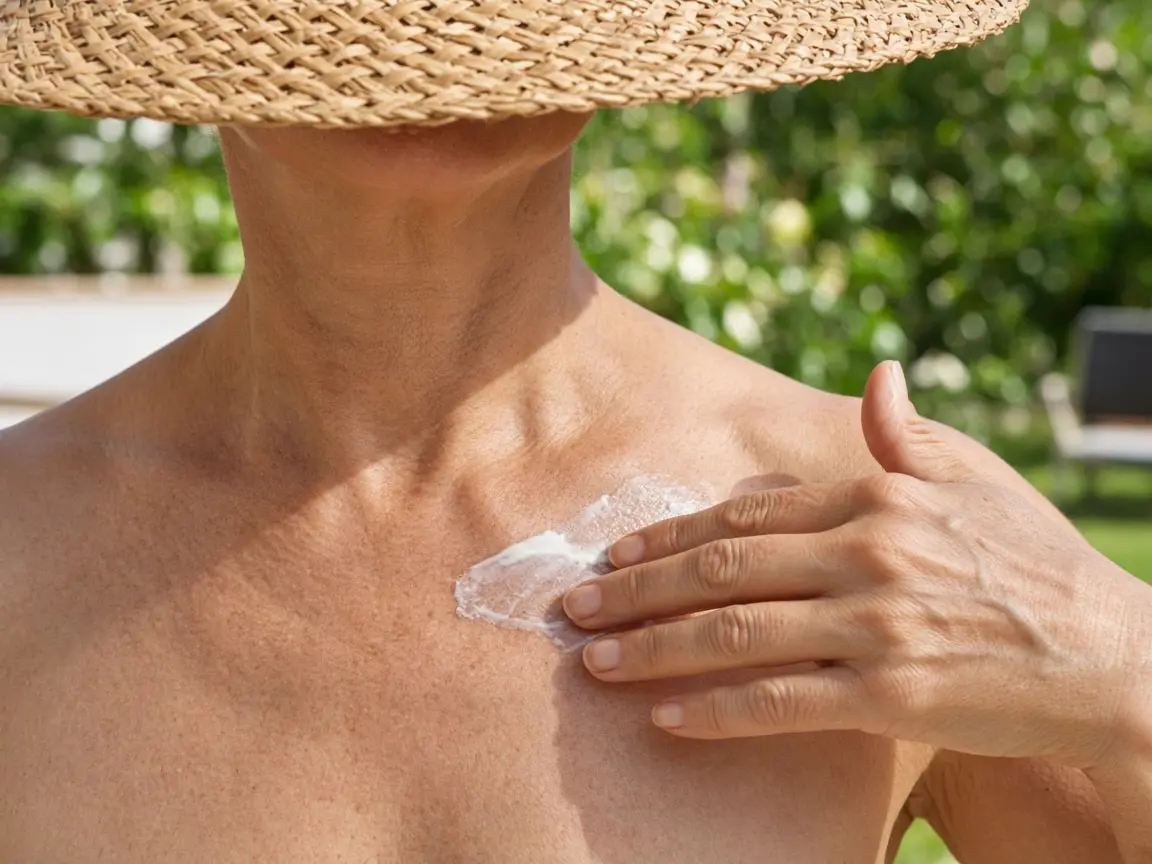
6. Never skip sunscreen on your neck and chest
This one matters most. The AAD’s guide on how to apply sunscreen says to choose SPF 30 or higher, water-resistant, broad-spectrum coverage, and to apply it to all skin not covered by clothing, including your neck.
It also notes that a tinted sunscreen with iron oxide better protects your skin from developing dark spots. Reapply every two hours outdoors, and right after swimming or sweating.
7. Be patient and consistent
Results take time. The AAD says most products take at least six weeks to work, and sometimes three months.
In the neck study, skin was checked after three and six months of daily use. Snap a photo in the same light today so you can compare later.
Using your vitamin C serum for neck care most mornings beats a burst of effort followed by weeks off.
Vitamin C Serum and Sunscreen: Partners, Not Substitutes
Vitamin C is an antioxidant, and the review above says it has been shown to help protect against photoaging. But it isn’t a sunscreen, so it can’t replace your SPF.
Think of your vitamin C serum for neck care as the support act and sunscreen as the headliner. We explain timing and layering in our guide to vitamin C serum and sunscreen.
A Simple Morning Routine for Neck and Chest
Here’s an easy routine you can do in about five minutes:
- Cleanse your face, neck, and chest gently and pat dry.
- Smooth 1–2 pumps of serum over your face, then down your neck and chest.
- Follow with moisturizer on the same areas.
- Finish with broad-spectrum SPF 30 or higher, all the way down to your neckline.
If you wear open collars, take the sunscreen a little lower than you think. Your vitamin C serum for neck care works best when this whole zone is covered.
Choosing the Best Vitamin C Serum for Neck and Chest
Not every formula is a good fit for this area. Here’s what to look for.
A stable form of vitamin C
Classic L-ascorbic acid is well studied, but researchers describe it as unstable, readily oxidizing on exposure to air. That’s one reason many brands use stable derivatives.
One of these is 3-O Ethyl Ascorbic Acid. A lab study on 3-O-ethyl-L-ascorbic acid describes it as a stable vitamin C derivative used in topical products. Using pig skin in the lab, the researchers found it got into the skin from several common cosmetic solvents.
Fragrance-free and gentle
MedlinePlus advises against heavily perfumed soaps for aging skin, and the same thinking makes sense for anything you leave on. A fragrance-free vitamin C serum for neck and chest skin keeps things simple.
If you’re easily irritated, our guide to vitamin C serum for sensitive skin has more gentle tips.
Supporting ingredients
Hyaluronic acid and niacinamide are ingredients you’ll often see alongside vitamin C. Pairing them in one bottle keeps your routine short, which helps you stay consistent.
Our Pick: Trendy Blends 18% Vitamin C Serum
If you want one vitamin C serum for neck and face, we made our Trendy Blends 18% Vitamin C Serum with mature skin in mind. It’s built around 18% 3-O Ethyl Ascorbic Acid, with niacinamide, hyaluronic acid, aloe, and cucumber, and it’s fragrance-free.
It comes in a 1 oz airless pump, so 1–2 pumps per use is all it takes. It’s $24.99 with free shipping in 3–4 business days, and it’s backed by our 60-Day Glow Guarantee with free returns.
If sagging is your bigger worry, our guide to the best face serum for sagging neck skin covers firmness in more depth. For step-by-step technique on your face, see how to apply vitamin C serum.
When to See a Dermatologist
A serum is a nice everyday step, but it has limits. The AAD’s page on how dermatologists treat sun-damaged skin lists in-office options such as prescription retinoids, chemical peels, intense pulsed light, and laser treatments for age spots and loose skin.
Mayo Clinic advises having a doctor look at spots that are black or have changed in appearance. That includes spots that grow, bleed, or have an irregular border or an unusual mix of colors.
Think of a vitamin C serum for neck care as daily maintenance, not a replacement for a skin check.
FAQs
Can I use vitamin C serum on my neck?
Many people do. Patch test first, start every other morning if the area is new to actives, and always follow with sunscreen.
Does vitamin C help crepey neck skin?
It may help some people. In one six-month trial, a 5% vitamin C cream improved the look of photoaged skin on the low neck and arms compared with a plain base cream.
Should I put vitamin C serum on my chest?
If your chest gets sun and shows spots, it’s worth including. Spread your vitamin C serum for neck care down over your chest, then add sunscreen.
Can vitamin C serum remove sun spots on my chest?
Vitamin C decreases melanin formation, so it may help spots look less noticeable over time. It isn’t a removal treatment, and a dermatologist can discuss in-office options for stubborn spots.
Should I apply vitamin C to my neck in the morning or at night?
Either can work, but many people like mornings so it sits under their sunscreen. Apply it after cleansing, then moisturizer and SPF.
How long does it take to see results on the neck?
The AAD says most products take at least six weeks to work, and sometimes three months. Consistent daily use and sunscreen matter more than any single application.
Conclusion
Your neck and chest have been out in the sun for decades, so they deserve a little attention now. A vitamin C serum for neck and chest care, paired with daily sunscreen, is a simple habit that can help that skin look smoother and more even over time.
Start gently, sweep the serum down past your collarbone, and never skip the SPF. Your favorite V-neck will thank you.
Disclaimer: This article is for general educational purposes only and isn’t medical advice. If you have a skin condition, a spot that’s changing, or a reaction that doesn’t settle, please talk with a board-certified dermatologist.
References
- MedlinePlus (U.S. National Library of Medicine). Aging changes in skin.
- Mayo Clinic Staff. Age spots (liver spots): Symptoms and causes.
- Humbert PG, Haftek M, Creidi P, et al. Topical ascorbic acid on photoaged skin. Clinical, topographical and ultrastructural evaluation: double-blind study vs. placebo. Exp Dermatol. 2003;12(3):237-44. PubMed
- Al-Niaimi F, Chiang NYZ. Topical vitamin C and the skin: mechanisms of action and clinical applications. J Clin Aesthet Dermatol. 2017;10(7):14-17. PMC
- American Academy of Dermatology. Wrinkle remedies.
- American Academy of Dermatology. How to apply sunscreen.
- Iliopoulos F, Sil BC, Moore DJ, Lucas RA, Lane ME. 3-O-ethyl-l-ascorbic acid: characterisation and investigation of single solvent systems for delivery to the skin. Int J Pharm X. 2019;1:100025. PMC
- American Academy of Dermatology. How dermatologists treat sun-damaged skin.
