
Vitamin C Serum for Sensitive Skin: 7 Proven, Gentle Tips.
Table of Contents
Finding a vitamin C serum for sensitive skin can feel like a lot of trial and error. You want the glow, the brighter tone, and the softer look of fine lines, but your face has other ideas the moment anything tingles.
If that sounds familiar, you’re in good company. Plenty of skin-thusiasts over 40 have tried a vitamin C product once, felt the sting, and quietly put it in a drawer.
Here’s the encouraging part: a vitamin C serum for sensitive skin can absolutely work. It mostly comes down to the form of vitamin C you pick, how the formula is built, and how slowly you introduce it.
Why Some Vitamin C Stings Sensitive Skin
Most of the sting comes from one place: pH. Classic L-ascorbic acid (L-AA) is the most biologically active and best-studied form of vitamin C, and it really does deliver.
The catch is that L-AA usually needs to be formulated at a pH below 3.5 to stay stable and get through the skin’s outer layer. That’s quite acidic, and reactive skin often notices.
A dermatology review describes topical vitamin C as largely safe for daily use, but it also notes that stinging, redness, and dryness can occasionally happen. The good news? Those reactions were typically easy to calm with a moisturizer.
Concentration plays a role too. That same topical vitamin C review notes that going above 20% doesn’t add benefit and might cause irritation, which is why well-made serums, including a good vitamin C serum for sensitive skin, tend to sit in the 10 to 20% range.
How to Choose a Gentler Vitamin C Serum for Sensitive Skin
So what makes a good vitamin C serum for sensitive skin? Think of it as three filters: a stable form, a calm formula, and smart packaging.
Pick a stable vitamin C derivative
Derivatives are modified versions of vitamin C designed to be steadier than pure L-AA. One standout is 3-O Ethyl Ascorbic Acid, an ethylated form where a small chemical “shield” protects the part of the molecule that normally oxidizes.
Researchers at UCL describe 3-O-ethyl-l-ascorbic acid as a stable vitamin C derivative widely used in topical products, and their lab work showed it could move into and through the skin from simple, common cosmetic solvents. Because it doesn’t depend on a very acidic environment to stay stable, it can be formulated at a milder pH than classic L-AA, which is often kinder to reactive faces.
To be fair to L-AA, it still has the deepest research history. But for many people with easily flushed skin, a well-formulated derivative is the more comfortable, more consistent choice.
Curious how the different forms compare? Our guide to the differences between vitamin C derivatives breaks it down.
Look for a fragrance-free, soothing formula
Fragrance is one of the most common troublemakers for reactive skin. The American Academy of Dermatology advises avoiding products with fragrance because it can irritate dry skin, and it points to hyaluronic acid as a strong moisturizer.
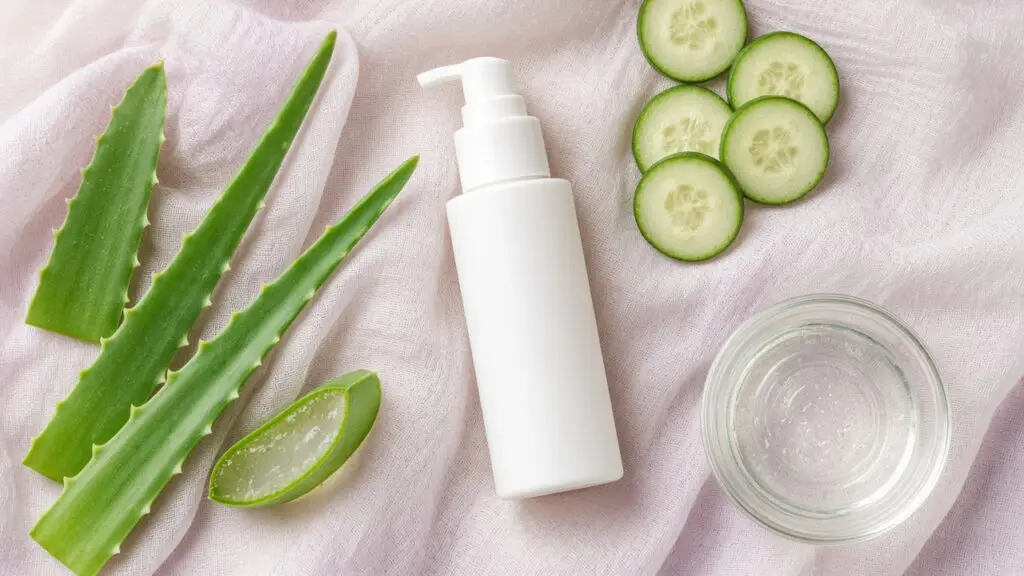
Supporting ingredients matter, too. Niacinamide, hyaluronic acid, glycerin, aloe, and cucumber all help a formula feel cushiony instead of sharp.
Choose airless packaging
Vitamin C doesn’t love air or light. An airless pump keeps a vitamin C serum for sensitive skin sealed between uses, so you get a fresher dose each time and you’re not sticking a dropper back into the bottle.
7 Gentle Tips for Using a Vitamin C Serum for Sensitive Skin
1. Patch test first, every time
Before a new product goes on your face, test it. The AAD suggests applying it to a quarter-sized spot, such as the inside of your arm, twice daily for seven to 10 days.
No redness, itching, or swelling? You’re likely good to start on your face.
This step matters even with gentler forms. True allergies to 3-O Ethyl Ascorbic Acid appear to be rare, with only two published case reports noted in that UCL paper, but every skin is unique.
2. Start every other day
Your skin needs a little time to get acquainted. Begin with your vitamin C serum for sensitive skin three or four mornings a week.
After two weeks of calm, happy skin, move to daily use. Slow and steady really does win here.
3. Use less than you think
One pump of your vitamin C serum for sensitive skin is plenty for the face. Add a second only if you want to cover your neck and chest.
More product doesn’t mean faster results. It just means more for your skin to process.
4. Apply to dry skin, not damp
Damp skin can let actives sink in faster, which sometimes means more tingle. Pat your face completely dry after cleansing, wait a minute, then apply your serum.
5. Don’t stack harsh actives
This is where most sensitive-skin routines go wrong. The AAD notes that using too many products may irritate the skin, especially when you layer more than one anti-aging product.
Keep vitamin C in the morning and save retinol or exfoliating acids for evenings. On nights you exfoliate, skip other actives entirely.
6. Buffer with a simple moisturizer
Follow your vitamin C serum for sensitive skin with a plain, fragrance-free moisturizer. It seals in hydration and softens the feel of any active.
If your skin is having a moody week, you can even apply moisturizer first and serum on top. You’ll still get benefits, just with a gentler delivery.
7. Wear sunscreen every single morning
Vitamin C and sunscreen are a dream team, but vitamin C isn’t a replacement for SPF. The AAD recommends a broad-spectrum, SPF 30 or higher, water-resistant sunscreen.
Sun exposure can also leave sensitive skin more reactive. Daily SPF protects the calm you’ve worked so hard to build.
Why 3-O Ethyl Ascorbic Acid Suits Reactive Skin
Let’s get specific about what makes this form a friendly base for a vitamin C serum for sensitive skin. Beyond stability, early lab research looks reassuring for tolerability.
In one study, a serum with 30% 3-O-ethyl-l-ascorbic acid showed high biocompatibility on reconstructed human skin models, with inflammation markers below the irritation threshold. It also supported collagen and reduced melanin in those lab models.
That was lab-grown skin, not a clinical trial on people, so we keep our expectations honest. Still, it lines up with what many sensitive-skin users report: a gentler experience than with traditional L-AA serums.
Our Pick for a Gentle Vitamin C Serum for Sensitive Skin
Our Trendy Blends 18% Vitamin C Serum was designed with exactly this in mind. It uses 18% 3-O Ethyl Ascorbic Acid, which sits within that 10 to 20% sweet spot.
It pairs that with niacinamide and hyaluronic acid, plus aloe and cucumber extracts for a softer feel. It’s fragrance-free, comes in a 1 oz airless pump, and costs $24.99.
Want to check every ingredient before you try it? Our full ingredient list is right there, no secrets. That’s the cleanical approach we believe in.
A Simple Morning Routine With a Vitamin C Serum for Sensitive Skin
Here’s an easy, low-fuss routine for mature, reactive skin. It takes about five minutes.
- Cleanse gently. Use lukewarm water and a mild, fragrance-free cleanser. Pat dry.
- Apply your serum. Press one pump of a vitamin C serum for sensitive skin into your face, then use a second pump for neck and chest if you like.
- Moisturize. Choose something simple and fragrance-free to lock in hydration.
- Protect. Finish with broad-spectrum SPF 30 or higher.
For a step-by-step technique walkthrough, see our guide on how to apply vitamin C serum. And if your skin feels chronically tight or reactive, our barrier repair articles are a great next read.
Signs Your Skin Needs a Break
A brief, mild tingle that fades within a minute is common with many actives. Burning, lasting redness, itching, or swelling isn’t something to push through.
If that happens, wash it off gently, pause all actives, and stick to cleanser, moisturizer, and SPF until your skin settles. If the reaction doesn’t fade, see a board-certified dermatologist.
FAQ: People Also Ask
Is vitamin C serum good for sensitive skin?
Yes, for most people. The key is choosing a gentle, stable form like 3-O Ethyl Ascorbic Acid, a fragrance-free formula, and introducing it slowly after a patch test.
What type of vitamin C is best for sensitive skin?
Derivatives such as 3-O Ethyl Ascorbic Acid are often better tolerated because they don’t need the very low pH that L-ascorbic acid typically requires. L-AA has more research behind it, but its acidity can sting reactive skin.
Can I use a vitamin C serum for sensitive skin every day?
Usually, yes. Start every other day for two weeks, then move to daily morning use once your skin stays calm.
Why does my vitamin C serum burn?
Common causes are a very low pH, high concentration, fragrance, damp skin, or layering too many actives. Simplify your routine and try a gentler formula.
Is 18% vitamin C too strong for sensitive skin?
Not necessarily. Research suggests effective vitamin C serums fall in the 10 to 20% range, and the form matters as much as the number. A stable derivative at 18% can feel far gentler than a lower-strength, highly acidic L-AA formula.
Should I use vitamin C in the morning or at night?
Morning is ideal because vitamin C’s antioxidant support pairs beautifully with sunscreen. It also keeps vitamin C away from evening retinol, which is easier on sensitive skin.
Conclusion
Sensitive skin doesn’t have to sit out the vitamin C glow. Choose a stable, fragrance-free formula, patch test, start slow, and never skip sunscreen.
The right vitamin C serum for sensitive skin should leave your face feeling comfortable, hydrated, and quietly brighter week after week. That’s glass-skin glow, one blend at a time.
Ready for a gentler start? Try the Trendy Blends 18% Vitamin C Serum with 3-O Ethyl Ascorbic Acid, niacinamide, and hyaluronic acid, backed by our 60-day money-back guarantee.
Disclaimer
This article is for general education and isn’t medical advice. If you have rosacea, eczema, persistent redness, or any skin condition, talk with a board-certified dermatologist before starting new products. Results vary from person to person.
References
- Al-Niaimi F, Chiang NYZ. Topical vitamin C and the skin: mechanisms of action and clinical applications. J Clin Aesthet Dermatol. 2017;10(7):14-17.
- Telang PS. Vitamin C in dermatology. Indian Dermatol Online J. 2013;4(2):143-146.
- Iliopoulos F, et al. 3-O-ethyl-l-ascorbic acid: characterisation and investigation of single solvent systems for delivery to the skin. Int J Pharm X. 2019;1:100025.
- The anti-ageing and whitening potential of a cosmetic serum containing 3-O-ethyl-l-ascorbic acid. Life (Basel). 2021;11(5):406.
- American Academy of Dermatology. How to test skin care products.
- American Academy of Dermatology. Should I apply my skin care products in a certain order?
- American Academy of Dermatology. How to pick the right moisturizer for your skin.
- American Academy of Dermatology. How to select a sunscreen.
