
Vitamin C Serum for Melasma: 7 Proven Tips for Brighter Skin.
Table of Contents
A vitamin C serum for melasma is often the first thing people try once those shadowy patches show up on their cheeks, forehead, or upper lip. They can feel like they appeared overnight, and they don’t budge easily.
If you’re in your 40s or 50s, you may have noticed melasma for the first time, or watched old patches come back. Hormone shifts, years of sun, and a bit of family history all add up.
Here’s the honest, hopeful picture. Vitamin C won’t erase melasma on its own, but it can be a gentle, steady part of a routine that helps patches fade. Let’s walk through what the research says and how to use it well.
What Melasma Is (and Why It’s So Stubborn)
Melasma shows up as brown or gray-brown patches, usually in a symmetrical pattern on both sides of the face. It’s different from a single age spot or a dark mark left behind by a pimple.
The American Academy of Dermatology explains that in melasma, the skin’s pigment cells seem to be more active than usual. Sunlight, pregnancy hormones, some birth control pills, and even thyroid disease can trigger them.
A comprehensive melasma review in Dermatology and Therapy adds that hormonal therapies play a role, and that melasma beyond the face has been linked to perimenopause. That’s one reason so many women over 40 start noticing it.
Want a refresher on the bigger picture? Our guide to what hyperpigmentation is explains how melasma fits in with other kinds of dark spots.
Why melasma keeps coming back
Melasma is famously stubborn because its triggers are everywhere. A little unprotected sun, daylight through a window, or an irritating product can wake those overactive pigment cells right back up.
That’s why the goal with a vitamin C serum for melasma isn’t a one-time fix. It’s a calm, consistent routine that keeps pigment quiet over the long haul.
Can a Vitamin C Serum for Melasma Really Help?
Yes, as a supporting player. A vitamin C serum for melasma works on pigment in a few ways, and the research is modest but encouraging.
How vitamin C works on pigment
A review of cosmeceuticals for hyperpigmentation explains that vitamin C interacts with copper at the active site of tyrosinase, the enzyme behind melanin. It acts as a reducing agent at several steps of pigment production.
It’s also a well-known antioxidant. A dermatology review on topical vitamin C and the skin describes how it helps neutralize free radicals from sun exposure, the same stress that keeps melasma active.
What the studies show
In a small double-blind trial of 16 women with melasma, researchers applied 5% vitamin C cream to one side of the face and 4% hydroquinone to the other for 16 weeks. Everyone also wore sunscreen.
Hydroquinone scored better on how patients rated their results (93% good or excellent, versus 62.5% for vitamin C). Yet colorimetry, an objective color measurement, showed no statistical difference between the two sides.
The big gap was comfort. Side effects showed up in 11 of 16 women on the hydroquinone side, compared with just 1 of 16 on the vitamin C side. The authors concluded vitamin C may play a role in melasma care, alone or in combination.
What it can’t do
A vitamin C serum for melasma isn’t a prescription treatment, and it won’t replace one if your patches are deep or widespread. The AAD notes that dermatologists may prescribe hydroquinone, tretinoin, or gentler options like azelaic acid, kojic acid, or vitamin C, and that results usually take 3 to 12 months.
Think of your serum as daily maintenance. It supports brighter, more even-looking skin while your sunscreen and any treatment plan do the heavy lifting.
Why Gentle Matters So Much With Melasma
Here’s something many people don’t realize. With melasma, irritation itself can make things worse.
The AAD’s melasma self-care advice recommends gentle, fragrance-free skin care. If a product burns or stings, it’s irritating your skin, and that can darken the patches you’re trying to fade.
That changes how you should shop for a vitamin C serum for melasma. A very acidic formula that tingles every morning may work against you.
Choose a stable vitamin C serum for melasma
This is where vitamin C derivatives shine. 3-O Ethyl Ascorbic Acid is a stable form of vitamin C that doesn’t need a very low pH to stay effective, so it tends to feel much kinder on reactive skin.
In lab research on a 3-O Ethyl Ascorbic Acid serum, the formula significantly lowered melanin content in reconstructed pigmented skin models and boosted collagen production in skin cells. That’s lab work rather than a melasma trial, but it points in a promising direction.
If your skin has stung from vitamin C before, our guide to a vitamin C serum for sensitive skin covers how to start slowly.
Look for soothing partners
Niacinamide is a great teammate for a vitamin C serum for melasma. The Dermatology and Therapy review notes that it works by limiting the transfer of pigment to the surface skin cells, a different step than vitamin C targets.
Hydrating, calming ingredients matter too. Hyaluronic acid, glycerin, aloe, and cucumber help keep the skin barrier comfortable, which keeps irritation-driven darkening in check.
7 Proven Tips for Using a Vitamin C Serum for Melasma
These tips pull together dermatologist guidance and the research above. They’re simple, but consistency is what makes them work.
1. Confirm it’s melasma first
Melasma can look a lot like sun spots or post-inflammatory marks, and each responds a little differently. A board-certified dermatologist can confirm what you’re dealing with, sometimes with a special light called a Wood’s lamp.
2. Make sunscreen non-negotiable
No serum can outwork the sun. The AAD recommends a broad-spectrum sunscreen with SPF 30 or higher, and for melasma it suggests one with zinc oxide or titanium dioxide.
3. Go tinted for visible light
Regular daylight, not just UV, can darken melasma. The AAD advises a tinted sunscreen that contains iron oxide, especially for deeper skin tones.
The research backs this up. In a randomized trial of 68 people with melasma, those using an iron oxide sunscreen saw greater improvement than those using a UV-only sunscreen.
4. Apply your serum every morning
Morning is the sweet spot for a vitamin C serum for melasma. Its antioxidant support pairs beautifully with your sunscreen, so your skin gets extra daytime defense.
Use 1 to 2 pumps of your vitamin C serum for melasma on clean, dry skin, pressing it gently over the patches and the rest of your face. Let it absorb for a minute or two, then follow with moisturizer and sunscreen.
5. Patch test and build slowly
The AAD suggests testing new skin care products on a small area first. Start your vitamin C serum for melasma every other morning for the first week or two, then move to daily use.
6. Skip anything harsh
Gritty scrubs, strong peels, and fragranced products can inflame the skin and undo your progress. Treat melasma-prone skin like silk: cleanse gently, pat dry, and keep your routine short. Your vitamin C serum for melasma does its best work on calm skin.
7. Give it time, and team up
Melasma fades in months, not days. Most people notice a brighter, more even tone with daily vitamin C in about 8 to 12 weeks, and our vitamin C results timeline explains what to expect at each stage.
The Dermatology and Therapy review notes that combination therapies generally work better than single treatments. Your serum can keep supporting your skin alongside anything your dermatologist recommends.
A Simple Melasma-Friendly Routine for Skin Over 40
Mature skin tends to be drier and slower to bounce back, so simple wins. Here’s an easy routine built around a vitamin C serum for melasma.
Morning
- Gentle, fragrance-free cleanser
- Vitamin C serum for melasma, 1 to 2 pumps
- Lightweight moisturizer
- Tinted, broad-spectrum SPF 30+ with iron oxide
- Reapply sunscreen when you’re outdoors for long stretches
Evening
- Gentle cleanser to remove sunscreen and makeup
- Any prescription treatment from your dermatologist
- A rich, soothing moisturizer to support your barrier
If hormones are part of your story, our guide to estrogen-deficient skin during menopause has more ideas for keeping mature skin calm and comfortable.
Why Trendy Blends Is a Gentle Vitamin C Serum for Melasma
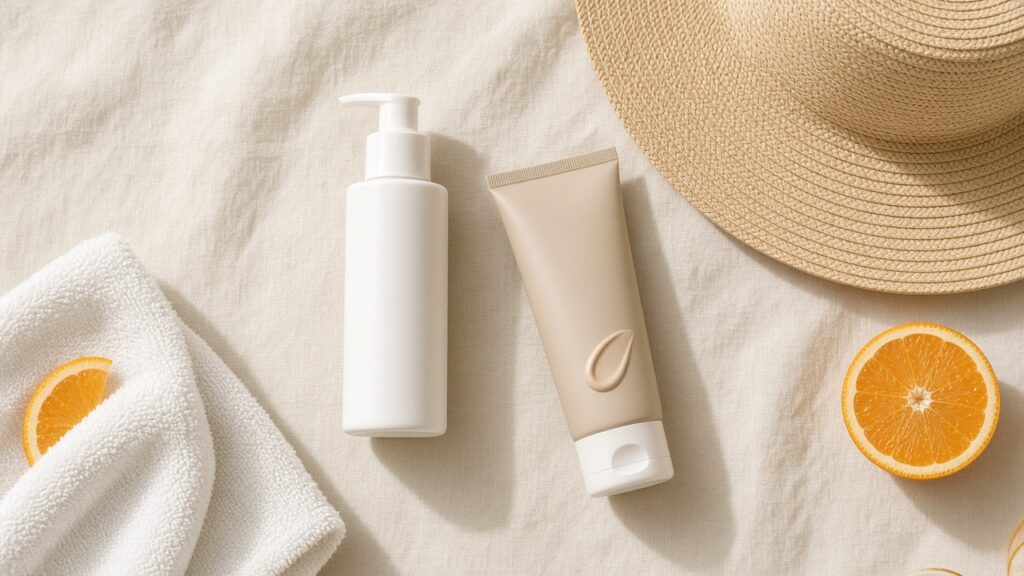
The Trendy Blends 18% Vitamin C Serum was designed with reactive, mature skin in mind. It pairs 18% 3-O Ethyl Ascorbic Acid with niacinamide and hyaluronic acid, plus soothing aloe and cucumber.
It’s fragrance-free, which matters when irritation can darken patches. It also comes in a 1 oz airless pump, so the formula stays sealed away from air and light, and you get a fresh, clean dose every morning.
When to See a Dermatologist
Please check in with a board-certified dermatologist if:
- Your patches are spreading or getting darker despite sunscreen
- You’re not sure whether it’s melasma, sun spots, or something else
- A spot changes shape, bleeds, itches, or looks different from the rest
- You’ve had melasma for years and home care hasn’t helped
A dermatologist can build a full plan, and your vitamin C serum for melasma can keep supporting your skin along the way.
FAQ: People Also Ask
Does vitamin C serum help melasma?
It can help as part of a routine. In a small trial, 5% vitamin C lightened melasma with far fewer side effects than hydroquinone, though hydroquinone scored higher with patients. Daily sunscreen is essential for any results.
What type of vitamin C is best for melasma?
A stable, gentle form is a smart choice because irritation can darken melasma. 3-O Ethyl Ascorbic Acid stays stable without a very low pH, so it’s usually more comfortable for reactive skin.
How long does a vitamin C serum for melasma take to work?
Most people notice a brighter, more even tone in about 8 to 12 weeks of daily use with sunscreen. Melasma itself often takes 3 to 12 months to improve, even with prescription treatment.
Can I use vitamin C with niacinamide for melasma?
Yes. Vitamin C helps slow pigment production, while niacinamide limits pigment transfer to the surface. They work on different steps, so they make a great team.
Is melasma caused by menopause?
Hormones play a role in melasma, and research has linked melasma beyond the face to perimenopause. Sun exposure, genetics, certain medications, and thyroid disease can also trigger it.
What sunscreen is best for melasma?
The AAD recommends a broad-spectrum SPF 30 or higher with zinc oxide or titanium dioxide. A tinted formula with iron oxide adds protection from visible light, which can also darken melasma.
Conclusion
Melasma asks for patience, but it isn’t a lost cause. A vitamin C serum for melasma, used every morning under a tinted sunscreen, can help your skin look brighter and more even over time.
Keep things gentle, protect your skin from light, and partner with a dermatologist for stubborn patches. Calmer, clearer, glowing skin really is possible, one blend at a time.
Ready to start? Try the Trendy Blends 18% Vitamin C Serum with 3-O Ethyl Ascorbic Acid, niacinamide, and hyaluronic acid, backed by our 60-day money-back guarantee.
Disclaimer
This article is for general education and isn’t medical advice. Melasma can look like other skin conditions, so see a board-certified dermatologist for a diagnosis, especially if you’re pregnant, taking hormones, or have a thyroid condition. Results vary from person to person.
References
- Ogbechie-Godec OA, Elbuluk N. Melasma: an up-to-date comprehensive review. Dermatol Ther (Heidelb). 2017;7(3):305-318.
- Espinal-Perez LE, Moncada B, Castanedo-Cazares JP. A double-blind randomized trial of 5% ascorbic acid vs. 4% hydroquinone in melasma. Int J Dermatol. 2004;43(8):604-607.
- Castanedo-Cazares JP, et al. Near-visible light and UV photoprotection in the treatment of melasma: a double-blind randomized trial. Photodermatol Photoimmunol Photomed. 2014;30(1):35-42.
- Sarkar R, Arora P, Garg KV. Cosmeceuticals for hyperpigmentation: what is available? J Cutan Aesthet Surg. 2013;6(1):4-11.
- Al-Niaimi F, Chiang NYZ. Topical vitamin C and the skin: mechanisms of action and clinical applications. J Clin Aesthet Dermatol. 2017;10(7):14-17.
- Zerbinati N, et al. The anti-ageing and whitening potential of a cosmetic serum containing 3-O-ethyl-l-ascorbic acid. Life (Basel). 2021;11(5):406.
- American Academy of Dermatology. Melasma: Causes.
- American Academy of Dermatology. Melasma: Diagnosis and treatment.
- American Academy of Dermatology. Melasma: Self-care.
- American Academy of Dermatology. How to test skin care products.
