
Vitamin C Serum and Metronidazole: 8 Balanced Basics
Vitamin C serum and metronidazole often meet on the same bathroom shelf, especially when rosacea shows up in your 40s just as you’re chasing brighter, more even skin. If your dermatologist has prescribed metronidazole cream or gel, it’s natural to wonder whether your morning serum can stay.
Here’s the reassuring part: we found no warning against using vitamin C serum and metronidazole in the same routine. What matters most is your prescription label, a gentle routine and a slow, patient start.
We make a vitamin C serum, so we checked every point below against MedlinePlus (U.S. National Library of Medicine), the American Academy of Dermatology (AAD) and studies on PubMed before writing about vitamin C serum and metronidazole.
Below: what each one does, why rosacea skin needs extra care after 40, eight balanced basics for vitamin C serum and metronidazole, a sample day and honest research notes.
Table of Contents
Can You Use Vitamin C Serum and Metronidazole Together?
Based on what we found, vitamin C serum and metronidazole can usually share one routine, as long as your dermatologist agrees. We searched PubMed and didn’t find a study testing the two together, so there’s no proof of a problem and no proof of a special benefit.
What we did find is clear guidance. MedlinePlus advises telling your doctor and pharmacist about the prescription and nonprescription medicines, vitamins and supplements you use or plan to use with metronidazole.
So bring your vitamin C serum and metronidazole (or photos of their labels) to your next appointment. You’ll get advice that fits your exact skin and prescription.
What Topical Metronidazole Does
Topical metronidazole is a prescription medicine for rosacea. MedlinePlus says it belongs to a class called nitroimidazole antimicrobials and works by stopping the growth of bacteria.
It comes as a cream, lotion or gel, usually applied once or twice a day. The AAD’s rosacea treatment guide says it can treat acne-like breakouts, long-lasting color and bacteria on the skin.
A 2019 systematic review of 152 randomized trials rated the evidence for topical metronidazole on rosacea bumps as moderate-certainty. Side effects in those trials were mild, such as itching, irritation and dry skin.
Lab studies from 1986 and 2007 found that metronidazole has antioxidant activity, which may be part of why it helps rosacea bumps.
What Vitamin C Serum Brings to Your Routine
Vitamin C is an antioxidant too. A 2017 review describes its photoprotective, anti-aging and antipigmentary effects, including support for collagen and less melanin formation, which is why it’s loved for dullness and dark spots.
That same review notes that clinical studies on topical vitamin C are still limited. So think of your serum as a helpful supporting player for glow, not a rosacea treatment.
Vitamin C Serum and Metronidazole Pills Are a Different Question
Many searches about vitamin C and metronidazole are really about pills. Oral metronidazole treats certain infections, including bacterial vaginosis, and it comes with its own warnings, such as avoiding alcohol during treatment and for at least 3 days after.
MedlinePlus lists a separate vaginal gel, too. This guide covers vitamin C serum and metronidazole cream, gel or lotion on your face, so ask your pharmacist about any other form.
Why Rosacea Skin Needs a Gentle Plan After 40
Rosacea isn’t only a young person’s problem. The AAD notes that women get rosacea more often than men, and that the risk seems higher if you’re 30 or older or going through menopause.
The AAD also says rosacea often makes skin sensitive and easily irritated. Sun is one of the most frequent triggers, and many skin care products can irritate it.
That’s why the AAD suggests avoiding products with alcohol, camphor, fragrance, glycolic acid, lactic acid, menthol, sodium lauryl sulfate and urea. It also recommends fragrance-free (not just “unscented”) products, and a cream instead of a lotion or gel.
The Moisturizer Study Worth Knowing
One small study is especially relevant. In a 2007 split-face study, 20 people using 0.75% metronidazole gel twice daily added a gentle moisturizer to one half of the face for 15 days.
On the moisturized side, dryness, roughness and flaking improved, and skin sensitivity dropped. It’s only 20 people, but it suggests gentle support can help rosacea skin on metronidazole.
Vitamin C Serum and Metronidazole After 40
In your 40s, you may want calmer rosacea and brighter, firmer-looking skin at once. That’s where vitamin C serum and metronidazole can make sense, each in its own lane.
The prescription treats rosacea, and the serum supports brightness. If your skin is very reactive, our guide to choosing a vitamin C serum for rosacea goes deeper on formulas.

8 Balanced Basics for Vitamin C Serum and Metronidazole
These basics come from MedlinePlus and AAD guidance. Use them as talking points with your dermatologist, not as a replacement for your prescription.
1. Talk With Your Dermatologist Before Adding Anything
Rosacea plans are personal. Ask whether vitamin C fits right now, especially if your skin is flaring or you use more than one rosacea medicine.
Bring your vitamin C serum and metronidazole, plus your sunscreen and makeup, so your dermatologist sees the whole routine.
2. Keep Metronidazole on the Schedule Your Doctor Set
MedlinePlus says to use metronidazole exactly as directed, no more and no less, and no more often than prescribed. If you miss a dose, apply it when you remember, but don’t double up.
With vitamin C serum and metronidazole, the serum is the flexible one. Build it around your prescription.
3. Split Vitamin C Serum and Metronidazole by Time of Day
If your metronidazole is once daily at night, the easiest plan is vitamin C serum in the morning. That spacing keeps things simple.
If you use metronidazole twice a day, ask your dermatologist where vitamin C should go. We didn’t find an official rule for the order of vitamin C serum and metronidazole.
4. Apply to Clean, Dry Skin and Let It Settle
MedlinePlus says to wash the area first, apply a thin layer and rub it in gently. It also says you can use cosmetics after waiting at least 5 minutes for the medicine to dry.
The AAD adds that moisturizer applied to dry skin is less likely to burn or sting. So pat your face dry, go slowly and skip any rubbing or scrubbing.
5. Choose a Fragrance-Free, Alcohol-Free Formula
Check your serum against the AAD’s avoid list. Fragrance and alcohol are the big ones, and the list also includes glycolic and lactic acid.
Our serum is fragrance-free, though it does contain fruit extracts, including orange and lemon. Every face is different, so patch test any vitamin C serum first. For more, see our guide to vitamin C for sensitive skin.
6. Medication First, Then Moisturizer
The AAD’s rosacea skin care tips are simple: if you use a rosacea medicine, apply it first, then a rosacea-friendly moisturizer. Moisturizer helps trap water in your skin and restore its lipids.
This matters on metronidazole, which can cause dryness. Look for a fragrance-free cream that says it’s made for sensitive skin.
7. Wear Sunscreen Every Single Morning
Sun can worsen rosacea any time of year. The AAD recommends broad-spectrum, water-resistant sunscreen with SPF 30 or higher, plus shade, a wide-brim hat and UV-blocking sunglasses.
If sunscreen stings, the AAD suggests a mineral formula with zinc oxide or titanium dioxide, silicone and no fragrance. Our post on vitamin C serum and sunscreen covers layering.
8. Patch Test, Be Patient and Know the Red Flags
The AAD suggests testing a new product twice daily for 7 to 10 days on a quarter-sized spot, like the inside of your arm. If there’s no redness, itching or swelling, you can try it on your face.
For rosacea bumps, the AAD says topical medicine may bring slight improvement in 3 or 4 weeks, with a noticeable difference in 2 to 3 months. So give your routine time.
Call your doctor about severe or lasting redness, dryness, burning or stinging. MedlinePlus says to call right away for numbness, tingling or burning in your hands or feet, or a rash, itching or hives.
A Sample Day With Vitamin C Serum and Metronidazole
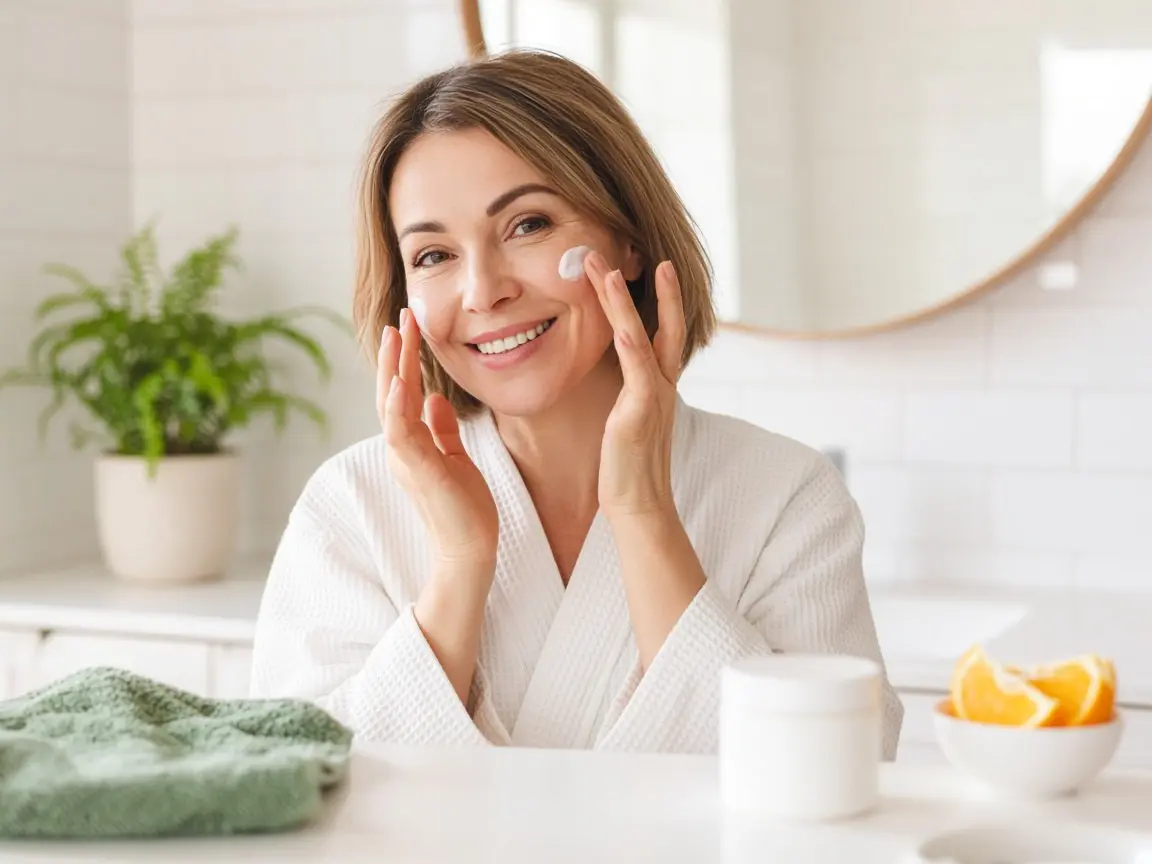
Prescriptions differ, so adjust this to your label. Here’s one simple day with vitamin C serum and metronidazole, if your metronidazole is used once daily at night.
Morning: cleanse gently with your fingertips and pat dry. Smooth on 1–2 pumps of vitamin C serum, then a fragrance-free moisturizer, then broad-spectrum SPF 30 or higher.
Evening: cleanse gently, let your skin dry and apply metronidazole exactly as prescribed. Follow with a rosacea-friendly moisturizer.
What the Research on Vitamin C Serum and Metronidazole Can and Can’t Tell Us
Let’s be honest about the evidence. We didn’t find a published study that tested vitamin C serum and metronidazole together, so we can’t say the pair works better than either one alone.
Metronidazole itself is well studied. In a 2001 trial of 72 people, once-daily 0.75% and 1% metronidazole creams cut rosacea bumps by a median of 62% and 60% over 12 weeks.
Newer options exist, too. In a 2015 trial of 962 people, ivermectin cream reduced rosacea bumps more than metronidazole cream. If your skin isn’t improving, ask your dermatologist about your options.
For rosacea, a 2024 review of vitamins and nutrients found mixed results for vitamin C supplements and no established recommendations. The research on 3-O Ethyl Ascorbic Acid, the form in our serum, is lab work, such as a pig-skin study and a cell study.
Niacinamide, which our serum also contains, has a small rosacea study behind it. A 2005 study of 50 people tested a niacinamide moisturizer, and its authors reported improved skin barrier function. It was a different product, though.
Where Trendy Blends Fits
Our Trendy Blends 18% Vitamin C Serum uses 18% 3-O Ethyl Ascorbic Acid with niacinamide, hyaluronic acid, aloe and cucumber. It’s fragrance-free and comes in a 1 oz airless pump, so you just use 1–2 pumps each morning.
It’s $24.99 with free shipping in 3–4 business days, and it’s backed by our 60-Day Glow Guarantee with free returns. If you use vitamin C serum and metronidazole, check with your dermatologist and patch test first.
Also using azelaic acid? See our guide to vitamin C serum with azelaic acid.
Frequently Asked Questions
Can I use vitamin C serum with metronidazole gel?
Usually, yes, if your dermatologist agrees. We found no warning against it, but no study has tested vitamin C serum and metronidazole together. Keep the gel on its prescribed schedule, choose a fragrance-free serum and patch test first.
Should I apply vitamin C serum before or after metronidazole?
We didn’t find an official rule. The simplest plan is vitamin C in the morning and metronidazole at night, if that fits your prescription. If you use both at the same time of day, ask your dermatologist or pharmacist which goes first.
Can I take vitamin C while taking metronidazole pills?
That’s a question for your pharmacist. Oral metronidazole is a different medicine with its own warnings, including no alcohol during treatment and for at least 3 days after. MedlinePlus suggests keeping a written list of all your medicines and vitamins.
Can vitamin C serum make rosacea worse?
It can if your skin reacts to it. Rosacea skin is easily irritated, so skip formulas with fragrance or alcohol, test on your arm for 7 to 10 days and ask your dermatologist about flares.
How long should I wait after metronidazole before applying makeup?
MedlinePlus says you can use cosmetics after waiting at least 5 minutes for metronidazole to dry. Follow your own product label if it gives different directions.
Does vitamin C serum help metronidazole work better?
We didn’t find evidence either way, because vitamin C serum and metronidazole haven’t been studied together. Both have antioxidant activity, but that doesn’t prove a team effect. Let metronidazole treat rosacea and enjoy your serum for glow.
The Bottom Line
Vitamin C serum and metronidazole can live happily in one routine: metronidazole exactly as prescribed, vitamin C serum in the morning, then moisturizer and sunscreen.
Go gently, give it 2 to 3 months and keep your dermatologist in the loop. Calmer, glowing skin after 40 is worth the patience, one gentle step at a time.
Medical disclaimer: This article is for general education only and is not medical advice. Talk with a board-certified dermatologist or pharmacist before combining skin care with prescription rosacea medicines, especially if you’re pregnant, breastfeeding or have a nerve or blood condition.
References
- MedlinePlus (U.S. National Library of Medicine). Metronidazole Topical. https://medlineplus.gov/druginfo/meds/a682244.html
- MedlinePlus (U.S. National Library of Medicine). Metronidazole. https://medlineplus.gov/druginfo/meds/a689011.html
- AAD (American Academy of Dermatology). Rosacea: Diagnosis and treatment. https://www.aad.org/public/diseases/rosacea/treatment/diagnosis-treat
- AAD (American Academy of Dermatology). Rosacea: Causes. https://www.aad.org/public/diseases/rosacea/what-is/causes
- AAD (American Academy of Dermatology). 7 rosacea skin care tips dermatologists recommend. https://www.aad.org/public/diseases/rosacea/triggers/tips
- AAD (American Academy of Dermatology). How to test skin care products. https://www.aad.org/public/everyday-care/skin-care-secrets/prevent-skin-problems/test-skin-care-products
- van Zuuren EJ, Fedorowicz Z, Tan J, et al. Interventions for rosacea based on the phenotype approach: an updated systematic review including GRADE assessments. Br J Dermatol. 2019;181(1):65-79. PMID: 30585305.
- Dahl MV, Jarratt M, Kaplan D, et al. Once-daily topical metronidazole cream formulations in the treatment of the papules and pustules of rosacea. J Am Acad Dermatol. 2001;45(5):723-30. PMID: 11606923.
- Taieb A, Ortonne JP, Ruzicka T, et al. Superiority of ivermectin 1% cream over metronidazole 0·75% cream in treating inflammatory lesions of rosacea: a randomized, investigator-blinded trial. Br J Dermatol. 2015;172(4):1103-10. PMID: 25228137.
- Laquieze S, Czernielewski J, Baltas E. Beneficial use of Cetaphil moisturizing cream as part of a daily skin care regimen for individuals with rosacea. J Dermatolog Treat. 2007;18(3):158-62. PMID: 17538804.
- Miyachi Y, Imamura S, Niwa Y. Anti-oxidant action of metronidazole: a possible mechanism of action in rosacea. Br J Dermatol. 1986;114(2):231-4. PMID: 2936372.
- Narayanan S, Hünerbein A, Getie M, et al. Scavenging properties of metronidazole on free oxygen radicals in a skin lipid model system. J Pharm Pharmacol. 2007;59(8):1125-30. PMID: 17725855.
- Al-Niaimi F, Chiang NYZ. Topical Vitamin C and the Skin: Mechanisms of Action and Clinical Applications. J Clin Aesthet Dermatol. 2017;10(7):14-17. PMID: 29104718.
- Algarin YA, Pulumati A, Jaalouk D, et al. The role of vitamins and nutrients in rosacea. Arch Dermatol Res. 2024;316(5):142. PMID: 38695936.
- Draelos ZD, Ertel K, Berge C. Niacinamide-containing facial moisturizer improves skin barrier and benefits subjects with rosacea. Cutis. 2005;76(2):135-41. PMID: 16209160.
- Iliopoulos F, Sil BC, Moore DJ, et al. 3-O-ethyl-l-ascorbic acid: Characterisation and investigation of single solvent systems for delivery to the skin. Int J Pharm X. 2019;1:100025. PMID: 31517290.
- Gęgotek A, Jarocka-Karpowicz I, Mucha M, Skrzydlewska E. Skin Cells’ Protection Against UVA-Induced Changes in Co-Cultured Keratinocytes-Fibroblasts’ Proteome and Released Signaling Proteins by 3-O-Ethyl Ascorbic Acid. Int J Mol Sci. 2026;27(12):5551. PMID: 42353265.
