
Vitamin C Serum With Azelaic Acid: 7 Smart, Gentle Tips
If you’re juggling dark spots, a flushed nose and cheeks, and the odd jawline breakout all at once, you may be wondering about vitamin C serum with azelaic acid. The good news is that these two ingredients can share a routine, as long as you introduce them slowly and let your skin set the pace.
After 40, skin rarely has just one concern. Melasma can deepen with summer sun, rosacea-type redness can creep in, and adult acne can show up right alongside your first fine lines.
Here’s what each ingredient does, how to pair vitamin C serum with azelaic acid, and how to keep tingling and dryness in check.
Table of Contents
Can You Use Vitamin C Serum With Azelaic Acid?
Yes, many people can. We didn’t find any official warning against pairing them, and the simplest plan gives vitamin C the morning and azelaic acid the evening.
If your azelaic acid is a prescription, follow your label first. MedlinePlus says prescription azelaic acid is usually applied twice a day, morning and evening, and it asks you to tell your doctor and pharmacist about all the other products you use.
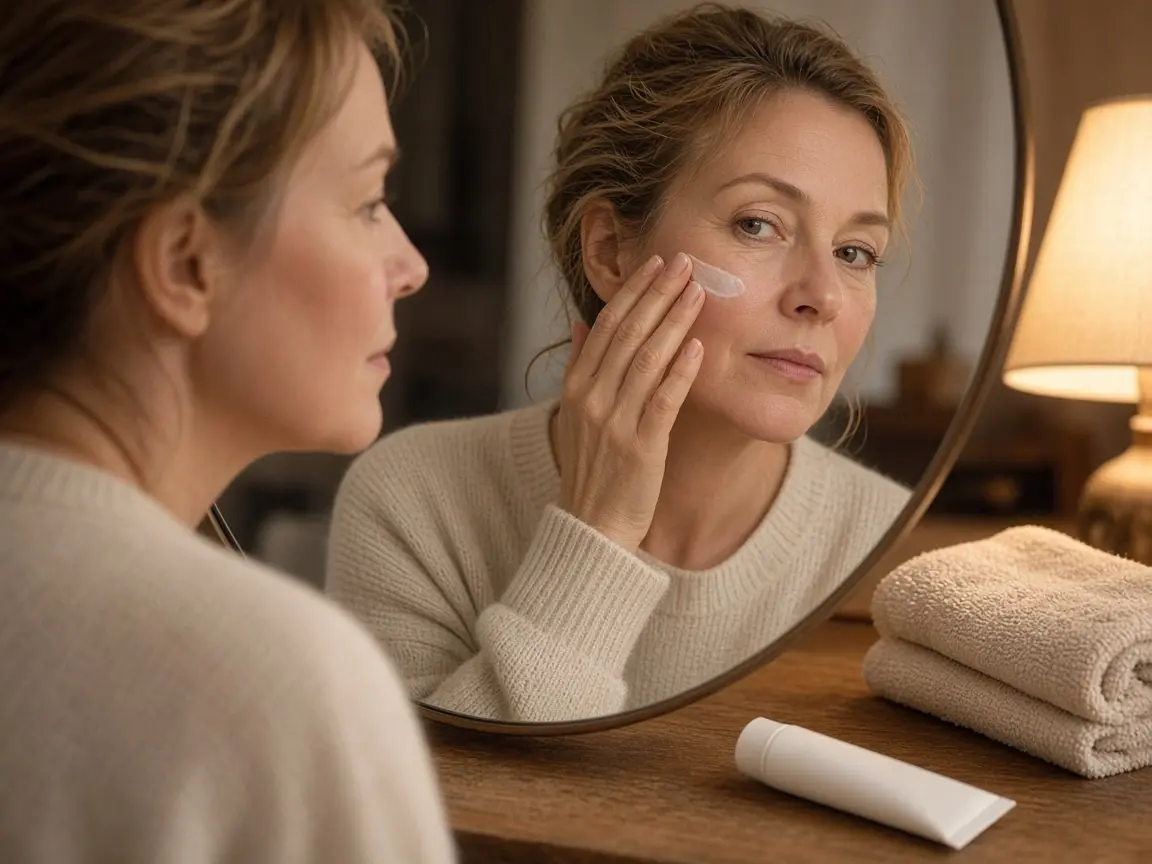
So using vitamin C serum with azelaic acid is mostly about timing and comfort, not chemistry.
Why This Pairing Appeals to Skin Over 40
The American Academy of Dermatology (AAD) says that for melasma, a dermatologist may prescribe a medication that’s gentler on the skin, like azelaic acid, kojic acid, or vitamin C. Both of our ingredients made that short list.
The AAD’s guide to fading dark spots in darker skin tones also lists azelaic acid and vitamin C among the non-prescription ingredients that can help. Its adult acne guide adds that azelaic acid fights acne and can fade the dark marks left behind after a pimple clears.
Adult acne is real, too. The AAD says some adults get acne well into their 40s and 50s, and that adult-onset acne is most common in women going through menopause.
That overlap of spots, redness, and breakouts is exactly why vitamin C serum with azelaic acid gets so much attention from women our age.
What Each Ingredient Does
Azelaic Acid: The Calming Multitasker
MedlinePlus describes azelaic acid as a dicarboxylic acid. It treats rosacea by decreasing swelling and redness, and it treats acne by killing bacteria in pores and decreasing keratin buildup.
A 2015 review describes anti-inflammatory and anti-infective activity, and it notes that azelaic acid also inhibits the skin’s melanin production. That last part is why it shows up in so many conversations about dark spots.
Prescription versions come as a gel, foam, or cream. You’ll also find lower-strength azelaic acid in some non-prescription serums.
Vitamin C: The Morning Antioxidant
Topical vitamin C is valued mainly as an antioxidant. A 2017 dermatology review of topical vitamin C describes roles in photoprotection, collagen support, and decreasing melanin formation.
The same review says clinical studies on topical formulas are still limited, and that stability is the big challenge. L-ascorbic acid is the best-studied form, but it’s unstable, and stable derivatives, like the 3-O Ethyl Ascorbic Acid in our serum, are formulated to address that.
Vitamin C Serum vs Azelaic Acid: What Research Shows
If you’re weighing vitamin C serum vs azelaic acid, it helps to know that neither has been studied much as a pair. Much of the research looks at each one on its own, often against hydroquinone, a well-known skin-lightening cream.
For Melasma and Dark Spots
In a 24-week double-blind trial of 155 patients with melasma, 73% using 20% azelaic acid cream had good to excellent results, compared with 19% using 2% hydroquinone. Everyone also used a broad-spectrum sunscreen.
A larger 24-week study of 329 women compared 20% azelaic acid with 4% hydroquinone. Azelaic acid gave good or excellent results in 65%, and the study found no significant difference between the two creams.
Vitamin C has smaller evidence. In a 16-week split-face trial of 16 women, hydroquinone scored better on subjective ratings, but color measurements showed no significant difference, and side effects were far less common with 5% ascorbic acid.
For melasma, that makes vitamin C serum with azelaic acid a reasonable supporting duo, with daily sunscreen as the foundation.
For Rosacea-Type Redness
Azelaic acid has stronger data here. Two randomized trials of 15% azelaic acid gel in moderate papulopustular rosacea found more improvement in redness than a plain gel: 44% vs 29% in one study and 46% vs 28% in the other.
A 15-week trial of 251 patients found 15% azelaic acid gel reduced bumps and redness more than 0.75% metronidazole gel. Neither treatment had much effect on visible small blood vessels.
If redness is your main concern, keep vitamin C serum with azelaic acid gentle and watch how your cheeks respond. The AAD warns that products that burn or sting can make rosacea flare.
Can You Combine Them?
One small study did. Twenty women had eight weekly professional treatments with 20% azelaic acid and phytic acid, plus 40% L-ascorbic acid layered on one side of the face, and redness and pigmentation improved more on that side.
Those were high-strength professional treatments, not a home routine, and the study had no untreated comparison group. Still, it’s a hopeful sign for vitamin C serum with azelaic acid as a team.
7 Smart, Gentle Tips for Vitamin C Serum With Azelaic Acid
1. Patch Test Each Product First
The AAD suggests testing a new product on a quarter-sized spot, such as the inside of your elbow, twice daily for 7 to 10 days. If you don’t get red, itchy, or swollen skin, you can move it to your face.
Test one at a time. That way, if something stings, you’ll know which product to blame.
2. Split Vitamin C Serum With Azelaic Acid by Time of Day
For most over-the-counter routines, the easiest split is vitamin C in the morning and azelaic acid at night. Each one gets its own moment, and your skin isn’t handling two actives at once.
If your doctor prescribed azelaic acid twice daily, keep that schedule. Ask whether vitamin C serum with azelaic acid in the same morning routine makes sense for you.
3. Vitamin C Serum or Azelaic Acid First?
If you do layer them, there’s no official rule for cosmetic products. Many people go thinnest texture first and let each layer dry before the next one.
Prescription azelaic acid is applied to freshly washed, dry skin. If yours is a prescription, ask your dermatologist whether vitamin C should go before or after it.
4. Expect Some Tingling, and Start Slowly
MedlinePlus lists itching, burning, stinging, tingling, tenderness, and dryness as possible side effects of azelaic acid. In the melasma trial above, mild to moderate irritation showed up early with both creams and was temporary.
Start your vitamin C serum with azelaic acid a few times a week and build up as your skin stays comfortable. Our guide to vitamin C serum burning explains normal tingling versus a true reaction.
5. Moisturize After Your Treatment
In its rosacea skin care tips, the AAD says to apply your medication first, then a rosacea-friendly moisturizer. It also notes that moisturizer applied to dry skin is less likely to burn or sting.
Choose fragrance-free products made for sensitive skin. The AAD recommends fragrance-free over “unscented” and suggests skipping alcohol-based products. A good moisturizer makes vitamin C serum with azelaic acid much easier to live with.

6. Wear Sunscreen Every Single Morning
This is the step that makes vitamin C serum with azelaic acid worth the effort. The AAD says sunlight triggers melasma, and that effective treatment for dark spots begins with sunscreen.
Look for broad-spectrum SPF 30 or higher. For melasma, the AAD suggests a tinted sunscreen with iron oxide, since visible light can worsen it, and our guide to vitamin C serum and sunscreen covers the order.
7. Give It Months, Not Days
For rosacea’s acne-like bumps, the AAD says topical medication may bring slight improvement in 3 or 4 weeks, with a noticeable difference in 2 to 3 months. The melasma trials above ran for 24 weeks.
In its guide for darker skin tones, the AAD notes that a dark spot a few shades darker than your skin usually fades within 6 to 12 months once the cause is stopped. Patience is part of the routine.
A Simple Routine for Vitamin C Serum With Azelaic Acid
Morning
- Cleanse gently with your fingertips and pat dry.
- Apply vitamin C serum to dry skin.
- Follow with a fragrance-free moisturizer.
- Finish with broad-spectrum SPF 30 or higher.
Evening
- Wash with a mild cleanser and pat dry.
- Smooth on a thin layer of azelaic acid.
- Once it’s dry, add your moisturizer.
If your skin feels cranky, take a night off. Vitamin C serum with azelaic acid is a flexible pairing, not a strict rule.
Where Trendy Blends Fits Into Your Morning
Our Trendy Blends 18% Vitamin C Serum is made for the morning half of this routine. It uses 3-O Ethyl Ascorbic Acid, a stable form of vitamin C, with niacinamide, hyaluronic acid, aloe, and cucumber.
It’s fragrance-free, which matters when redness-prone skin is in the mix. It comes in a 1 oz airless pump, and 1–2 pumps covers your face.
If you plan to use our vitamin C serum with azelaic acid, patch test first and start slowly. The serum is $24.99 with free shipping in 3–4 business days, backed by our 60-Day Glow Guarantee with free returns.
When to Check With Your Doctor First
MedlinePlus asks you to tell your doctor if you’re pregnant, planning a pregnancy, or breastfeeding before using azelaic acid. It also asks you to mention a history of asthma or cold sores that keep coming back.
MedlinePlus notes that azelaic acid may change skin color, especially in darker complexions. If that’s you, ease into vitamin C serum with azelaic acid and tell your doctor about any changes. Stop and get emergency help for swelling of the face or throat, hives, or trouble breathing.
Melasma and rosacea can both be stubborn. A board-certified dermatologist can confirm what you’re seeing, and our post on vitamin C serum for melasma covers more on stubborn patches.
Frequently Asked Questions
Can I use vitamin C serum and azelaic acid together?
Yes, many people can use vitamin C serum with azelaic acid. The simplest plan is vitamin C in the morning and azelaic acid at night, introduced one at a time. If your azelaic acid is prescribed, follow your doctor’s schedule.
Should I apply vitamin C serum before or after azelaic acid?
There’s no official rule for cosmetic products, and many people apply the thinnest texture first. Prescription azelaic acid goes on clean, dry skin, so ask your dermatologist where vitamin C fits.
Is azelaic acid or vitamin C better for melasma?
Azelaic acid has larger trials behind it. In 24-week studies, 20% azelaic acid cream did as well as or better than hydroquinone, while vitamin C’s melasma evidence comes from smaller studies.
Does azelaic acid help rosacea redness?
It can. In two randomized trials, 15% azelaic acid gel improved redness in more patients than a plain gel, and the AAD says it may reduce long-lasting color.
Why does vitamin C serum with azelaic acid tingle?
Azelaic acid is a common culprit, since MedlinePlus lists itching, burning, stinging, and tingling as side effects. Tell your doctor if they’re severe or don’t go away.
How long does vitamin C serum with azelaic acid take to work?
Expect months, not days. The AAD says topical treatment for rosacea bumps usually takes 2 to 3 months to make a noticeable difference, and the melasma studies ran for 24 weeks.
Conclusion
Using vitamin C serum with azelaic acid can be a calm, steady way to care for dark spots, redness, and breakouts after 40. Keep it simple: vitamin C and sunscreen in the morning, azelaic acid at night.
Patch test, start slowly, moisturize, and lean on your dermatologist when spots or flushing won’t budge. Brighter, calmer skin builds one patient week at a time.
Medical disclaimer: This article is for general education only and is not medical advice. Follow your azelaic acid label or your doctor’s directions, and talk with a board-certified dermatologist before changing your routine, especially if you are pregnant, breastfeeding, or have a skin condition.
References
- Verallo-Rowell VM, Verallo V, Graupe K, et al. Double-blind comparison of azelaic acid and hydroquinone in the treatment of melasma. Acta Derm Venereol Suppl (Stockh). 1989;143:58-61. PMID: 2528260.
- Baliña LM, Graupe K. The treatment of melasma. 20% azelaic acid versus 4% hydroquinone cream. Int J Dermatol. 1991;30(12):893-5. PMID: 1816137.
- Espinal-Perez LE, Moncada B, Castanedo-Cazares JP. A double-blind randomized trial of 5% ascorbic acid vs. 4% hydroquinone in melasma. Int J Dermatol. 2004;43(8):604-7. PMID: 15304189.
- Thiboutot D, Thieroff-Ekerdt R, Graupe K. Efficacy and safety of azelaic acid (15%) gel as a new treatment for papulopustular rosacea: results from two vehicle-controlled, randomized phase III studies. J Am Acad Dermatol. 2003;48(6):836-45. PMID: 12789172.
- Elewski BE, Fleischer AB Jr, Pariser DM. A comparison of 15% azelaic acid gel and 0.75% metronidazole gel in the topical treatment of papulopustular rosacea: results of a randomized trial. Arch Dermatol. 2003;139(11):1444-50. PMID: 14623704.
- Markiewicz-Tomczyk A, Budzisz E, Erkiert-Polguj A. Clinical evaluation of anti-aging effects of combined therapy-Azelaic acid, phytic acid, and vitamin C applied layer by layer in females with Fitzpatrick skin types II and III. J Cosmet Dermatol. 2022;21(12):6830-6839. PMID: 36056802.
- Schulte BC, Wu W, Rosen T. Azelaic Acid: Evidence-based Update on Mechanism of Action and Clinical Application. J Drugs Dermatol. 2015;14(9):964-8. PMID: 26355614.
- Al-Niaimi F, Chiang NYZ. Topical Vitamin C and the Skin: Mechanisms of Action and Clinical Applications. J Clin Aesthet Dermatol. 2017;10(7):14-17. PMID: 29104718.
- MedlinePlus. Azelaic Acid Topical. U.S. National Library of Medicine.
- American Academy of Dermatology. Melasma: Diagnosis and treatment.
- American Academy of Dermatology. Melasma: Self-care.
- American Academy of Dermatology. How to fade dark spots in darker skin tones.
- American Academy of Dermatology. Adult acne treatment dermatologists recommend.
- American Academy of Dermatology. Adult acne.
- American Academy of Dermatology. Rosacea: Diagnosis and treatment.
- American Academy of Dermatology. 7 rosacea skin care tips dermatologists recommend.
- American Academy of Dermatology. How to prevent rosacea flare-ups.
- American Academy of Dermatology. How to test skin care products.
