
Vitamin C Serum vs Cream: 7 Honest Truths for Glowing Skin
If you’ve been standing in the skincare aisle weighing up vitamin C serum vs cream, you’re not alone. Both promise brighter, smoother skin, and both can look tempting when your 40+ skin feels drier and duller than it used to.
The honest answer is that in the vitamin C serum vs cream matchup, neither format wins every time. The formula inside matters more than the label on the front, and a 40+ routine can happily use both.
Below, we’ll walk through what the research actually says, seven honest truths about vitamin C serum vs cream, how to choose by skin type, and how to layer them so your skin stays comfortable and glowing.
Table of Contents
Vitamin C Serum vs Cream: The Quick Answer
If you want vitamin C in the lightest possible layer, a serum is often the easier fit. If your main need is moisture, a cream does that job well, and it can sit right on top of your serum.
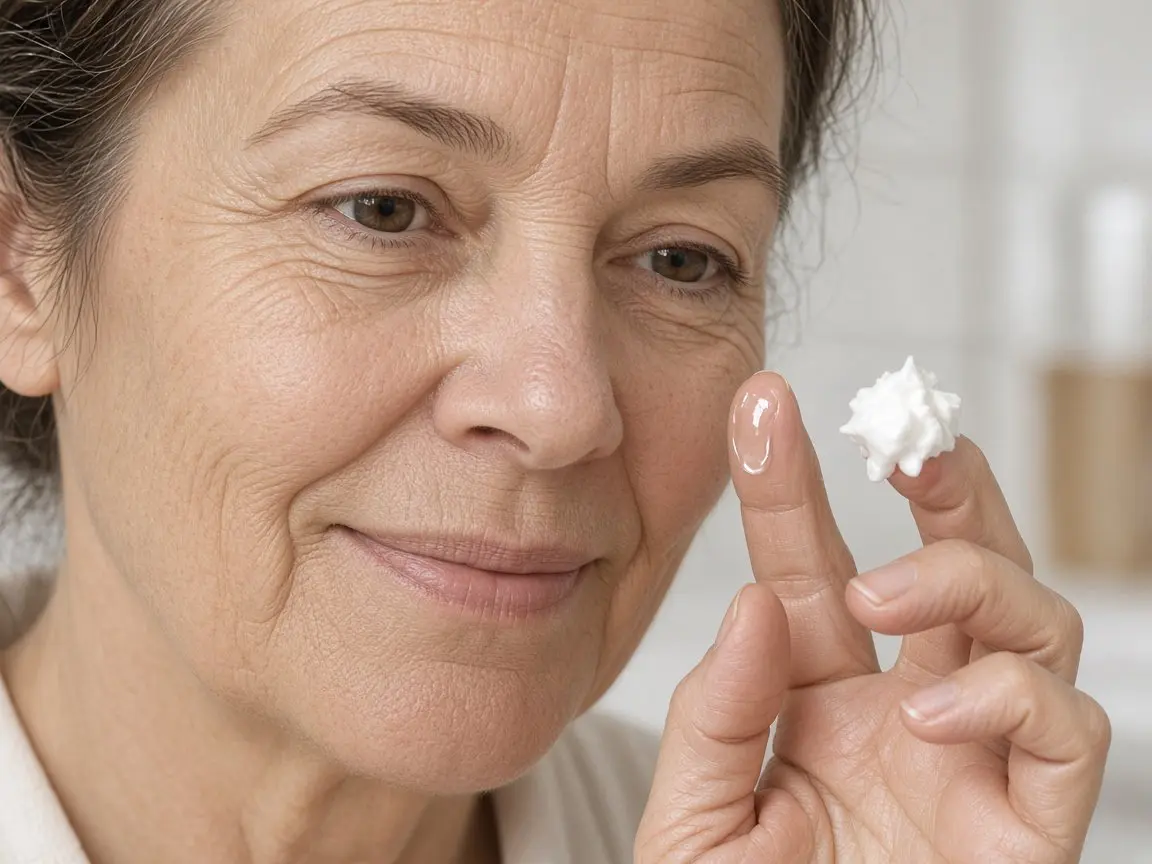
The American Academy of Dermatology (AAD) doesn’t pick a side, either. In its skin care guide for your 20s, a board-certified dermatologist lists “vitamin C serum or cream” as a science-backed ingredient that can reduce skin aging and dark spots.
So the vitamin C serum vs cream choice really comes down to your skin type, your routine, and the formula itself. Let’s unpack that.
What’s the Real Difference Between a Serum and a Cream?
At the simplest level, the vitamin C serum vs cream difference comes down to texture and job description. A serum is a light, often water-based layer built around active ingredients, while a cream is a richer blend of water and oils designed to moisturize.
Texture and feel
The AAD’s guide on how to pick the right moisturizer explains that a gel is often water-based and feels lighter, while a cream is thicker with a higher oil content, making it more hydrating.
That’s why a serum tends to sink in quickly and layer easily, while a cream feels cushiony and comforting. Neither is “better” in general; they just feel and behave differently on skin.
What usually goes inside
A cosmetic chemist quoted by TODAY.com says water-based serums usually carry vitamin C in the 10% to 15% range. She adds that creams more often use vitamin C derivatives, sometimes in amounts that may not deliver the full antioxidant benefit.
That’s a general market pattern, not a rule. Some creams do contain a meaningful amount of vitamin C, like the 5% cream in the trial below, which is why reading the label matters in any vitamin C serum vs cream comparison.
7 Honest Truths About Vitamin C Serum vs Cream
These are the points we think get lost in the marketing. Each one is based on sources listed in our references.
1. The formula matters more than the format
A 2017 review on vitamin C in skin health says some vitamin C can be delivered to the skin’s outer layer by topical application, but how well that works depends on the formulation of the cream or serum used.
In other words, the vitamin C serum vs cream question has no single winner. A well-made cream may do better than a poorly made serum, and vice versa.
2. Vitamin C needs help getting into skin
Your skin is designed to keep things out. The same review explains that vitamin C, as a water-soluble, charged molecule, is repelled by the skin’s outer barrier, and some penetration happens only when pH is below 4 and it’s present as ascorbic acid.
A review of topical vitamin C by two consultant dermatologists adds that lowering the pH of L-ascorbic acid to below 3.5 improves its stability and permeability. That’s one reason so much effort has gone into vitamin C derivatives that are more stable, as our guide to the forms of vitamin C explains.
3. Both formats have research behind them
In a small 3-month study of topical ascorbic acid serum, 19 people aged 36 to 72 with mild to moderate sun damage applied it to one side of the face and a plain serum to the other. The vitamin C side showed significant improvement in fine wrinkling, roughness, and overall appearance.
Creams have data too. In a 6-month double-blind trial, women with sun-damaged skin on the low neck and arms used a 5% vitamin C cream on one side and the plain cream base on the other. Both the examining dermatologist and the volunteers saw significant improvement on the vitamin C side.
These studies tested specific formulas, and the serum study was small, so they don’t prove every product works. But they do show the vitamin C serum vs cream debate isn’t “one works, one doesn’t.”
4. A cream’s base can moisturize on its own
Here’s a detail most product pages skip. The 2017 review points out that in studies of topical creams, the cream formula provides a moisturizing effect in itself, which makes it harder to tell what the vitamin C is doing.
It adds that decreased roughness in some topical studies may depend more on the cream’s formulation than its vitamin C content. So if a vitamin C cream makes your skin feel softer, the moisturizing base may deserve some of the credit.
5. Strength has a sweet spot
The dermatologists’ review says that in most cases a product needs more than 8% vitamin C to be of biological significance. Above 20%, studies found no added benefit and possible irritation.
It notes that reputable products today sit in the 10% to 20% range. Those figures come mainly from L-ascorbic acid research, so they’re a useful guide rather than a precise target for every form of vitamin C. Either way, check the percentage before you pick a side in the vitamin C serum vs cream debate.
6. Stability and packaging count
A lab study on 3-O-ethyl-L-ascorbic acid notes that L-ascorbic acid is unstable and readily oxidizes on exposure to air. It describes 3-O-ethyl-L-ascorbic acid as a stable vitamin C derivative that has been used in topical products.
In lab tests on pig skin, it got into the skin from several common cosmetic solvents, including glycerin and 1,2-hexanediol. That’s early research on simple solvents, not a human trial or a finished product, but it helps explain why stable forms and air-limiting packaging get attention. Packaging is worth weighing in any vitamin C serum vs cream decision.
7. Mature skin often wants both
As skin ages, it holds less moisture. In the AAD’s moisturizer guide, a dermatologist says that perimenopausal people and everyone 50 and older should be using a cream-based moisturizer.
That’s not a vote against serums. For 40+ skin, a lovely answer to vitamin C serum vs cream is a light vitamin C serum first, then a comforting cream on top.
How to Choose: Vitamin C Serum vs Cream by Skin Type
Your skin type is the best tiebreaker. Here’s how we’d think it through.
Vitamin C serum vs cream for dry, mature skin
If your skin feels tight or flaky, you’ll want a cream somewhere in your routine. A dermatologist in the AAD’s moisturizer guide says creams add more moisture and preserve more water than lotion, so people with dry skin should start with a cream or ointment.
That cream doesn’t have to be your vitamin C. A lightweight serum underneath plus your favorite rich moisturizer gives you both jobs done well. Our guide on how to choose a moisturizer can help you pick the top layer.
If your skin is oily or combination
The same AAD guide notes that for some people, too much moisturizer can clog pores, and a dermatologist suggests oily skin consider a lighter gel or skipping moisturizer. In the vitamin C serum vs cream choice for oily skin, a fluid serum often feels more comfortable than a heavy cream.
For combination skin, a dermatologist there suggests moisturizing the dry spots and skipping the oily areas. A serum all over and a cream only where you’re dry is a simple way to apply that advice.
If your skin is sensitive
TODAY.com’s experts note that some people find vitamin C serums irritating, often because of their low pH. If that’s you, a gentler formula may matter more than the vitamin C serum vs cream label.
The AAD suggests testing new products on a quarter-sized spot, like the underside of your arm, twice a day for seven to 10 days before using them on your face. Our guide to vitamin C serum for sensitive skin has more tips.
How to Layer Vitamin C Serum and Cream
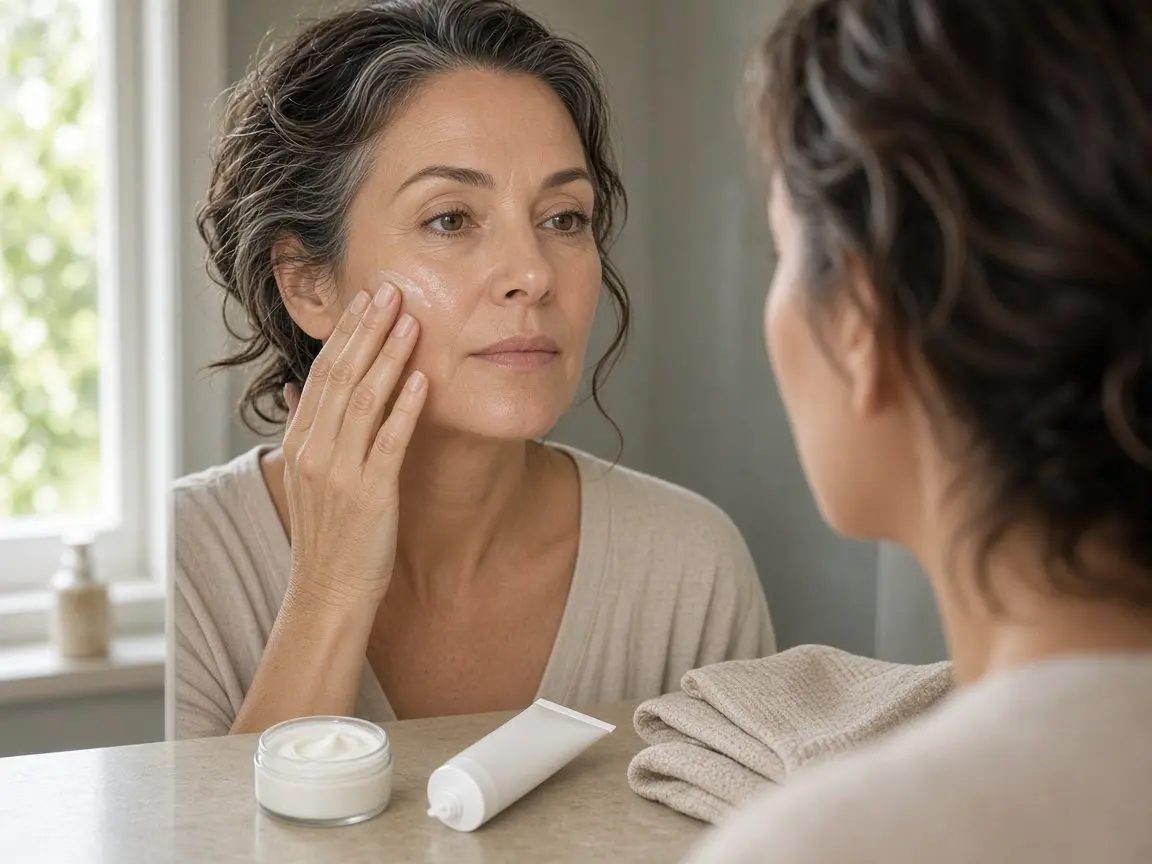
You don’t have to settle the vitamin C serum vs cream question at all, because using both is easy once you know the order. A common rule of thumb is thinnest to thickest, so the serum goes on before the cream.
Your morning vitamin C serum vs cream routine
The AAD dermatologist’s advice is to apply vitamin C after washing your face in the morning, before sunscreen. So, cleanse, apply your serum, follow with your cream, then finish with broad-spectrum sunscreen.
Give the serum a short moment to settle before the cream goes on. Our post on how long to wait after vitamin C covers timing in more detail.
Keep expectations realistic
The AAD’s guide to selecting anti-aging products says dermatologists agree that sunscreen and moisturizer are the two most effective anti-aging products you can buy. It also reminds us that anti-aging products deliver modest results.
The AAD adds that using more than one anti-aging product within a few days or weeks can irritate skin. So it’s sensible to start one new product at a time and give it a few weeks.
Why We Chose a Lightweight Serum
When we created our Trendy Blends 18% Vitamin C Serum, we chose a serum for its flexibility. It’s light enough to layer under most creams and sunscreens, so you don’t have to give up your favorite moisturizer.
It’s built around 18% 3-O Ethyl Ascorbic Acid, a stable form of vitamin C, with niacinamide, hyaluronic acid, aloe, and cucumber. It’s fragrance-free and comes in a 1 oz airless pump designed to limit air exposure, and 1–2 pumps is all you need per use.
It’s $24.99 with free shipping in 3–4 business days, plus our 60-Day Glow Guarantee with free returns. If you’d like to settle the vitamin C serum vs cream question on your own skin, it’s an easy, low-risk way to try.
FAQ
Is vitamin C serum better than vitamin C cream?
Not always. In the vitamin C serum vs cream comparison, serums are usually lighter and often carry more vitamin C, while creams add moisture, and research suggests results depend heavily on the overall formula.
Can I use a vitamin C serum and a cream together?
Yes, and it’s a comfortable combo for dry or mature skin. Apply the serum first on clean skin, then your cream, then sunscreen in the morning.
Which goes first, vitamin C serum or moisturizer?
Serum goes first. A common rule is to layer from thinnest to thickest, so your vitamin C serum goes on before a moisturizer or cream.
Is vitamin C cream good for mature skin?
It can be, especially if your skin is dry. Just check the vitamin C form and strength, since a cream’s moisturizing base may be doing much of the work you notice.
Is a vitamin C serum or cream better for sensitive skin?
Either can work if the formula is gentle. Choose a fragrance-free product, patch test for seven to 10 days, and stop if you notice lasting redness, burning, or itching.
Can a vitamin C serum replace my moisturizer?
For most dry or mature skin, no. Most serums aren’t designed to be your main moisturizer, so follow yours with a cream that suits your skin type.
Conclusion
When it comes to vitamin C serum vs cream, the best choice is the one your skin enjoys using every day. A serum gives you a light, flexible layer, and a cream adds the comfort dry, mature skin often craves.
For many of us over 40, the answer isn’t either-or. Try a lightweight vitamin C serum under a cream you love, wear sunscreen daily, and give it a few weeks.
Disclaimer: This article is for general educational purposes only and isn’t medical advice. If you have a skin condition, very sensitive skin, or concerns about any product, please talk with a board-certified dermatologist before starting something new.
References
- Pullar JM, Carr AC, Vissers MCM. The roles of vitamin C in skin health. Nutrients. 2017;9(8):866. PMC
- Al-Niaimi F, Chiang NYZ. Topical vitamin C and the skin: mechanisms of action and clinical applications. J Clin Aesthet Dermatol. 2017;10(7):14-17. PMC
- Traikovich SS. Use of topical ascorbic acid and its effects on photodamaged skin topography. Arch Otolaryngol Head Neck Surg. 1999;125(10):1091-8. PubMed
- Humbert PG, Haftek M, Creidi P, Lapière C, Nusgens B, Richard A, Schmitt D, Rougier A, Zahouani H. Topical ascorbic acid on photoaged skin. Clinical, topographical and ultrastructural evaluation: double-blind study vs. placebo. Exp Dermatol. 2003;12(3):237-44. PubMed
- Iliopoulos F, Sil BC, Moore DJ, Lucas RA, Lane ME. 3-O-ethyl-l-ascorbic acid: characterisation and investigation of single solvent systems for delivery to the skin. Int J Pharm X. 2019;1:100025. PMC
- American Academy of Dermatology. Dermatologist-recommended skin care for your 20s.
- American Academy of Dermatology. How to pick the right moisturizer for your skin.
- American Academy of Dermatology. How to select anti-aging skin care products.
