
Vitamin C Serum in Winter: 7 Simple Tips for Radiant Skin
If your skin starts feeling tight and looking a little gray once the heat clicks on, you might be wondering whether a vitamin C serum in winter is still worth the effort. It’s a fair question. Most of us think of vitamin C as a summer, sunny-day ingredient, then quietly push the bottle to the back of the cabinet come November.
Here’s the thing: cold air, indoor heating and year-round UV all keep working on your skin, and after 40 your skin makes less of the natural oil that keeps it soft.
Below, we’ll look at what winter really does to mature skin, what the research says about vitamin C in the colder months, and seven simple tips for keeping a vitamin C serum in winter comfortable, glowy and gentle.
Table of Contents
Why Winter Is So Hard on Skin After 40
Winter dryness isn’t in your head. Cold weather, dry indoor air and long, hot showers can all leave skin feeling drier, and age adds its own twist.
Cold, dry air outside and heated air inside
The American Academy of Dermatology (AAD) says living in a cold, dry place dries the skin, and taking long, hot showers can dry your skin too. In winter, many of us get both at once.
Research hints at this, too. A 2018 study of 80 healthy adults found that cheek skin had lower levels of natural moisturizing factors in winter than in summer, along with a higher score for tiny protrusions on the surface of skin cells. On the backs of the hands, though, those moisturizing factors were actually higher in winter, so the picture is mixed.
Humidity seems to matter as well. A review on air humidity and skin found that dry, air-conditioned indoor air is linked with dry-skin symptoms, though the authors call the overall evidence inconclusive.
Your skin makes less oil with age
The AAD notes that by your 40s, the amount of sebum (the oil that keeps skin soft) your body makes falls dramatically. After 40, it keeps falling, and by 60 years of age nearly everyone has dry skin.
So if winter feels harsher on your skin than it did at 30, that’s not your imagination. You’re starting the season with less built-in moisture.
The sun doesn’t take winter off
According to the AAD, the sun emits harmful UV rays year-round, and even on cloudy days up to 80% of those rays can get through the clouds.
The World Health Organization adds that reflective surfaces like fresh snow increase UV levels, and UV rises with altitude. So a bright ski day or a snowy walk can add up to more UV than you’d expect.

Should You Use Vitamin C Serum in Winter?
For most people, there’s no reason to stop. A vitamin C serum in winter offers the same potential perks as in July: antioxidant support, gradual brightening and collagen support. The main change is how you surround it with moisture.
Antioxidant support that works in every season
A dermatology review of topical vitamin C and the skin describes vitamin C as one of the most powerful antioxidants in the skin. The review says it has been shown to protect against photoaging, though much of that early work was done in the lab.
The same review points out that sunscreens are only partially effective at blocking free radicals produced by UV exposure. That’s one reason vitamin C is often paired with daily SPF, as a teammate rather than a replacement.
A little brightness for gray winter skin
If your skin tends to look a bit flat by midwinter, you’re not alone. The review explains that vitamin C decreases melanin formation, which reduces pigmentation, so it may gently help even out tone over time. It also notes vitamin C may not work as well as some other options, such as hydroquinone.
Collagen support when skin feels thinner
Vitamin C has an anti-aging effect by increasing collagen synthesis, stabilizing collagen fibers and decreasing collagen breakdown, according to the same review. Those are lab and mechanism findings, but there’s no reason to think they switch off in cold weather.
Vitamin C serum in winter: what the research shows
Let’s be honest about the evidence. Research on vitamin C serum in winter specifically is very thin. The closest we found was a small, brand-funded study of 29 women using a vitamin C serum plus a retinol-bakuchiol serum across seasons, with no placebo group, and none of this research tested our formula.
A 2023 systematic review of seven publications with 139 volunteers found that treated skin looked smoother and less wrinkled, with significant lightening on objective pigmentation tests. The authors also say long-term use may be needed for noticeable changes, and more studies are needed.
Interestingly, in that review, hydration improved equally on the vitamin C and placebo sites. In other words, vitamin C isn’t your moisturizer, which is exactly why your winter routine needs one.
7 Simple Tips for Using Vitamin C Serum in Winter
These tips draw on dermatologists’ advice for dry skin, and they’re easy to fold into the routine you already have.
1. Cleanse gently and keep showers short
The AAD recommends limiting baths and showers to five to ten minutes in warm water, and patting skin dry rather than rubbing.
It also suggests gentle, fragrance-free products, since some, like deodorant soaps, are too harsh for dry, sensitive skin. A creamy, low-lather cleanser makes a softer base for your vitamin C serum in winter.
2. Apply 1–2 pumps to clean skin
After cleansing, smooth 1–2 pumps over your face, neck and chest. You don’t need extra in winter, and piling on more won’t make it work faster.
If your hands are dry and spotty too, there’s often enough left on your fingertips for the backs of your hands. Our guide to vitamin C serum for hands covers that step.
3. Lean on humectants like glycerin and hyaluronic acid
The AAD lists glycerin and hyaluronic acid among the ingredients to look for in a cream or ointment when skin is dry.
Choosing a vitamin C serum in winter that already includes them means one less layer. Our serum contains both glycerin and sodium hyaluronate, a form of hyaluronic acid.
4. Seal it in with a richer cream
According to the AAD, ointments and creams add more moisture to skin and are more effective than lotions. Winter is a good time to trade your light summer lotion for something richer.
Look for ingredients the AAD mentions, such as shea butter, dimethicone, lanolin, mineral oil or petrolatum. The AAD also suggests applying moisturizer while your skin is still damp.
For more ideas on layering, see our post on vitamin C serum for dry skin.
5. Keep wearing sunscreen, even on gray days
The AAD recommends a broad-spectrum, water-resistant sunscreen with SPF 30 or higher on skin not covered by clothing every day you’re outside, not just in summer. It also advises extra caution near snow, which reflects the sun’s rays.
Your vitamin C serum in winter goes on first, then moisturizer, then sunscreen. Our guide to vitamin C serum and sunscreen explains the order in detail.
6. Run a humidifier while you sleep
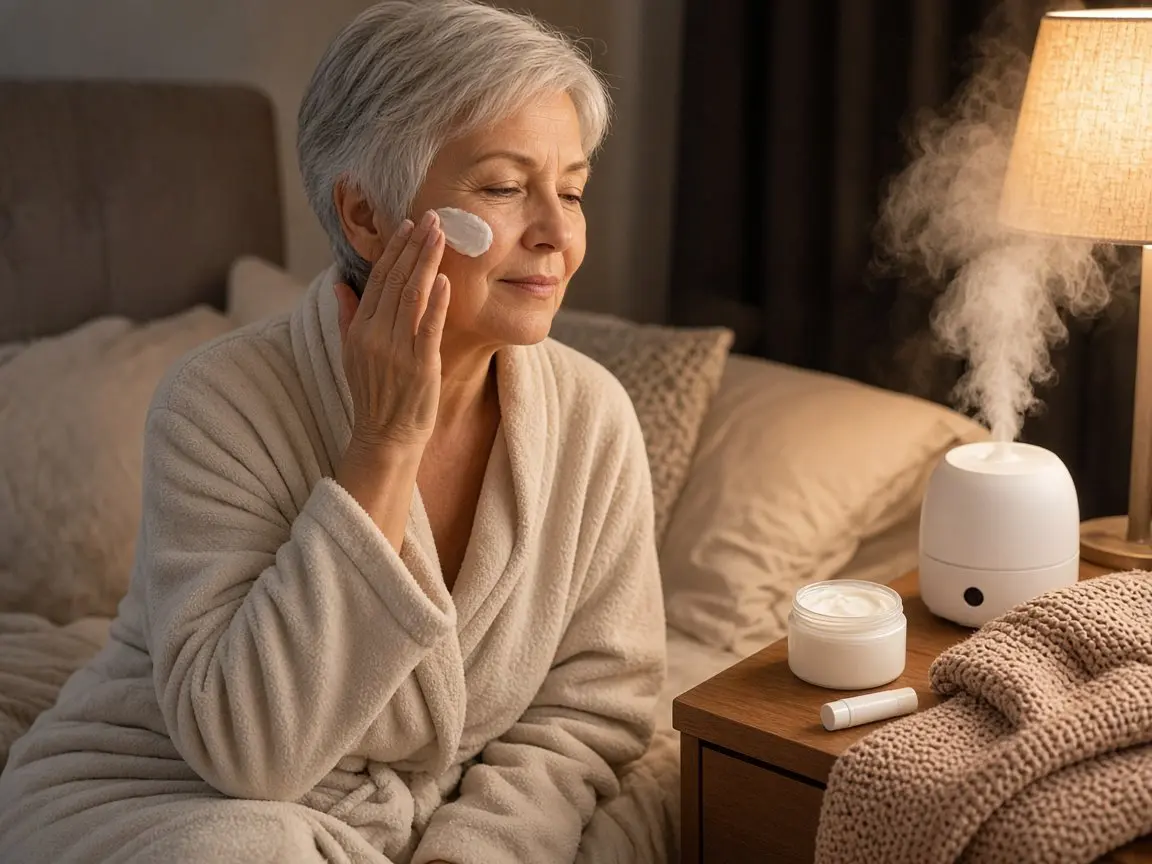
The AAD suggests boosting the humidity in your home with a humidifier, especially in your bedroom overnight. Clean it regularly to prevent mold.
It’s a small, low-effort step that may make heated rooms feel a little kinder to your skin.
7. Go easy on extra exfoliants and actives
The AAD notes that some skin care products are too harsh for dry, sensitive skin. If you use scrubs, peels or strong acids, winter can be a sensible time to cut back and keep your vitamin C serum in winter routine simple.
Add one new product at a time so you know what’s helping and what isn’t.
When Vitamin C Serum in Winter Stings
The AAD advises telling your dermatologist if anything you apply, including moisturizer, causes burning, stinging or irritation. Don’t push through it.
Patch test before you start
The AAD recommends testing a new skin care product on a quarter-sized spot, such as the bend of your elbow, twice daily for seven to 10 days. If you develop a reaction, gently wash it off and don’t use it again.
If you’ve been using your serum for months without trouble and it suddenly stings in January, very dry, chapped skin may be one reason. Our post on why vitamin C serum can burn walks through the most common reasons.
Choose a gentler form of vitamin C
The vitamin C review above mentions that concentrations above 20% haven’t been shown to add benefit and might cause some irritation. Fragrance-free formulas are another plus, since the AAD recommends fragrance-free products for dry skin.
L-ascorbic acid is the classic form, but the review above describes it as unstable. 3-O Ethyl Ascorbic Acid was developed as a stable vitamin C derivative, and a lab study notes it has been used in cosmetics as a stable alternative to L-ascorbic acid for a number of years.
When to see a dermatologist
If your skin cracks, bleeds, itches badly or doesn’t improve with gentle care, see a board-certified dermatologist. The AAD notes that conditions such as atopic dermatitis and psoriasis can cause excessively dry skin, and treating it can keep it from worsening.
A Simple Winter Routine With Vitamin C
Here’s a cozy, no-fuss way to fit a vitamin C serum in winter into your morning:
- Wash with a gentle, fragrance-free cleanser in lukewarm water, then pat dry.
- Apply 1–2 pumps of vitamin C serum to face, neck and chest.
- Follow with a rich cream while skin is still slightly damp.
- Finish with broad-spectrum SPF 30 or higher, even on cloudy days.
- Add lip balm and gloves before heading out into the cold.
At night, cleanse gently, apply your favorite moisturizer, and switch on the humidifier.
Adjusting your vitamin C serum in winter for travel and ski trips
Heading somewhere snowy or high up? The WHO notes that UV levels rise with altitude and fresh snow, so pack a broad-spectrum SPF 30 or higher. The AAD advises reapplying about every two hours when you’re outdoors, even on cloudy days.
Your vitamin C serum in winter can travel with you, too. An airless pump is easy to toss in a toiletry bag, and you’ll only need 1–2 pumps each morning.
How to Tell Your Winter Routine Is Working
Give it time. The 2023 review notes that long-term use may be needed for noticeable changes, so think in months, not days.
In the meantime, a few small signs suggest your vitamin C serum in winter is sitting well with your skin:
- Your face feels comfortable, not tight, an hour after you apply your products.
- There’s no lasting stinging, redness or flaking where you apply the serum.
- Makeup and sunscreen go on smoothly without pilling or patchy dry spots.
If any of those go the wrong way, simplify first. Pause extra actives, keep your cream rich, and consider using your vitamin C serum in winter every other day until your skin settles.
FAQ
Is it OK to use vitamin C serum in winter?
Yes, for most people. Vitamin C may offer antioxidant and brightening support all year. Pair it with a richer moisturizer and daily sunscreen, and patch test first if your skin is very dry.
Is vitamin C serum better in winter or summer?
It can be useful in both. In summer it backs up your sunscreen in strong sun. In winter it may support tone and collagen while UV still reaches your skin through clouds and off snow.
Can a vitamin C serum in winter dry out my skin?
Vitamin C isn’t a moisturizer on its own; in one review, hydration improved equally with vitamin C and placebo. Look for a serum with humectants like glycerin and hyaluronic acid, and follow with a cream.
Should I apply vitamin C serum in winter in the morning or at night?
Morning is a natural fit because vitamin C pairs well with sunscreen. If mornings are rushed, evening use is fine too. Consistency matters more than timing.
Do I still need sunscreen in winter if I use vitamin C?
Yes. The AAD says the sun emits harmful UV rays year-round and recommends daily sunscreen when you’re outside. Vitamin C supports, but doesn’t replace, SPF.
How much vitamin C serum should I use in winter?
The same as the rest of the year: 1–2 pumps for your face, neck and chest. Using more won’t speed things up and may be more likely to irritate dry skin.
Conclusion
Winter doesn’t have to mean dull, tight, uncomfortable skin. Using a vitamin C serum in winter, wrapped in a gentle cleanser, a richer cream, a humidifier and daily sunscreen, is a simple way to help keep your glow going until spring. Small, steady habits tend to matter more than any single product.
If you’re looking for a gentle everyday option, our Trendy Blends 18% Vitamin C Serum pairs 18% 3-O Ethyl Ascorbic Acid with niacinamide, hyaluronic acid, aloe and cucumber. It’s fragrance-free, comes in a 1 oz airless pump for $24.99 with free shipping in 3–4 business days, and is backed by our 60-Day Glow Guarantee with free returns.
Disclaimer: This article is for general educational purposes and isn’t medical advice. Talk to a board-certified dermatologist about skin concerns, very dry or cracked skin, or reactions to products, especially if you have a skin condition or use prescription treatments.
References
- American Academy of Dermatology. Dry skin: who gets and causes. aad.org
- American Academy of Dermatology. Dermatologists’ top tips for relieving dry skin. aad.org
- American Academy of Dermatology. Sunscreen FAQs. aad.org
- American Academy of Dermatology. How to test skin care products.
- World Health Organization. Ultraviolet radiation fact sheet. who.int
- Engebretsen KA, Kezic S, Riethmüller C, et al. Changes in filaggrin degradation products and corneocyte surface texture by season. Br J Dermatol. 2018;178(5):1143-1150. PubMed 29512138
- Goad N, Gawkrodger DJ. Ambient humidity and the skin: the impact of air humidity in healthy and diseased states. J Eur Acad Dermatol Venereol. 2016;30(8):1285-1294.
- Al-Niaimi F, Chiang NYZ. Topical vitamin C and the skin: mechanisms of action and clinical applications. J Clin Aesthet Dermatol. 2017;10(7):14-17. PMC5605218
- Correia G, Magina S. Efficacy of topical vitamin C in melasma and photoaging: a systematic review. J Cosmet Dermatol. 2023;22(7):1938-1945. PubMed 37128827
- Hooper D, Tedaldi R, Iglesia S, Young MB, Kononov T, Zahr AS. Antioxidant skincare treatment for hyperpigmented and photodamaged skin: multi-center, open-label, cross-seasonal case study. J Clin Aesthet Dermatol. 2023;16(10):31-38.
- Iliopoulos F, Sil BC, Moore DJ, Lucas RA, Lane ME. 3-O-ethyl-l-ascorbic acid: characterisation and investigation of single solvent systems for delivery to the skin. Int J Pharm X. 2019;1:100025. PMC6733298
