
Vitamin C Serum for Combination Skin: 7 Simple Tips to Glow
If your forehead is shiny by lunch but your cheeks feel tight after washing, you’ve probably wondered whether a vitamin C serum for combination skin can handle both at once. It’s a fair question, because so much skincare seems made for one skin type or the other.
The good news? You don’t need two serums. Below, we’ll look at why your T-zone and cheeks act so differently, what the research actually says, and seven simple tips for fitting a vitamin C serum for combination skin into your routine after 40.
Table of Contents
What Combination Skin Really Means
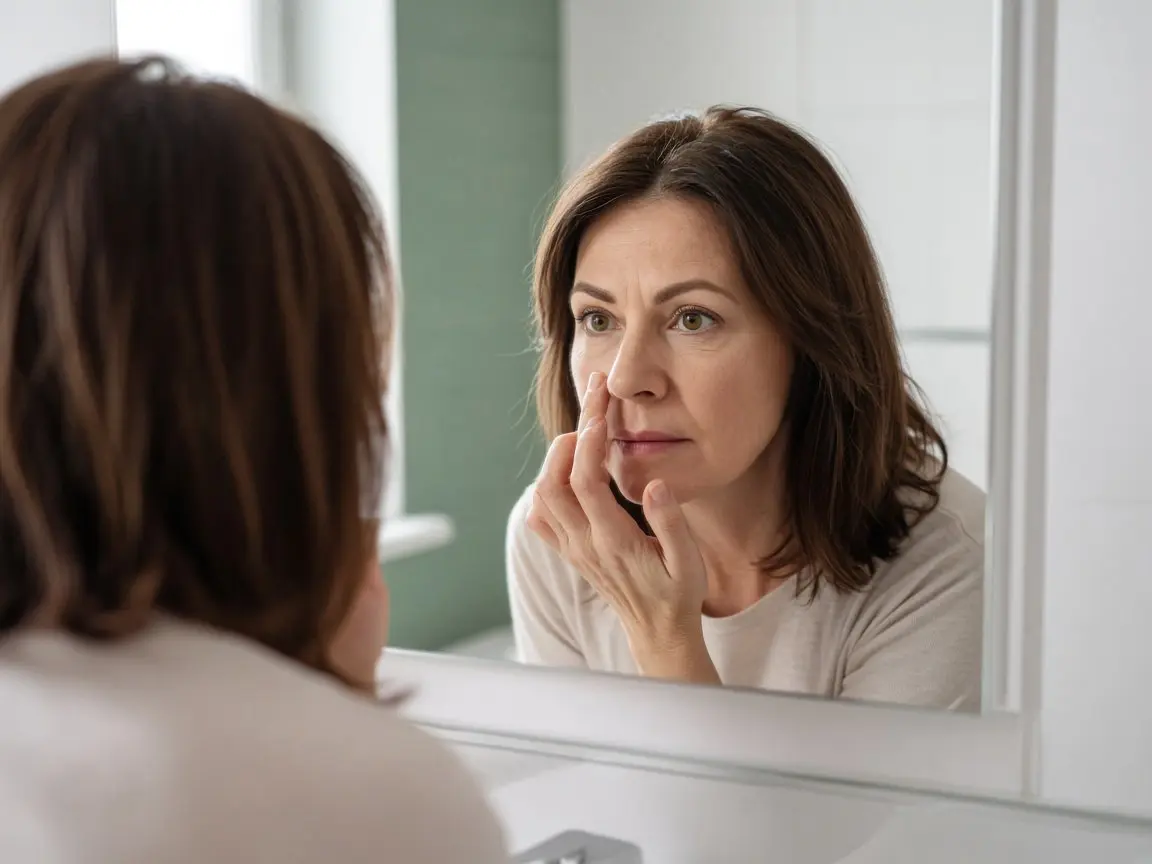
Combination skin is just what it sounds like: some areas run oily while others stay normal or dry.
The T-zone vs. the cheeks
In a year-long study from Seoul National University, dermatologists measured oil at five spots on the face, season by season, in the same volunteers. Sebum on the forehead, nose and chin was higher than on both cheeks.
The researchers also called combination the most common skin type, yet said its definition is vaguer than the others. No wonder so many of us aren’t sure which box to tick.
Your skin type can shift with the seasons
That same study found summer was the highest oil season, with seasonal changes in both the T-zone and the U-zone around the cheeks. So skin that feels like combination skin in July may behave a little differently in January.
It’s one reason a vitamin C serum for combination skin should be light and easy to wear all year, while your moisturizer does the seasonal heavy lifting.
What changes after 40
The American Academy of Dermatology (AAD) says that as we age, skin becomes drier. For some of us, that can mean drier cheeks while the nose and chin still get a little shiny by mid-afternoon.
If dryness has become your main concern, our guide to vitamin C serum for dry skin goes deeper. And if your whole face runs shiny, the oily skin version is the better read.
There’s a silver lining, too. The AAD notes that people with oily skin tend to have thicker skin and fewer wrinkles, so a bit of shine on your forehead isn’t all bad news.
Why a Vitamin C Serum for Combination Skin Makes Sense
A good serum is thin and light, so it can go over your whole face without feeling heavy on the oily parts. That alone makes a vitamin C serum for combination skin easier to live with than a rich cream.
Vitamin C also brings a few science-backed perks that both zones can use.
Antioxidant support for every zone
Vitamin C is an antioxidant. In a small study at Duke University, a serum with 15% L-ascorbic acid, vitamin E and ferulic acid helped protect skin from UV damage.
The authors added that it works differently from sunscreen and would be expected to supplement it. In other words, it’s a teammate for your SPF, never a replacement.
Help for sun-faded tone
In a 6-month double-blind trial on photoaged skin of the low neck and arms, a 5% vitamin C cream led to significant improvement compared with the plain cream base. Both a dermatologist and the volunteers themselves rated the treated side better.
That was body skin rather than the face, but it shows what steady, patient vitamin C use may do for sun-worn skin over time.
A possible bonus for blemish-prone areas
If your T-zone breaks out, this one’s interesting. In a 12-week randomized trial of 50 people, a 5% sodium ascorbyl phosphate lotion, another stable vitamin C derivative, improved acne more than the plain lotion.
The researchers suggest antioxidants may help by preventing the oxidation of sebum, which has been proposed to clog pores. It’s one small trial with a different form of vitamin C, so think of it as promising rather than proven.
What to Look For in a Vitamin C Serum for Combination Skin
The shelves are packed with vitamin C serums. For skin that’s oily in some places and dry in others, a few details matter most.
A stable form of vitamin C
L-ascorbic acid is the best-known form, but it’s less stable in water-based formulas. 3-O Ethyl Ascorbic Acid is a stabilized derivative, and in lab tests it was more stable in water-based solutions than plain ascorbic acid.
Another lab study found 3-O Ethyl Ascorbic Acid has antioxidant ability and inhibits tyrosinase, an enzyme involved in making pigment. That’s lab work rather than a face trial, but it’s one reason this form is used in brightening formulas.
A lightweight, water-based texture
The AAD suggests that people with oily skin choose products labeled “oil free” and “noncomedogenic,” which means they won’t clog pores. A watery serum fits that bill far better than a heavy face oil.
When you’re shopping for a vitamin C serum for combination skin, check the texture and the label before the price tag.
Hydration without grease
Hyaluronic acid binds water without feeling oily, which makes it a nice fit for dry cheeks. In a 60-day study of 76 women aged 30 to 60, creams with 0.1% hyaluronic acid used around the eyes improved skin hydration and elasticity compared with a control cream.
Niacinamide for the T-zone
Niacinamide is a natural partner here. In a double-blind study of 100 Japanese adults, a 2% niacinamide moisturizer significantly lowered the sebum excretion rate after 2 and 4 weeks.
Results were milder in a 6-week split-face study of 30 Caucasian adults: surface oil dropped, but the sebum excretion rate didn’t change significantly. So it may help, and how much can vary from person to person.
In separate trials in Japanese women, niacinamide also reduced the look of hyperpigmentation compared with a plain moisturizer after 4 weeks. Our guide to niacinamide and vitamin C explains how the two get along.
Fragrance-free, in an airless pump
For breakout-prone skin, the AAD suggests skipping sunscreens that contain fragrance or oils. Many people choosing a vitamin C serum for combination skin prefer it fragrance-free, too, so there’s one less thing to wonder about.
An airless pump lets you dispense 1–2 pumps without dipping fingers into the bottle, which makes a vitamin C serum for combination skin easy to use the same way every morning.
7 Simple Tips for Using Vitamin C Serum for Combination Skin
Ready to put it all together? These steps keep things easy for both zones.
1. Wash gently, not harshly
It’s tempting to scrub the shiny parts. The AAD warns that a face wash that’s too harsh can irritate skin and trigger more oil, so choose a mild, gentle foaming cleanser instead.
Use warm water, not hot. The AAD’s guide to making pores less noticeable explains that hot water can irritate skin and make pores look larger.
2. Patch test first
Before your vitamin C serum for combination skin goes on your face, test it. The AAD recommends testing a new product twice a day for seven to 10 days on a quarter-sized spot, like the bend of your elbow.
No redness, itching or swelling after that? You’re good to go.
3. Apply your vitamin C serum for combination skin before moisturizer
Dermatologists suggest a simple order: cleanse, apply any treatment, then moisturizer and/or sunscreen, then makeup. Your serum slots in right after cleansing.
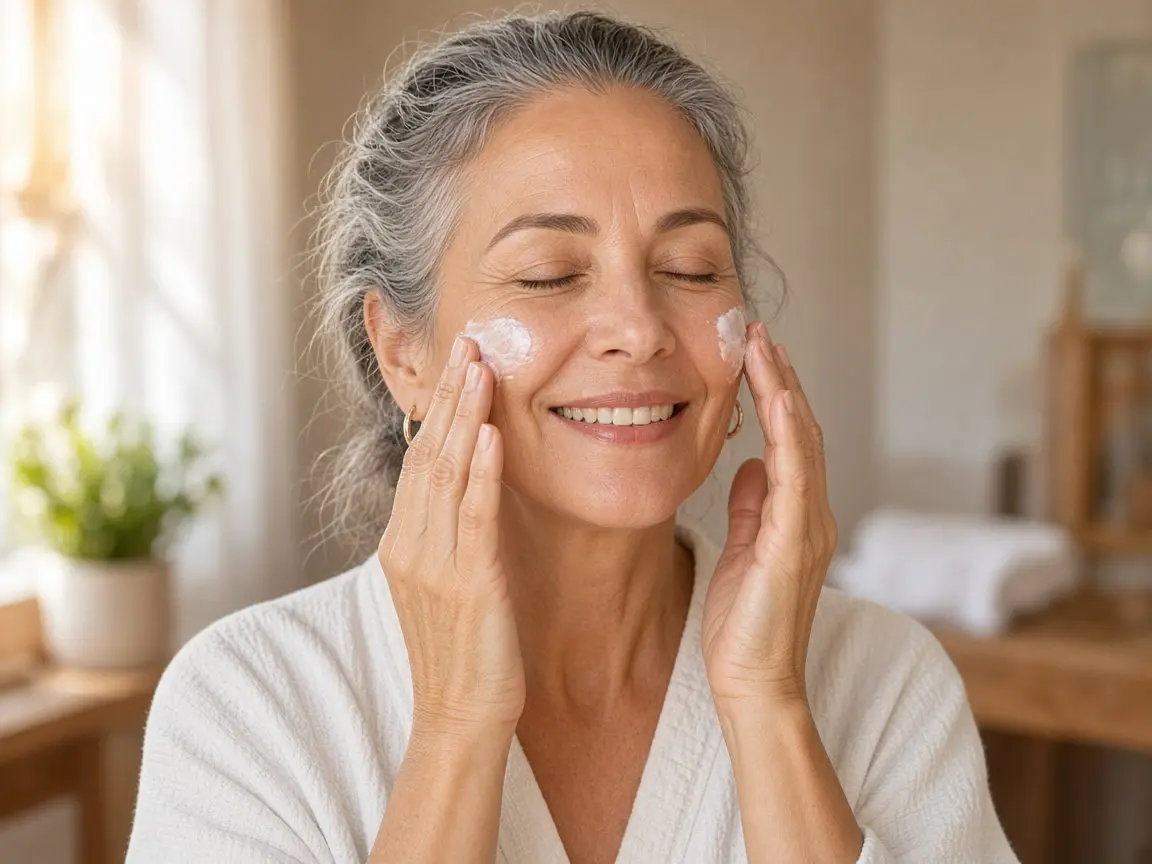
Smooth 1–2 pumps evenly over your whole face and neck. There’s no need to skip the T-zone; just let it sink in for a minute before the next step.
4. Moisturize by zone
Even oily skin needs moisture. The AAD explains that when skin becomes dry, your body makes more oil, which can clog pores and lead to breakouts.
Try a light, oil-free lotion over your whole face, then pat a little extra onto dry cheeks. The AAD also suggests leaving some water on your skin after washing, then applying moisturizer to help trap it in.
5. Wear sunscreen every single morning
Pick a broad-spectrum sunscreen with SPF 30 or higher. For breakout-prone areas, the AAD suggests sunscreens with zinc oxide and titanium dioxide.
Remember, a vitamin C serum for combination skin works alongside sunscreen, not instead of it. Our guide to vitamin C serum and sunscreen walks through the layering order and wait time.
6. Blot, don’t pile on powder
Midday shine on your nose? The AAD recommends gently pressing a blotting paper against your face for a few seconds. Don’t rub it around, because that spreads the oil to other areas.
7. Keep it short and adjust with the seasons
The AAD notes that using too many products, especially several anti-aging products at once, can irritate skin and make signs of aging more noticeable.
Since oil levels shift through the year, it’s fine to use a lighter moisturizer in summer and a richer one on your cheeks in winter. Your vitamin C serum for combination skin can stay exactly the same.
Common Mistakes With a Vitamin C Serum for Combination Skin
A few habits can make two-toned skin feel even more confused.
Fighting shine with harsh products
Strong, drying cleansers feel squeaky clean, but the AAD advises against alcohol-based cleansers and warns that a harsh wash can trigger more oil.
Skipping moisturizer on oily areas
The AAD says moisturizer still matters for oily skin, to keep it hydrated. A light, oil-free layer is usually enough.
Layering too many actives at once
A vitamin C serum for combination skin, a retinol, an acid toner and a peel pad on the same night is a lot to ask of any skin. Introduce one new product at a time.
Expecting overnight results
In the studies above, changes were measured over weeks to months, from 2 to 6 weeks for niacinamide to checks at 3 and 6 months in a vitamin C trial. Patience matters with a vitamin C serum for combination skin.
When to See a Dermatologist
Check in with a board-certified dermatologist if a product burns, causes swelling or a rash, or if oiliness and breakouts don’t improve with a gentle routine.
As the AAD puts it, every person’s skin is different, and there’s no one-size-fits-all approach. A dermatologist can also check any new or changing spots.
FAQ
Is a vitamin C serum for combination skin a good idea?
For many people, yes. A light, water-based serum can go over both oily and dry areas, and vitamin C adds antioxidant support. Patch test first, then follow with moisturizer and sunscreen.
Should I put vitamin C serum on my whole face if I have combination skin?
Usually, yes. Apply 1–2 pumps of your vitamin C serum for combination skin evenly over clean skin, then adjust your moisturizer by zone instead of changing your serum.
Will vitamin C serum make my T-zone oilier?
A light, water-based serum generally feels less greasy than oils or rich creams. If your T-zone gets shinier, check your moisturizer and sunscreen too, and choose oil-free, noncomedogenic formulas.
Can I use vitamin C and niacinamide together on combination skin?
Yes. They’re often paired in the same formula, and in some studies niacinamide lowered facial oil. Our serum includes both.
Should I use vitamin C serum in the morning or at night?
Morning is a natural time for a vitamin C serum for combination skin, since it pairs nicely with sunscreen and vitamin C is an antioxidant. If evenings suit your routine better, that’s fine too. Using it consistently matters most.
How long does it take to see results?
Give your vitamin C serum for combination skin time. In studies, niacinamide was measured over 2 to 6 weeks, while a vitamin C trial on sun-damaged skin checked results at 3 and 6 months. Take photos in the same light every few weeks.
Conclusion
Combination skin isn’t a problem to fix. It’s simply skin with a few different needs on one face, and those needs can shift with the seasons and the years.
A gentle cleanser, a light vitamin C serum for combination skin, a zone-by-zone moisturizer and daily sunscreen can help your T-zone and cheeks feel more balanced.
If you’d like a gentle everyday option, our Trendy Blends 18% Vitamin C Serum pairs 18% 3-O Ethyl Ascorbic Acid with niacinamide, hyaluronic acid, aloe and cucumber. It’s fragrance-free, comes in a 1 oz airless pump for $24.99 with free shipping in 3–4 business days, and is backed by our 60-Day Glow Guarantee with free returns.
Disclaimer: This article is for general educational purposes and isn’t medical advice. Talk to a board-certified dermatologist about skin concerns, new or changing spots, or reactions to products, especially if you have a skin condition or use prescription treatments.
References
- American Academy of Dermatology. How to control oily skin.
- American Academy of Dermatology. Can a moisturizer help clear acne?
- American Academy of Dermatology. How to get the most from your skin care products (apply skin care in a certain order).
- American Academy of Dermatology. How to test skin care products at home.
- American Academy of Dermatology. How to make large pores look smaller.
- American Academy of Dermatology. Skin care in your 40s and 50s.
- American Academy of Dermatology. How to select a sunscreen.
- Youn SW, Na JI, Choi SY, Huh CH, Park KC. Regional and seasonal variations in facial sebum secretions: a proposal for the definition of combination skin type. Skin Res Technol. 2005;11(3):189-195.
- Murray JC, Burch JA, Streilein RD, et al. A topical antioxidant solution containing vitamins C and E stabilized by ferulic acid provides protection for human skin against damage caused by ultraviolet irradiation. J Am Acad Dermatol. 2008;59(3):418-425.
- Humbert PG, Haftek M, Creidi P, et al. Topical ascorbic acid on photoaged skin. Clinical, topographical and ultrastructural evaluation: double-blind study vs. placebo. Exp Dermatol. 2003;12(3):237-244.
- Woolery-Lloyd H, Baumann L, Ikeno H. Sodium L-ascorbyl-2-phosphate 5% lotion for the treatment of acne vulgaris: a randomized, double-blind, controlled trial. J Cosmet Dermatol. 2010;9(1):22-27.
- Golonka I, Oleksy M, Junka A, et al. Selected physicochemical and biological properties of ethyl ascorbic acid compared to ascorbic acid. Biol Pharm Bull. 2017;40(8):1199-1206.
- Liao WC, Huang YT, Lu LP, Huang WY. Antioxidant ability and stability studies of 3-O-ethyl ascorbic acid, a cosmetic tyrosinase inhibitor. J Cosmet Sci. 2018;69(4):233-243.
- Pavicic T, Gauglitz GG, Lersch P, et al. Efficacy of cream-based novel formulations of hyaluronic acid of different molecular weights in anti-wrinkle treatment. J Drugs Dermatol. 2011;10(9):990-1000.
- Draelos ZD, Matsubara A, Smiles K. The effect of 2% niacinamide on facial sebum production. J Cosmet Laser Ther. 2006;8(2):96-101.
- Hakozaki T, Minwalla L, Zhuang J, et al. The effect of niacinamide on reducing cutaneous pigmentation and suppression of melanosome transfer. Br J Dermatol. 2002;147(1):20-31.
