
Vitamin C Serum Before Makeup: 7 Easy Tips to Avoid Pilling
If you’ve ever smoothed on vitamin C serum before makeup only to watch your foundation roll into tiny crumbs, you’re in good company. It’s frustrating, especially when you’ve spent good money on both.
The upside? Pilling is often a layering problem, not a sign that your serum or your skin is wrong. A few small changes to how much you use, how you apply it, and how long you pause can make a real difference.
Below, you’ll find the right order for every step, why pilling happens, and seven easy tips for wearing vitamin C serum before makeup on mature, 40+ skin. Think of it as a calm, glowy morning, minus the eraser crumbs.
Table of Contents
Can You Use Vitamin C Serum Before Makeup?
Yes. In fact, morning is a natural home for vitamin C. A review by two consultant dermatologists of topical vitamin C calls it one of the most powerful antioxidants in the skin and says it has been shown to help protect against photoaging.
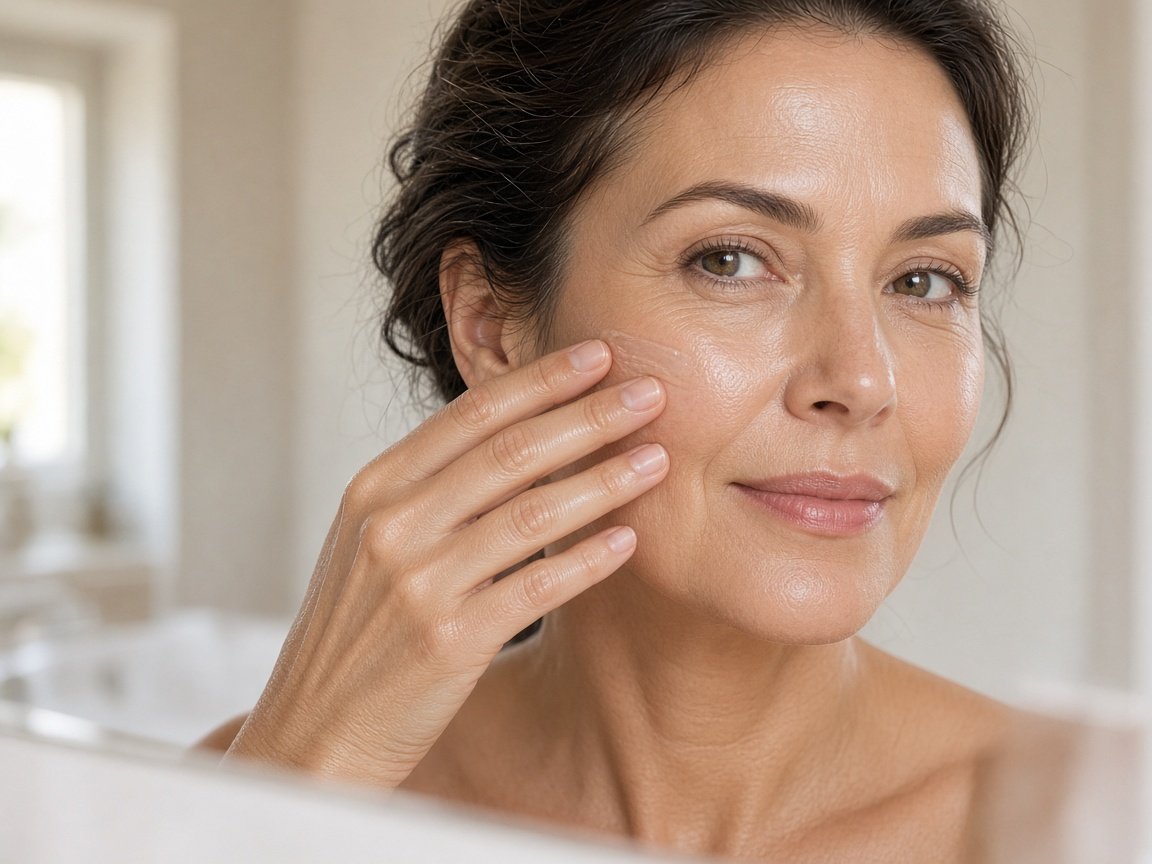
The same review says vitamin C supports collagen and decreases melanin formation, which reduces pigmentation. Those are daytime-friendly perks, and one reason many routines place vitamin C serum before makeup and sunscreen.
What the science does and doesn’t say
Here’s the honest part. That review also notes that clinical studies on topical vitamin C formulas remain limited, and a 2017 review on vitamin C in skin health says how well topical vitamin C works, compared with getting enough from your diet, is still poorly understood.
So think of vitamin C serum before makeup as a smart daily habit, not a miracle. And for pilling, the science is even thinner, so the tips below are practical, real-life advice rather than research findings.
What Is Pilling, and Why Does It Happen?
Pilling is when skincare or makeup balls up into little flakes or crumbs as you smooth on the next layer. It tends to show up right when you’re blending foundation, which is the worst possible moment.
There isn’t much formal research on pilling itself, but not giving each product enough time to absorb is a common cause, and these everyday culprits come up again and again in beauty advice.
The usual suspects
- Too much product. Extra serum or moisturizer has nowhere to go, so it sits on the surface.
- Rushing the next layer. Spreading a cream over a still-wet layer can drag both around.
- Rubbing instead of pressing. Friction rolls films up into balls.
- Too many layers. Every extra product is another chance for textures to clash.
- Mismatched formulas. Some water-based and silicone-heavy products just don’t sit well together.
Why mature skin can make it trickier
The AAD’s guide to skin care in your 40s and 50s notes that as we age, skin becomes drier. Dry, flaky patches can give foundation something to cling to, and many of us reach for richer creams to compensate.
Richer creams plus a serum plus sunscreen plus primer adds up fast. That’s a lot of layers under your foundation, so a lighter hand often helps more than a new product.
The Right Order for Vitamin C Serum Before Makeup
The American Academy of Dermatology (AAD) has a simple answer to what order to apply skin care products: wash your face, apply any treatment, add moisturizer and/or sunscreen, then apply makeup. The AAD says the sequence affects how well your products work.
Your vitamin C serum before makeup counts as the treatment step, so it goes on right after cleansing. Here’s how that looks on a typical morning:
- Cleanse with a gentle cleanser and pat dry.
- Smooth on 1–2 pumps of vitamin C serum.
- Follow with a moisturizer suited to your skin.
- Apply a broad-spectrum sunscreen, SPF 30 or higher.
- Add primer, if you use one.
- Finish with foundation and the rest of your makeup.
Where sunscreen fits
Sunscreen is the last skincare step before makeup. Cleveland Clinic dermatologist Amy Kassouf, MD, says sunscreen should go on before makeup, because “sunscreen works best when applied directly to clean skin.”
She also suggests giving sunscreen a few minutes to dry and sink in before you start your makeup, since starting too early may undermine your SPF. Vitamin C serum before makeup is a lovely partner to sunscreen, never a replacement for it.
If you’d like the full layering story, our guide to vitamin C serum and sunscreen covers the order in more detail.
7 Easy Tips for Vitamin C Serum Before Makeup
These tips mix dermatologist guidance with practical, mirror-tested common sense. Try one or two at a time so you can see what actually fixes your pilling.
1. Start with clean, dry skin
The AAD suggests washing with a gentle cleanser and gently patting dry. Its 40s-and-50s guide also recommends a mild cleanser over soap and advises against scrubbing your skin clean.
Starting with skin that’s clean and calm gives your vitamin C serum before makeup a smooth canvas. It also means less leftover residue for later layers to grab onto.
2. Use less vitamin C serum before makeup
More serum doesn’t mean more glow. With our serum, 1–2 pumps is the usual amount for one use.
If you’re seeing crumbs, try the smaller amount first. Excess product that sits on the surface is a common reason layers pill.
3. Press and pat, don’t rub
Warm the serum between your fingertips, then press it into your cheeks, forehead, and chin. Gentle patting spreads it without the friction that rolls layers into little balls.
The AAD suggests using your ring finger around the eyes, because it’s the weakest finger and won’t pull too hard on delicate skin. That gentle touch works beautifully everywhere on mature skin.
4. Let each layer settle
There’s no official stopwatch for vitamin C serum before makeup. A wait of about 1–2 minutes after vitamin C is a common suggestion, though advice varies a lot.
A practical rule is to wait until your skin no longer feels wet or slippery before adding moisturizer. Use the pause to brush your hair or pour your coffee. Our guide on how long to wait after vitamin C walks through timing for each step.
For sunscreen, Dr. Kassouf’s advice to wait a few minutes before makeup is a good habit. And if you’re heading outside, the AAD’s sunscreen guide says it takes approximately 15 minutes for skin to absorb sunscreen and protect you.
5. Keep your routine short
The AAD warns that using too many products may irritate the skin, especially if you use more than one anti-aging product. It adds that this often makes the signs of aging more noticeable.
Fewer layers also means fewer chances for pilling. One treatment serum, one moisturizer, and one sunscreen is plenty for most mornings with vitamin C serum before makeup.
6. Go light on moisturizer and primer
Moisturizer matters for mature skin, and the AAD says it traps water in the skin, giving it a more youthful appearance. You just may not need a thick layer under foundation.
Try a lighter lotion in the morning and save rich creams for night. If your skin runs oily, our guide to vitamin C serum for oily skin has more ideas for a lighter routine. If you use primer, a thin layer is usually enough, and you may find you can skip it on easy days.
7. Apply foundation with pressing motions
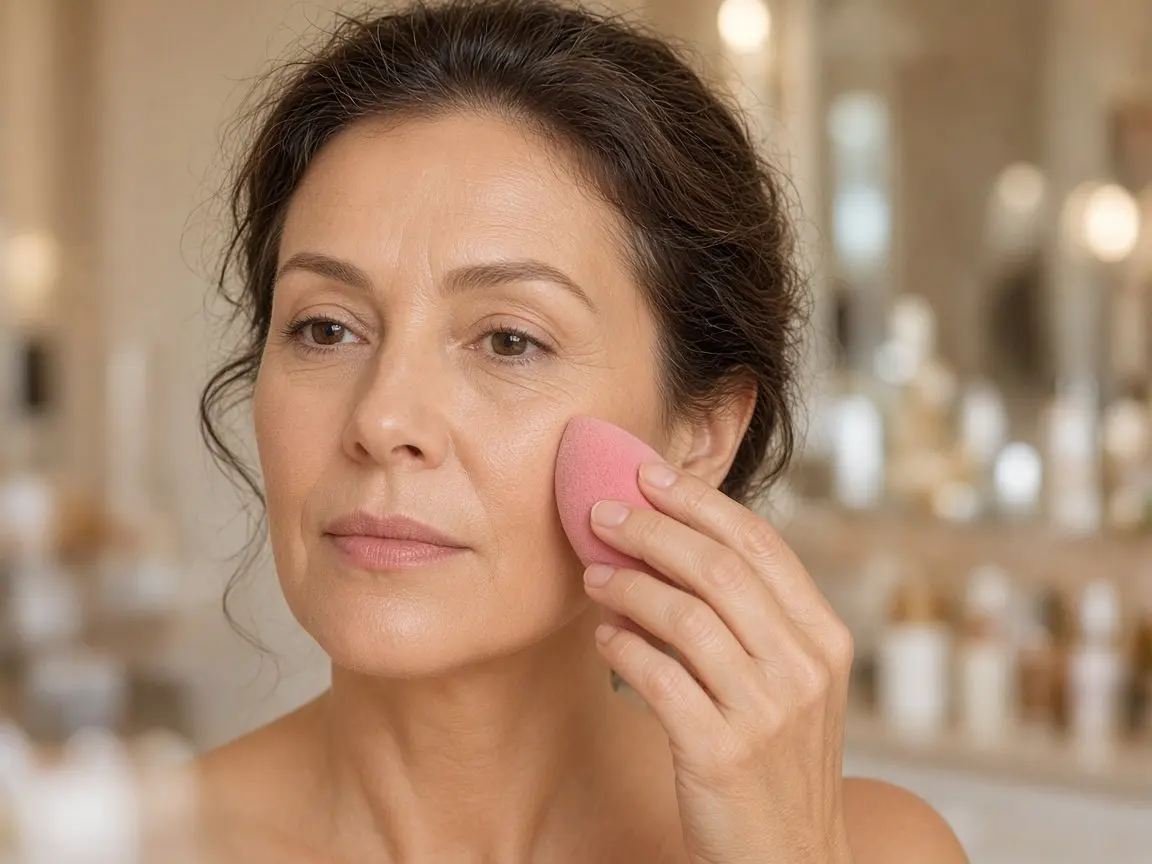
Instead of sweeping foundation across your face, press or stipple it on with a damp sponge, brush, or fingertips. Pressing tends to disturb the layers underneath less than dragging does.
If you still see crumbs, pause and blot gently rather than rubbing harder. Then try tips 2 and 4 again tomorrow, since too much product and too little wait time are common causes.
Don’t Count on SPF Makeup Alone
It’s tempting to let a foundation with SPF do double duty. But according to Dr. Kassouf, you’re probably getting about half the protection you think from SPF makeup, because people apply much less than the amount used in SPF testing.
Her fix is simple: wear sunscreen with at least SPF 30, then makeup with SPF 30 on top. The AAD also notes that a tinted sunscreen with iron oxide better protects your skin from developing dark spots, since iron oxide protects against visible light.
The AAD recommends at least 1 teaspoon of sunscreen for your face and reapplying every two hours when you’re outdoors. Dr. Kassouf says mineral powders are great for reapplying over makeup.
Choosing a Vitamin C Serum Before Makeup
Not every serum behaves the same under foundation. Texture, formula, and packaging all play a part in how your vitamin C serum before makeup wears through the day.
A stable form of vitamin C
Classic L-ascorbic acid is well studied, but researchers describe it as unstable, readily oxidizing on exposure to air. A lab study on 3-O-ethyl-L-ascorbic acid describes it as a stable vitamin C derivative used in topical products.
In lab tests on pig skin, 3-O Ethyl Ascorbic Acid got into the skin from several common cosmetic solvents, including glycerol and 1,2-hexanediol. It’s early research, and our serum itself wasn’t tested, but it’s one reason we chose this form. Our guide to forms of vitamin C compares the options.
A lightweight, fragrance-free formula
For makeup days, a lightweight, water-based serum is easy to layer. Fragrance-free is one less thing to think about if your skin is easily bothered, especially on days you’ll wear several layers on top.
Packaging matters too. With an airless pump, counting 1–2 pumps makes it easy to keep your vitamin C serum before makeup to a small, consistent amount.
Patch test before a big day
The AAD’s advice on testing skin care products is to apply a new product to a quarter-sized spot, such as the underside of your arm or the bend of your elbow, twice daily for seven to 10 days.
Plan ahead, so you’re not trying a brand-new vitamin C serum before makeup on the morning of a wedding or big meeting. If your skin turns red, itchy, or swollen, the AAD says to gently wash the product off and not use it again.
Our Pick: Trendy Blends 18% Vitamin C Serum
If you’re looking for a vitamin C serum before makeup that keeps things simple, our Trendy Blends 18% Vitamin C Serum is built around 18% 3-O Ethyl Ascorbic Acid, with niacinamide, hyaluronic acid, aloe, and cucumber. It’s fragrance-free and comes in a 1 oz airless pump.
Use 1–2 pumps each morning, let it settle, then follow with moisturizer and sunscreen. It’s $24.99 with free shipping in 3–4 business days, plus our 60-Day Glow Guarantee with free returns.
FAQ
Should I put vitamin C serum before makeup or after?
Before. The AAD suggests cleansing, applying any treatment, then moisturizer and/or sunscreen, with makeup last. Vitamin C serum is the treatment step, right after cleansing.
How long should I wait after vitamin C serum before makeup?
There’s no official rule. Wait until your skin no longer feels wet or slippery before moisturizer, and give sunscreen a few minutes to dry before foundation.
Why does my foundation pill over vitamin C serum?
Pilling is often about layering, not the serum itself. Common causes include using too much product, rushing the next layer, rubbing instead of pressing, and stacking too many products.
Can I use vitamin C serum before makeup every day?
Yes, if your skin tolerates it. Patch test first, and stop if you notice redness, itching, or swelling.
Do I still need sunscreen if my foundation has SPF?
Yes. A Cleveland Clinic dermatologist says you probably get about half the protection you think from SPF makeup, so wear sunscreen with at least SPF 30 underneath.
Can vitamin C serum replace my primer?
It isn’t designed to. Still, on easy days you may find a lightweight serum and moisturizer feel smooth enough to skip primer, so try it on a low-stakes day first.
Conclusion
A vitamin C serum before makeup can be a lovely way to start the day, as long as you treat it as the first thin layer, not the main event. Use 1–2 pumps, press it in, let it settle, and keep the rest of your routine short.
Then finish with sunscreen and a gentle hand with foundation. Your glow, and your makeup, will thank you.
Disclaimer: This article is for general educational purposes only and isn’t medical advice. If you have a skin condition, sensitive skin, or concerns about any product, please talk with a board-certified dermatologist before starting something new.
References
- Al-Niaimi F, Chiang NYZ. Topical vitamin C and the skin: mechanisms of action and clinical applications. J Clin Aesthet Dermatol. 2017;10(7):14-17. PMC
- Pullar JM, Carr AC, Vissers MCM. The roles of vitamin C in skin health. Nutrients. 2017;9(8):866. PMC
- American Academy of Dermatology. Dermatologist-recommended skin care for your 40s and 50s.
- American Academy of Dermatology. Should I apply my skin care products in a certain order?
- Cleveland Clinic. Should you put sunscreen on before makeup?
- American Academy of Dermatology. How to apply sunscreen.
- Iliopoulos F, Sil BC, Moore DJ, Lucas RA, Lane ME. 3-O-ethyl-l-ascorbic acid: characterisation and investigation of single solvent systems for delivery to the skin. Int J Pharm X. 2019;1:100025. PMC
- American Academy of Dermatology. How to test skin care products.
