
Flawless Skin: 5 Proactive Ways to Achieve a Clear, Even Complexion

Flawless skin is a popular goal, but no one’s skin is truly perfect. What most of us really want is skin that looks clear, even and healthy, with fewer breakouts and dark spots. The good news is that a few simple, dermatologist-backed habits get you most of the way there.
Below are 5 proactive ways to achieve flawless-looking skin, from a gentle routine and daily sunscreen to fading dark spots with vitamin C, plus a simple routine and tips on when to see a dermatologist.
Table of Contents
What “Flawless Skin” Really Means
Real skin has pores, texture and the occasional blemish. Filters and heavy editing on social media make it easy to forget that. A healthier goal is clearer skin with an even skin tone, that feels comfortable and breaks out less often. That is what we mean by flawless skin in this guide.
The main things that get in the way are breakouts, dark spots and uneven tone, redness and irritation, and dullness. Each one responds to slightly different care, which is why the steps below work best together for clearer skin.
Breakouts
Pimples form when oil, dead skin cells and bacteria clog pores. Hormones, harsh skin care and pore-clogging products can all make them more likely. Each pimple can also leave a mark behind, so preventing breakouts is the first step toward an even complexion.
Dark Spots and Uneven Tone
Dark spots appear when skin makes extra melanin, often after sun exposure or inflammation such as acne. These marks can linger long after the pimple itself has healed, especially in medium and darker skin tones. Read more about what hyperpigmentation is.
Redness and Dullness
Redness often comes from irritation, such as scrubbing, over-washing or too many active ingredients. Dullness usually means a buildup of dead cells on the surface or dehydrated skin. Both improve with gentler care, moisturizer and a little patience. If redness won’t settle, it may be worth checking for a damaged skin barrier.
5 Proactive Ways to Achieve Flawless Skin
1. Keep Your Routine Gentle and Consistent
A simple routine you do every day beats a complicated one you skip, and it is the foundation of flawless skin. The American Academy of Dermatology (AAD) advises washing your face twice a day, when you wake up and before bed, and after sweating. Washing more often than that can irritate skin and lead to more breakouts.
Be gentle. The AAD warns that scrubbing irritates skin and can make acne flare, and it suggests avoiding astringents and rubbing alcohol. Dermatologist Melissa Piliang tells Cleveland Clinic that hot water washes away the skin’s natural oils, so use lukewarm water instead.
Then moisturize. Even oily skin benefits: the AAD recommends moisturizing after cleansing, using an oil-free formula. Choose skin care, sunscreen and makeup labeled “non-comedogenic,” which means they are formulated not to clog pores.
2. Wear Sunscreen Every Day
Sun exposure is one of the biggest causes of dark spots, uneven tone and early aging, so daily sunscreen is essential for an even skin tone. The AAD recommends a broad-spectrum, water-resistant sunscreen with SPF 30 or higher, applied every day to all skin not covered by clothing.
If you are prone to dark spots, the AAD’s dark-spot guide suggests a tinted sunscreen with iron oxide, which also helps protect against visible light. Reapply every two hours outdoors and after swimming or sweating. See how to pair vitamin C serum with sunscreen.
3. Treat Breakouts Early, and Don’t Pick
Blemishes are often what stands between you and flawless skin, and how you handle them matters. The AAD lists a few habits that make acne worse:
- Popping or squeezing pimples. This can push bacteria and debris deeper into the skin, increasing inflammation and the risk of scars.
- Spot-treating only. To prevent new breakouts, apply a thin layer of acne treatment over the whole area where you tend to break out.
- Switching products too fast. Give a treatment 6 to 8 weeks to show improvement. Complete clearing generally takes 3 to 4 months.
- Sharing makeup or brushes, which can lead to blemishes even with non-comedogenic products.
If you have deep or painful acne, the AAD says seeing a dermatologist is necessary to help clear it. For a simple oily-skin plan, see our basic skincare routine for oily skin.
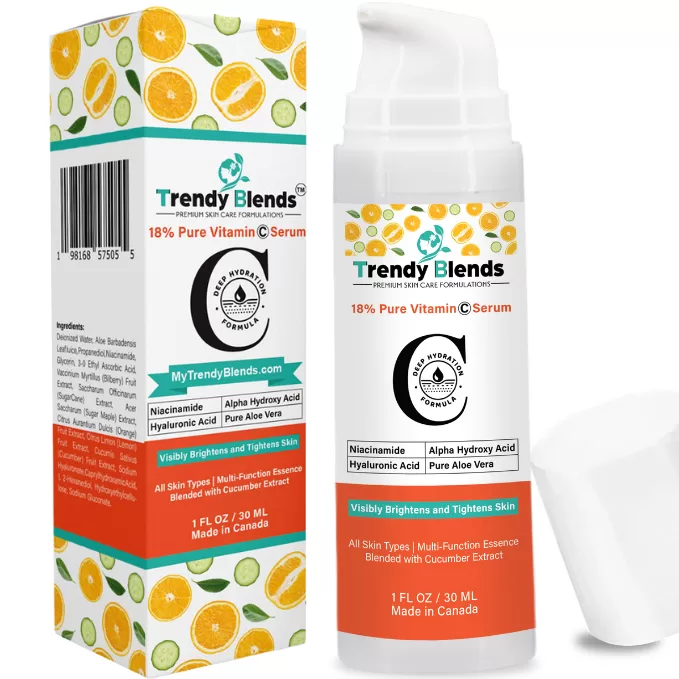
Flawless Skin Begins with Trendy Blends Vitamin C Serum. An Exceptional SkinCare Serum.

4. Fade Dark Spots With Vitamin C
Dark spots and post-acne marks get in the way of an even skin tone, even after breakouts clear. Vitamin C interferes with tyrosinase, the enzyme behind melanin, according to a dermatology review. The AAD lists vitamin C, along with azelaic acid, glycolic acid, kojic acid and retinoids, among the ingredients that can fade existing dark spots.
Niacinamide is a helpful partner. In a clinical study, it reduced pigmentation by limiting how pigment moves into skin cells. Cleveland Clinic recommends applying vitamin C in the morning, because it works in synergy with sunscreen.
Be patient. The AAD says a spot a few shades darker than your skin usually fades within 6 to 12 months once the cause is under control, while deeper pigment can take longer. Learn more about the ingredients that fade dark spots.
5. Sleep Well and Look After Your Health
Sleep shows on your skin. In a study of 60 women, good sleepers had fewer signs of intrinsic skin aging than poor sleepers, and their skin barrier recovered about 30% better after a tape-stripping test.
Other habits help too. The AAD notes that smoking greatly speeds up skin aging, and that a few studies suggest a diet rich in fruits and vegetables may help prevent damage that leads to premature aging.
Makeup Tips for a Flawless Look Without Breakouts
Makeup can even out your skin tone instantly, but the wrong habits can cause the very breakouts you are trying to cover. The AAD offers a few simple rules:
- Choose non-comedogenic products. Some makeup contains oil or other ingredients that can clog pores. Products labeled “non-comedogenic” or “won’t clog pores” don’t cause breakouts in most people.
- Never sleep in makeup. Even non-comedogenic makeup can cause acne if you leave it on overnight. If you are too tired to wash your face, use a makeup remover towelette.
- Don’t share makeup, brushes or applicators. Other people’s oil, dead skin cells and bacteria can end up in your products.
- Wash your brushes and sponges regularly so old makeup and oil don’t build up.
A tinted sunscreen with iron oxide can double as a light base on easy days, giving you some coverage while protecting against the sun and visible light that can darken spots.
Myths About Getting Flawless Skin
- “The more you wash, the clearer your skin.” The AAD says washing too often irritates skin and can cause more breakouts. Twice a day is enough.
- “A good scrub clears acne.” Scrubbing irritates skin and can make acne flare. Gentle cleansing works better.
- “Oily skin doesn’t need moisturizer.” Skin can be oily and still lack water. Use a light, oil-free moisturizer.
- “Popping a pimple makes it heal faster.” It can push debris deeper, increase inflammation and raise the risk of a scar or dark mark.
- “You only need sunscreen on sunny days.” UV rays reach your skin on cloudy days too, and sun exposure darkens spots year-round.
Letting go of these myths often does more for your skin than buying another product. When in doubt, choose the gentler option: skin that isn’t irritated has a much easier time staying clear, calm and even.
A Simple Routine for Flawless Skin
Morning
- Wash with a gentle, non-comedogenic cleanser and lukewarm water.
- Apply 1–2 pumps of vitamin C serum to dry skin.
- Moisturize with a light, oil-free formula.
- Finish with broad-spectrum SPF 30 or higher, tinted with iron oxide if you are prone to dark spots.
Evening
- Remove makeup and sunscreen, then cleanse.
- Apply your acne treatment or a retinoid in a thin layer over breakout-prone areas, starting a few nights a week.
- Moisturize.
Add one new product at a time and give it at least 6 to 8 weeks. For more texture tips, read our 9 proactive tips for smooth skin.
How Long Does It Take to Get Flawless Skin?
Different problems clear on different timelines, so set your expectations by concern:
- Redness and irritation: often calm within a few weeks once you switch to a gentler routine.
- Breakouts: the AAD says acne treatments need 6 to 8 weeks to show improvement, and complete clearing generally takes 3 to 4 months.
- Dark spots: marks a few shades darker than your skin usually fade within 6 to 12 months, as long as you keep wearing sunscreen. Deeper pigment can take longer.
Taking a photo in the same light once a month helps you see progress that is hard to notice day to day. Flawless skin is a long game, and consistency matters more than any single product. If you have been patient and see no change after a few months, that is a good time to get a dermatologist’s advice rather than adding more products.
Where Trendy Blends Vitamin C Serum Fits In
The Trendy Blends 18% Vitamin C Serum combines 18% 3-O ethyl ascorbic acid, a stable form of vitamin C, with niacinamide, hyaluronic acid, aloe and cucumber. That puts two tone-evening ingredients in one lightweight step.
It is fragrance-free and comes in a 1 oz airless pump. Use 1–2 pumps each morning before moisturizer and sunscreen. It costs $24.99 with free shipping in 3–4 business days and is backed by our 60-Day Glow Guarantee. Read more about vitamin C serum for acne marks.
When to See a Dermatologist
The AAD notes that many people can control acne with good skin care and nonprescription treatment, but if acne continues after giving those steps a fair chance, a dermatologist can help, and some people need prescription-strength treatment. See a board-certified dermatologist sooner for deep or painful acne, or for dark patches that keep coming back. With the right help, the AAD says, virtually everyone who has acne can see clearer skin.
Frequently Asked Questions
How can I get flawless skin naturally?
Focus on the basics: wash gently twice a day, moisturize, wear sunscreen every day, don’t pick at blemishes, and get enough sleep. No one’s skin is truly flawless, but these habits make it clearer and more even.
How long does it take to see clearer skin?
The AAD says acne treatments need 6 to 8 weeks to show improvement and 3 to 4 months to clear. Dark spots that are a few shades darker than your skin usually fade within 6 to 12 months.
Does vitamin C serum help with an even skin tone?
It can. Vitamin C slows the enzyme that makes melanin, and the AAD lists it among the ingredients that can fade dark spots. Use it in the morning under sunscreen.
Can vitamin C serum help with acne marks?
It can help fade the flat, dark marks that pimples leave behind. Deep, pitted acne scars usually need treatment from a dermatologist.
How often should I use vitamin C serum?
Once a day in the morning works well. Apply 1–2 pumps to clean, dry skin, then moisturizer and sunscreen. If you have sensitive skin, start every other day.
Conclusion: Flawless Skin Is About Consistency
Flawless skin isn’t about perfection. It comes from small habits done every day: gentle cleansing, moisturizer, daily sunscreen, treating breakouts without picking, fading dark spots with ingredients like vitamin C and niacinamide, and getting enough sleep.
Start with the basics, add one new step at a time, and give your skin a few months. Clearer skin and a more even skin tone are realistic goals. For more ideas, see how to get glowing skin.

