
Vitamin C Serum on Sunburn: 7 Smart, Soothing Tips
Thinking about putting vitamin C serum on sunburn because it’s the “brightening, repairing” bottle on your shelf? It’s a fair question, especially after a sunny getaway or a bright day on the slopes. The short answer: skip it while the burn is fresh, soothe your skin first, and bring your serum back once the redness and tenderness have settled.
Below, we’ll walk through what a sunburn actually does, why vitamin C serum on sunburn is a timing question more than a yes-or-no one, and seven smart tips for getting your glow back without the sting, especially if your skin is over 40.
Table of Contents
What a Sunburn Does to Your Skin
A sunburn is inflamed, painful skin that feels hot to the touch, and it often shows up within a few hours of too much sun, according to Mayo Clinic. UV light damages skin cells, and your immune system responds by sending more blood to the area. That’s the redness you see.
Within a few days, skin may start to peel as it sheds the damaged top layer. A bad burn can take several days to heal. And yes, you can burn on cool or cloudy days, and snow, sand and water reflect UV rays too.
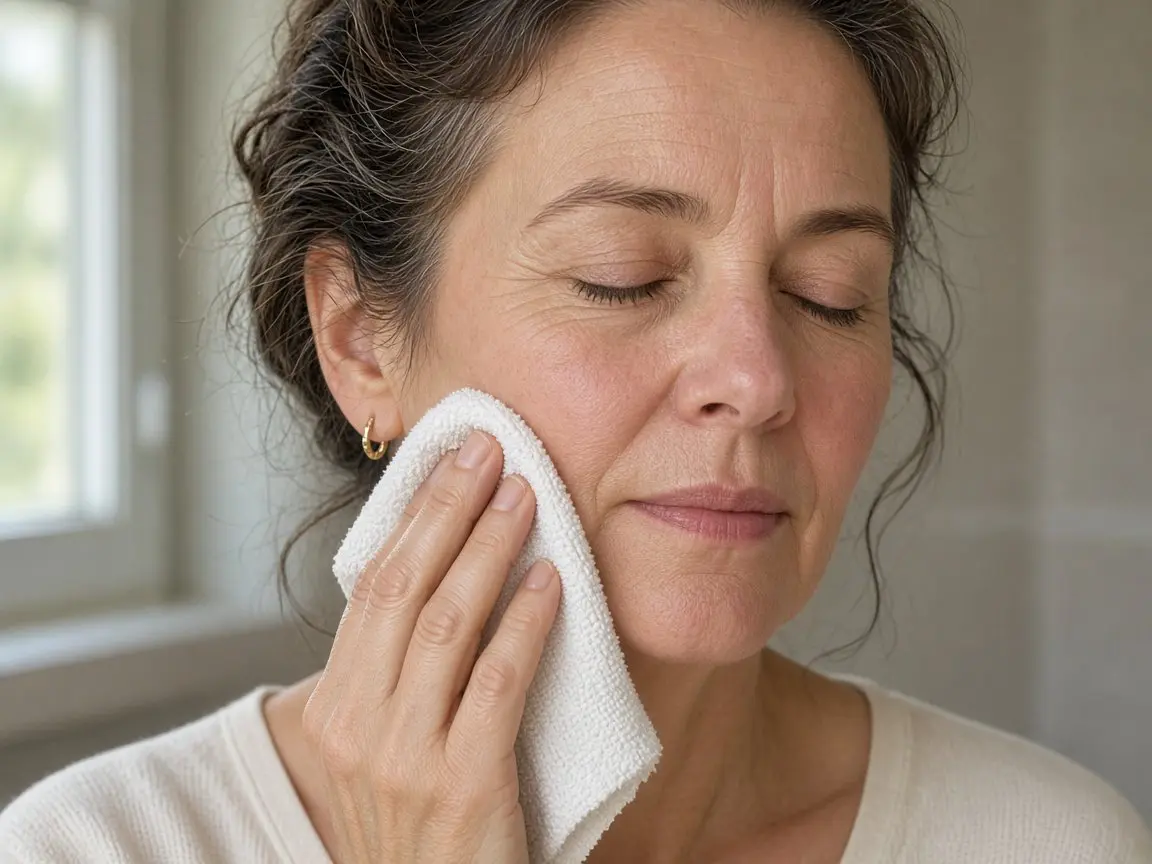
Why mature skin needs a little extra patience
Many of us notice that skin feels drier and more reactive with age, so a burn can feel tight for longer. That’s a good reason to treat a sunburn gently rather than pile on actives the same evening, and why we’re cautious about vitamin C serum on sunburn in the first few days.
Sun exposure and repeated sunburns also speed up skin aging, Mayo Clinic notes, with changes like deep wrinkles, rough texture and dark spots on the face, hands and chest. So the bigger goal is preventing the next burn, not just fixing this one.
Can You Put Vitamin C Serum on Sunburn?
We didn’t find any clinical trial that tested vitamin C serum on sunburn that had already happened. The research on topical vitamin C and UV is about applying it before sun exposure, mostly in pig skin and small human studies. So this guidance rests on dermatologist sunburn advice plus what those studies actually measured.
Here’s our take: when skin is hot, raw, blistered or peeling, using vitamin C serum on sunburn is more likely to sting than to help. Vitamin C serums can tingle even on healthy skin, as we explain in why vitamin C serum can tingle or burn. Broken or inflamed skin tends to feel that more.
What dermatologists recommend instead
The American Academy of Dermatology suggests getting out of the sun, taking cool baths or showers, and gently patting skin dry. Then apply a moisturizer with aloe vera or soy while skin is still damp.
The AAD also suggests calamine lotion, a cool damp washcloth or a colloidal oatmeal bath for discomfort. You can consider aspirin or ibuprofen for swelling and discomfort, and drink extra water, because a sunburn draws fluid toward the skin’s surface.
If you blister, leave the blisters alone. The AAD says not to pop them, to keep them clean, and to protect them with petroleum jelly while they heal.
What the Research Says About Vitamin C and UV
This is where vitamin C gets interesting, as long as we’re honest about what was tested. In a 1992 study on pig skin, topical vitamin C raised the skin’s vitamin C levels, and that tracked with less redness and fewer “sunburn cells” after UVB (Darr et al.).
The same researchers reported that, in pig skin, UV exposure severely depleted vitamin C levels. That’s one reason antioxidants get so much attention in sun-care routines. Notice, though, that none of these studies applied vitamin C serum on sunburn after the fact.
Vitamin C works better with a partner
A 2003 pig-skin study applied 15% L-ascorbic acid and 1% vitamin E daily for four days before UV exposure. Each helped on its own, but the combination gave stronger protection against redness and sunburn cells (Lin et al.).
In human skin, a 2008 study tested a vitamin C, E and ferulic acid formula applied for four days before UV. It provided meaningful protection on every measure, though the authors noted the number of participants was small (Murray et al.). They also said its action is different from sunscreen and should add to it, not replace it.
Where 3-O Ethyl Ascorbic Acid fits in
Those studies used L-ascorbic acid, which is effective but notoriously unstable. 3-O Ethyl Ascorbic Acid is a stable vitamin C derivative, and lab work on pig skin showed it can penetrate skin from several common cosmetic solvents (Iliopoulos et al.).
The UV studies above didn’t test this derivative, so we won’t borrow their results. What we can say is that it’s a stable way to keep vitamin C in your daily routine, where antioxidant care does its best work: before the sun, alongside sunscreen.
7 Smart Tips for Vitamin C Serum on Sunburn
These tips are about timing and comfort. Think of them as a gentle plan for the days after a burn, not a treatment for the burn itself.
1. Cool and calm first, serum later
For the first day or two, follow the AAD basics: cool showers, a soothing aloe or soy moisturizer, and plenty of water. Vitamin C serum on sunburn can wait on the shelf. Nothing in your routine needs to “work hard” right now.
2. Skip vitamin C serum on sunburn that’s blistered or peeling
Blisters mean a deeper, second-degree burn, according to the AAD. Peeling skin is still healing too. Applying any active serum over raw or flaking patches can sting and may irritate the area further, so keep to bland moisturizer and petroleum jelly on blisters.
3. Use the touch test before you restart
A simple check: when your skin no longer feels hot, tender or tight, and the peeling has finished, you’re usually ready to reintroduce actives. For a mild burn that might be a few days. For a bad one, it can take longer, so let your skin set the pace.
Rushing vitamin C serum on sunburn-tender skin is the most common mistake we hear about, and it usually ends with stinging.
4. Patch test vitamin C serum on sunburn-healed skin
Before going back to your full face, apply a little serum to a small area, like along the jawline, and wait a day. If there’s no lasting redness or stinging, you’re good to go.
Our vitamin C serum for sensitive skin guide has more tips on easing back in.
5. Start with one pump and a moisturizer on top
Our Trendy Blends 18% Vitamin C Serum pairs 3-O Ethyl Ascorbic Acid with niacinamide, hyaluronic acid, aloe and cucumber, and it’s fragrance-free in a 1 oz airless pump.
When you restart, use 1 pump on clean, dry skin every other morning, then follow with moisturizer. If that feels fine for a week, you can go back to your usual 1–2 pumps.
6. Hold off on exfoliants and retinoids
Freshly healed skin doesn’t need extra stress. Pause scrubs, acids and retinoids until your skin feels completely normal again. Mayo Clinic also notes that cosmetics with alpha hydroxy acids can increase sun sensitivity, which is the last thing you want right after a burn.
When you do bring everything back, add one product at a time so you can tell what your skin likes. Vitamin C serum on sunburn-healed skin can come first, since it’s the one you’ll use daily.
7. Pair vitamin C with sunscreen every single morning
This is the real payoff. Vitamin C serum on sunburn won’t undo a burn, but vitamin C in the morning, under sunscreen, is the routine that the research supports most.
The AAD recommends a broad-spectrum, water-resistant sunscreen with SPF 30 or higher on all skin not covered by clothing, plus shade and protective clothing. For the right order and wait time, see our vitamin C serum and sunscreen guide.

When to See a Doctor
Most sunburns heal with home care, but some need a professional. Mayo Clinic advises seeing a health care provider if you have large blisters, blisters on your face or hands, severe swelling, signs of infection, or pain that keeps getting worse.
Seek care right away for a fever over 103 F with vomiting, confusion, dehydration, or cold skin with dizziness or faintness. No serum belongs in that picture.
Signs to pause your vitamin C serum on sunburn-prone skin
Stop and give your skin a break if you notice stinging that lasts, new redness, itching or a rash after you restart. Go back to a plain moisturizer and sunscreen, and check with a board-certified dermatologist if it doesn’t settle.
Fading the Aftermath: Dark Spots and Uneven Tone
Mayo Clinic notes that lingering color changes after a sunburn usually fade with time. Repeated sun exposure, though, can leave freckles and dark spots, especially on the face, hands and chest.
Vitamin C serum on sunburn day one won’t stop those marks, but daily vitamin C can play a longer game. A 2017 review describes topical vitamin C as an antioxidant that also decreases melanin formation and supports collagen, while noting that clinical studies remain limited (Al-Niaimi and Chiang).
For more ways to care for skin that’s seen a lot of sun over the years, read our post on reversing sun damage.
Frequently Asked Questions
Can I put vitamin C serum on sunburn?
It’s best not to while the burn is fresh. Hot, raw or peeling skin is more likely to sting. Soothe it with cool water and an aloe or soy moisturizer, then restart vitamin C once your skin no longer feels tender.
Does vitamin C serum help sunburn heal faster?
There’s no good evidence that it does. Studies of topical vitamin C looked at applying it before UV exposure, mostly in pig skin and small human studies, not at treating a burn that already happened.
How long should I wait to use vitamin C serum after a sunburn?
Wait until the redness, heat and tenderness are gone and any peeling has finished. For a mild burn that may be a few days. Patch test first, then start with 1 pump every other morning.
Can vitamin C serum cause sunburn?
Mayo Clinic names alpha hydroxy acids, not vitamin C, as a cosmetic ingredient that can increase sun sensitivity. Vitamin C doesn’t replace sunscreen, though, so you can still burn if you skip SPF.
Is vitamin C serum on sunburn safe for mature skin?
Mature skin often feels drier and more reactive, so give it extra healing time. Once it’s calm, a fragrance-free vitamin C serum used under sunscreen can fit well into a 40+ routine.
Can I use vitamin C serum with sunscreen to prevent sunburn?
Yes, and that’s the smartest use. A small human study found a vitamin C, E and ferulic acid serum added UV protection, and its authors said it should supplement sunscreen, not replace it.
Conclusion
A sunburn calls for cool water, a soothing moisturizer and a little patience, not your strongest actives. Using vitamin C serum on sunburn while the skin is still hot or peeling is more likely to sting than to help.
Once your skin feels like itself again, patch test, ease back in with 1 pump, and pair your vitamin C with sunscreen every morning. That’s the habit that helps keep the next sunny trip burn-free.
Written by Trendy Blends LLC
Disclaimer: This article is for general educational purposes and is not medical advice. Talk to a board-certified dermatologist or your health care provider about a sunburn, especially if you have blisters, a fever, severe swelling or signs of infection. Stop any product that causes lasting irritation.
References
- American Academy of Dermatology. How to treat sunburn. https://www.aad.org/public/everyday-care/injured-skin/burns/treat-sunburn
- Mayo Clinic Staff. Sunburn: symptoms and causes. https://www.mayoclinic.org/diseases-conditions/sunburn/symptoms-causes/syc-20355922
- Darr D, Combs S, Dunston S, Manning T, Pinnell S. Topical vitamin C protects porcine skin from ultraviolet radiation-induced damage. Br J Dermatol. 1992;127(3):247-253. PMID: 1390169
- Lin JY, Selim MA, Shea CR, et al. UV photoprotection by combination topical antioxidants vitamin C and vitamin E. J Am Acad Dermatol. 2003;48(6):866-874. PMID: 12789176
- Murray JC, Burch JA, Streilein RD, Iannacchione MA, Hall RP, Pinnell SR. A topical antioxidant solution containing vitamins C and E stabilized by ferulic acid provides protection for human skin against damage caused by ultraviolet irradiation. J Am Acad Dermatol. 2008;59(3):418-425. PMID: 18603326
- Iliopoulos F, Sil BC, Moore DJ, Lucas RA, Lane ME. 3-O-ethyl-l-ascorbic acid: characterisation and investigation of single solvent systems for delivery to the skin. Int J Pharm X. 2019;1:100025. PMID: 31517290
- Al-Niaimi F, Chiang NYZ. Topical vitamin C and the skin: mechanisms of action and clinical applications. J Clin Aesthet Dermatol.
