
Vitamin C Serum After Hydrafacial: 7 Gentle Tips
Wondering about vitamin C serum after Hydrafacial — when it is safe to bring it back, and how to keep that fresh, dewy look without the sting? For most people over 40, the answer is a gentle yes once your skin feels calm and your provider’s aftercare plan says you are ready.
Below, we’ll look at what a Hydrafacial actually does, why a short pause is smart, and seven gentle tips for using vitamin C serum after Hydrafacial so your routine feels kind, not harsh.
Table of Contents
What a Hydrafacial Does to Your Skin
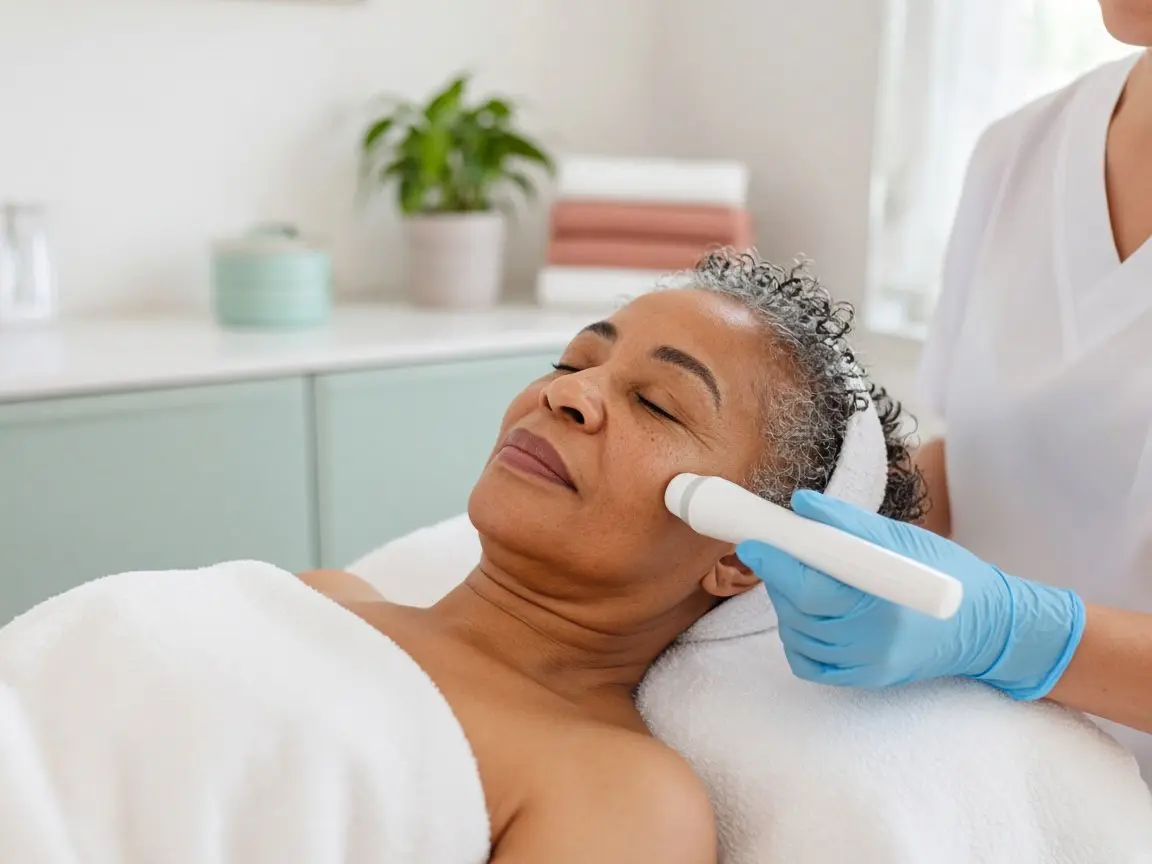
A Hydrafacial is a branded form of hydradermabrasion: a crystal-free, suction-based facial that exfoliates and then infuses a serum. Published descriptions of the treatment note steps that include cleansing and peeling, suction to extract dead skin cells, sebum and debris, and, in one acne protocol, blue LED light (Storgard et al.). Exact steps and add-on boosters vary by clinic, so ask what went on your face.
In a 2024 study, women saw immediate gains in radiance and hydration after one treatment (Huang et al.), which is why skin can look fresher afterward. That glow is also a reminder that your surface was just exfoliated, and a little extra care helps it settle.
The outer layer thins briefly, then recovers
In a small 2024 imaging study of eight volunteers, the average stratum corneum thickness fell from 9.42 to 6.67 µm right after treatment, then measured 9.75 µm at the two-week follow-up (Razi et al.). The same study saw no visible difference in collagen fibers at two weeks.
That is a tiny sample, so treat it as a snapshot. It does suggest the surface is thinnest right after your visit and rebuilds within days to weeks, which fits a gentle approach to actives.
Hydrafacial is not the same as microdermabrasion
Traditional microdermabrasion uses crystals or a diamond tip; hydradermabrasion uses suction plus a serum. If you want that comparison, see our guide to vitamin C serum after microdermabrasion. Either way, your skin can still be pink, tight, or more reactive for a day.
Can You Use Vitamin C Serum After Hydrafacial?
Often, yes, with good timing. We did not find a clinical trial that names an exact hour when vitamin C serum after Hydrafacial becomes safe. So this guidance rests on provider aftercare advice, the AAD’s exfoliation guidance, and what studies show about a temporarily thinner outer layer.
The treatment itself may already include an antioxidant or hydrating serum. In a 2008 randomized study of 20 women aged 34–56, skin antioxidant levels rose after hydradermabrasion with a polyphenolic antioxidant serum, but not when the same serum was only applied by hand (Freedman). That study did not test vitamin C, so it cannot tell us how vitamin C behaves.
How long to wait for vitamin C serum after Hydrafacial
Follow your provider’s sheet first. If it does not mention actives, a cautious approach is to wait until pinkness and tightness fade before restarting vitamin C serum after Hydrafacial. For many people that is the next morning; for sensitive skin, give it 48 hours.
If your face stings with plain water or still looks clearly red, wait another day. Comfort is a better guide than the clock.
Why skin over 40 may need a slower start
Mature skin often runs drier and can feel more reactive after exfoliation. That is not a reason to skip your glow steps. It is a reason to lead with moisture and ease vitamin C serum after Hydrafacial back in with a light hand.
Why a Short Pause Helps: Barrier and Absorption
Hydrafacial-style treatments are designed to help skin look better and, in some designs, to carry a serum in. In a 2024 study, 29 women aged 25–65 had six biweekly hydradermabrasion sessions with a growth factor serum plus an at-home serum for 12 weeks. Irritation scores stayed low and results improved over time, though the study was funded by the serum’s maker (Huang et al.).
Studies like these are encouraging for in-office care, but they are not a vitamin C trial. A thinner surface can make some products feel stronger, and strong, low-pH acids may sting until skin settles. That is the science-minded reason to pause briefly before vitamin C serum after Hydrafacial.
7 Gentle Tips for Vitamin C Serum After Hydrafacial
These steps keep aftercare simple for mature skin. Think of them as a calm checklist, not a medical protocol.
1. Follow your provider’s plan first
Your esthetician or dermatologist knows which boosters, peels, or extractions you had. Follow their moisturizer and sun instructions before you add anything else. If they ask you to hold actives for a set number of days, honor that timeline for vitamin C serum after Hydrafacial.
2. Moisturize while skin looks pink
For the first day, keep it bare: a gentle cleanser, then a plain fragrance-free moisturizer. The AAD’s safe-exfoliation tips remind us that exfoliation can dry skin, so moisturizer helps keep it comfortable.
Skip scrubs, cleansing brushes, and hot water for a few days.
3. Wait until redness and tightness settle
Many people feel ready for vitamin C serum after Hydrafacial the next morning. If you have sensitive skin, or your treatment included a peel step, closer to 48 hours is perfectly fine.
A quick check: wash with a gentle cleanser. If nothing stings and your color looks close to normal, you are likely ready to try one pump.
4. Start with 1 pump, then build to 1–2 pumps
Dispense 1 pump into your fingertips on day one. Gently pat it over the face instead of rubbing. After a few comfortable mornings, you can use 1–2 pumps as usual.
A brief tingle can happen on freshly exfoliated skin. Burning that lasts is a cue to rinse and pause. Our guide on why vitamin C serum can burn explains what is normal.
5. Choose a gentle, stable vitamin C form
Topical vitamin C is a well-known antioxidant that can support collagen and help with uneven pigment over time. A 2017 clinical review notes those roles and also says clinical studies on topical formulas remain limited.
When you restart vitamin C serum after Hydrafacial, many people prefer a stable derivative such as 3-O Ethyl Ascorbic Acid over a strong, very low-pH L-ascorbic acid serum. That is a comfort choice, not a claim that one form is the only effective option.
6. Pause other actives for a few days
Do not stack a fresh Hydrafacial with retinol, glycolic acid, or other exfoliating acids in the same week. Let vitamin C serum after Hydrafacial be your only active until your skin feels like itself again.
Some Hydrafacial protocols include a peel step. If yours did, our timeline for vitamin C serum after a chemical peel shows why deeper treatments often need a longer pause.
7. Finish every morning with sunscreen
Freshly exfoliated skin may be more sun-sensitive. Use a broad-spectrum, water-resistant sunscreen of SPF 30 or higher, and reapply as directed in the AAD’s sunscreen application guidance.
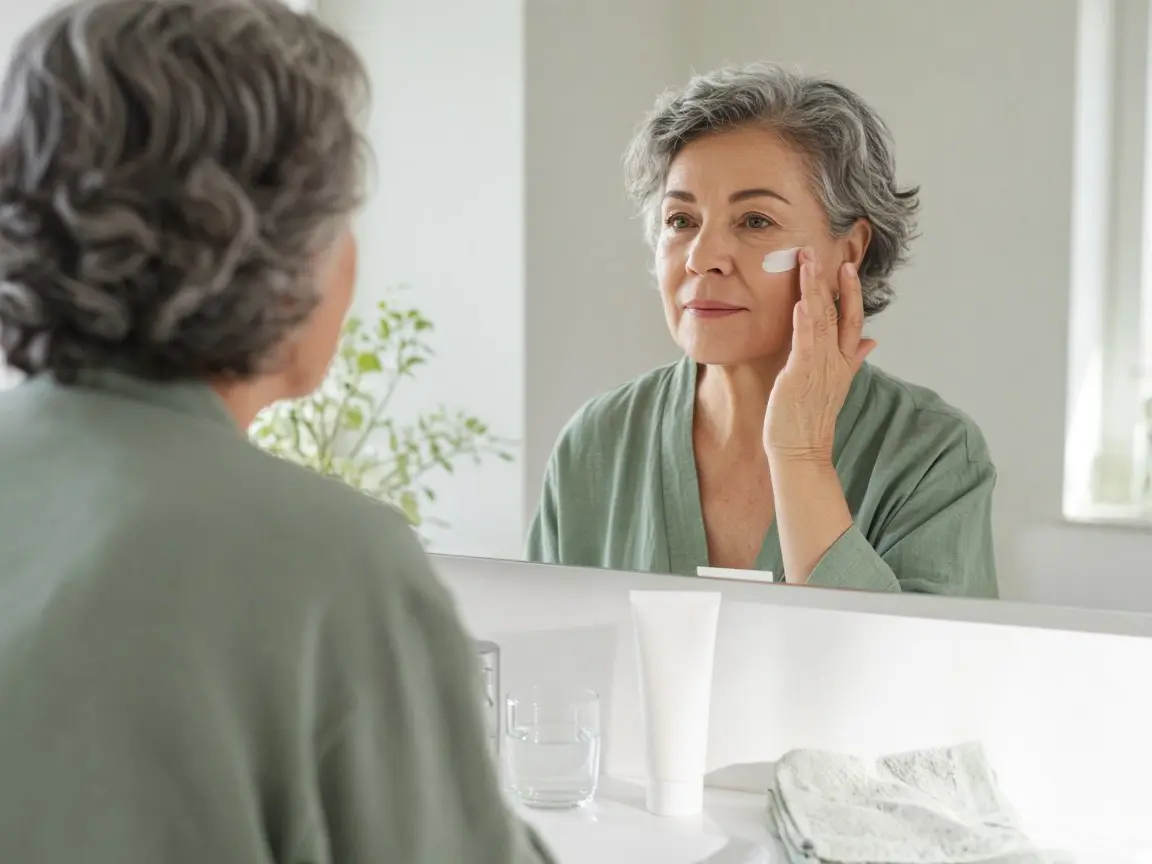
Apply vitamin C serum after Hydrafacial first, then moisturizer, then sunscreen. More on pairing vitamin C serum and sunscreen is here if you want the full order.
Extra Habits and When to See a Dermatologist
Between visits, keep habits boring in the best way. Sleep, gentle cleansing, daily SPF, and lukewarm water go further than adding more bottles. The AAD’s microdermabrasion FAQs note that treated skin can bruise, burn, sting, or become very sun-sensitive in some cases, and that people prone to dark spots after injury should be careful. Those notes are about microdermabrasion, but the same sensible caution fits any exfoliating facial.
Call your provider if stinging, swelling, or bruising lasts longer than expected, if you have taken isotretinoin in the past six months, or if new dark patches appear. See a dermatologist for any mole that is changing.
Signs to pause your vitamin C serum after Hydrafacial
- Stinging or burning that does not fade within a minute or two
- Clear pinkness, swelling, or a tight, raw feel
- Flaking or peeling that looks worse after each use
- Breakouts or bumps that appear right after restarting
If any of these show up, rinse, moisturize, and wait another day or two before trying again.
Our Pick: Trendy Blends 18% Vitamin C Serum
Trendy Blends 18% Vitamin C Serum pairs 18% 3-O Ethyl Ascorbic Acid with niacinamide, hyaluronic acid, aloe, and cucumber in a 1 oz airless pump. It is fragrance free and $24.99, and it is backed by our 60-day money-back guarantee.
FAQ
How soon after Hydrafacial can I use vitamin C serum?
Follow your provider first. If they give no timing, wait until redness and tightness settle, often the next morning or 48 hours for sensitive skin, then start with 1 pump of vitamin C serum after Hydrafacial.
Can I use vitamin C serum the same day as a Hydrafacial?
It is safer to wait. Your skin was just exfoliated, so most people do better with moisturizer and sunscreen on day one unless your provider says otherwise.
Does the Hydrafacial already include vitamin C?
It depends on the boosters your clinic uses. Ask what was applied so you do not double up on actives, and skip extra serums until your skin feels calm.
Why does vitamin C serum sting after a Hydrafacial?
Freshly exfoliated skin can make actives feel stronger. Rinse, moisturize, and try again when skin feels calm, starting with 1 pump.
Is vitamin C serum after Hydrafacial OK for sensitive or mature skin?
Often yes, if you go slowly. Lead with moisturizer, wait out the pink phase, choose a gentler stable formula, and pause if anything burns.
How often should I get a Hydrafacial if I use vitamin C daily?
Your provider sets the schedule. In the studies we cited, series were spaced one to two weeks apart. Keep daily vitamin C for days when skin feels comfortable.
Conclusion
A Hydrafacial can leave skin looking fresh and hydrated, and vitamin C supports brightness and antioxidant care over time. Used thoughtfully, vitamin C serum after Hydrafacial can fit neatly into a mature-skin routine.
The key is patience on day one. Moisturize, protect from the sun, wait until you feel comfortable, then pat on 1–2 pumps and keep other actives quiet until your skin feels like itself again.
Written by Tracy-Cabana
Disclaimer: This article is for general educational purposes and is not medical advice. Talk to a board-certified dermatologist or your treatment provider about Hydrafacial aftercare and before restarting actives, especially if you have taken isotretinoin, scar easily, or notice lasting redness, bruising, or dark marks. Stop any product that causes lasting irritation.
References
- American Academy of Dermatology. Microdermabrasion: FAQs. https://www.aad.org/public/cosmetic/age-spots-marks/microdermabrasion-faqs
- American Academy of Dermatology. How to safely exfoliate at home. https://www.aad.org/public/everyday-care/skin-care-secrets/routine/safely-exfoliate-at-home
- American Academy of Dermatology. How to apply sunscreen. https://www.aad.org/public/everyday-care/sun-protection/shade-clothing-sunscreen/how-to-apply-sunscreen
- Storgard R, Mauricio-Lee J, Mauricio T, Zaiac M, Karnik J. Efficacy and tolerability of HydraFacial Clarifying Treatment Series in the treatment of active acne vulgaris. J Clin Aesthet Dermatol. 2022;15(12):42-46. PMID: 36569524
- Razi S, Truong TM, Khan S, Sanabria B, Rao B. Hydradermabrasion through the lens of line-field confocal optical coherence tomography. Skin Res Technol. 2024;30(4):e13684. PMID: 38558475
- Freedman BM. Hydradermabrasion: an innovative modality for nonablative facial rejuvenation. J Cosmet Dermatol. 2008;7(4):275-280. PMID: 19146604
- Huang P, Mehta R, Emmerich T, Jiang LI, Makino E. Efficacy and tolerability of a novel cosmetic growth factor serum when used as part of biweekly diamond tip hydradermabrasion treatments on facial skin. J Cosmet Dermatol. 2024;23(4):1304-1312. PMID: 38357748
- Al-Niaimi F, Chiang NYZ. Topical vitamin C and the skin: mechanisms of action and clinical applications. J Clin Aesthet Dermatol. 2017;10(7):14-17. PMID: 29104718
