
Vitamin C Serum After Waxing: 7 Gentle Tips for Calm Skin
Can you use vitamin C serum after waxing, or will it sting? For most women over 40 who wax the upper lip, chin or brows, the answer is yes, with a little patience. Freshly waxed skin needs a short break to calm down before any active ingredient goes back on.
Below, we’ll explain what waxing does to your skin, what dermatologists recommend before and after, and seven gentle tips for adding vitamin C serum after waxing without redness or bumps.
Table of Contents
What Waxing Does to Your Skin
Waxing is a form of epilation, which means it pulls out the whole hair, including the root, instead of cutting it at the surface. A 2021 review of hair removal practices groups waxing with plucking, threading and sugaring for that reason.
Many women in their 40s and 50s notice more hair on the upper lip or chin and turn to facial waxing. It’s quick and affordable, and the results usually last longer than shaving.
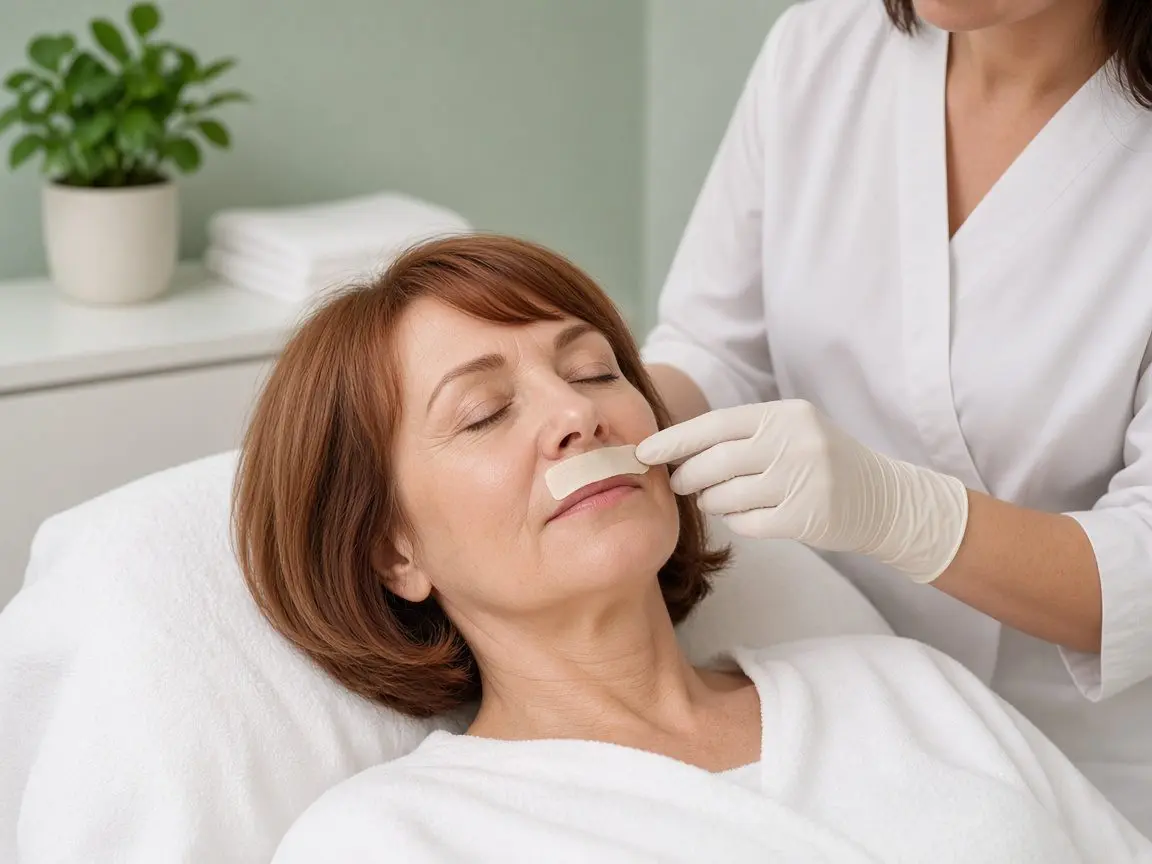
Waxing takes a little skin with it
Wax grips hair, but it also grips the outer layer of dead skin cells. In a lab study on pig skin, researchers found that waxing thinned the stratum corneum, the skin’s protective top layer.
The same study saw more water escaping from the skin and more of a test substance passing through after waxing. It was a lab model, not a study on human faces, but it helps explain why products can feel stronger on freshly waxed skin.
Why redness and bumps happen
Pulling hair from the follicle can leave skin pink and tender for a short time. Some people also get small red bumps around the hair follicles in the days or weeks after waxing.
In a study of 28 women who developed bumps after waxing, biopsies showed changes that resembled ingrown-hair irritation, and some had a reaction to hair fragments left in the skin. Those women had waxed their arms and legs, not their faces, but the lesson is the same: be gentle with waxed skin.
Can You Use Vitamin C Serum After Waxing?
Usually, yes, once your skin has settled. We couldn’t find any study that tested the best timing for vitamin C serum after waxing, so the advice below is based on general dermatology guidance and common sense.
What we do know is that waxing lowers the skin’s barrier for a while. Some salon aftercare guides suggest pausing vitamin C, retinol and acids for 24 to 72 hours. That’s a reasonable window to follow.
When can you apply vitamin C serum after waxing?
If you had your face waxed at a salon, follow your esthetician’s aftercare instructions first. Without specific advice, waiting at least 24 hours is a cautious starting point, and 48 hours is kinder if your skin is sensitive.
Then check in with your skin. If the area looks its normal color and feels comfortable when you wash it, you’re likely ready for vitamin C serum after waxing. If it’s still pink, tender or bumpy, wait another day.
Why skin over 40 may need a slower start
Skin tends to get drier as we age, and dry skin often feels more reactive after hair removal. The upper lip area is also small and close to the nose and mouth, where skin can be delicate.
That doesn’t mean you need to skip your vitamin C. It just means leading with moisture and easing back into vitamin C serum after waxing.

What Dermatologists Say About Waxing Safely
The American Academy of Dermatology (AAD) shares a simple set of at-home waxing tips from dermatologists. Here are the points that matter most for vitamin C serum after waxing:
- Never wax sunburned or very sensitive skin.
- Avoid retinol and prescription retinoids two to five days before waxing your face, so you don’t remove skin along with the hair.
- Don’t wax if you’ve taken isotretinoin in the last six months.
- Wash and dry the area before waxing, so the wax grips properly.
- Afterward, soothe skin with cold packs if needed, skip hot baths and showers, and use a moisturizer labeled oil-free or non-comedogenic.
The AAD also says to see a board-certified dermatologist if redness or swelling lasts more than two days.
Watch for allergies to wax products
Wax and aftercare products can contain ingredients that some people react to. A recent analysis of common allergens in waxing products found colophony (rosin), botanicals, fragrance, beeswax and color additives in many wax products, and fragrance in most of the post-wax products checked.
The authors note these allergens don’t often cause reactions, but it’s worth knowing. If you have sensitive skin, a fragrance-free routine, including your vitamin C serum after waxing, is a smart choice.
7 Gentle Tips for Using Vitamin C Serum After Waxing
These steps keep things simple and kind to mature skin. Think of them as a short reset, not a strict rulebook.
1. Cool and calm the area first
Right after waxing, a clean cold pack or cool cloth can ease tenderness, as the AAD suggests. Rinse with lukewarm, not hot, water and pat dry with a clean towel.
Skip steamy showers and saunas that day. Heat can make freshly waxed skin look redder, and vitamin C serum after waxing can wait until tomorrow.
2. Moisturize, and keep it simple
Apply a plain, fragrance-free, non-comedogenic moisturizer to the waxed area. On day one, that may be all your skin needs.
Ingredients like glycerin, hyaluronic acid and aloe tend to feel comfortable on tender skin. Leave vitamin C serum after waxing for the next day.
3. Wait until your skin feels normal
Give your skin at least 24 hours. If you’re prone to redness, waiting 48 hours is perfectly fine.
A simple test: wash with a gentle cleanser. If it doesn’t sting and the area looks its usual color, your skin is likely ready for vitamin C serum after waxing.
4. Start with 1 pump and pat it on
Dispense 1 pump into your fingertips and gently pat it over your face, using a lighter touch over the waxed area. Patting is kinder than rubbing on skin that may still feel a little tender.
If it burns, rinse it off and try again in a day or two. Our guide on why vitamin C serum can burn explains what’s normal and what isn’t.
5. Choose a gentle, stable vitamin C
Vitamin C comes in several forms. L-ascorbic acid is the most studied, and a 2017 review notes that topical vitamin C is a strong antioxidant in the skin, while stable, well-absorbed formulas remain a challenge.
Derivatives like 3-O Ethyl Ascorbic Acid are another option. In lab tests, ethyl ascorbic acid was more stable in solution than ascorbic acid and showed lower toxicity to cells in a dish. Those were lab findings, not results on faces.
6. Pause other actives for a few days
Hold off on retinol, glycolic acid and scrubs for a few days after waxing. Let vitamin C serum after waxing be your only active step at first.
Waiting about 72 hours before gentle exfoliation is a salon tip some estheticians share to help prevent ingrown hairs. Use a soft touch when you do. If your skin tends to be reactive, our post on vitamin C serum for sensitive skin has more ideas.
7. Finish with sunscreen every morning
Freshly waxed skin deserves extra sun care. The AAD recommends a broad-spectrum sunscreen with SPF 30 or higher that’s water resistant.
Apply your vitamin C serum after waxing first, let it absorb, then follow with moisturizer and sunscreen. Here’s more on pairing vitamin C serum and sunscreen.
Vitamin C Before Waxing: Should You Stop?
The AAD’s pre-wax advice focuses on retinoids, not vitamin C. Still, if your serum tends to tingle, skipping it the morning you wax is an easy, cautious choice.
Wax works best on clean, dry skin, so wash off any serum or moisturizer before waxing. Then bring vitamin C serum after waxing back once your skin has calmed.
Vitamin C Serum After Waxing vs. Other Hair Removal
Waxing isn’t the only hair removal method that affects your skin barrier. The same lab study that looked at waxing also found barrier changes after dry shaving and electric epilation.
If you shave or dermaplane instead, see our guide to vitamin C serum after dermaplaning, which follows a similar gentle approach.
Signs to pause your vitamin C serum after waxing
- Stinging or burning that doesn’t fade within a minute or two
- Redness or swelling that lasts more than two days
- Small red bumps, pus spots or ingrown hairs
- Itching, a rash or new dark patches
If any of these show up, go back to a gentle cleanser, moisturizer and sunscreen. See a board-certified dermatologist if irritation lasts or gets worse.
Frequently Asked Questions
How long after waxing can I use vitamin C serum?
Follow your esthetician’s instructions first. Without specific advice, waiting at least 24 hours is a cautious choice, and 48 hours is kinder for sensitive skin.
Why does my vitamin C serum sting after waxing?
Waxing removes some of the skin’s outer layer along with the hair, so products can feel stronger for a while. Rinse it off, moisturize, and try again in a day or two.
Can I use vitamin C serum before waxing my face?
You can use it in your regular routine, but wash it off before waxing, since wax grips best on clean, dry skin. The AAD advises stopping retinoids two to five days before waxing your face.
Can vitamin C serum help with dark spots after waxing?
Vitamin C is linked to lower melanin formation, so it may help with uneven tone over time. See a dermatologist for dark patches that don’t fade.
Is vitamin C serum after waxing safe for sensitive skin?
Often, yes, if you go slowly. Patch test first, wait 48 hours after waxing, and start with 1 pump every other morning.
What should I put on my face right after waxing?
Keep it simple: a cool compress if needed, then a fragrance-free, non-comedogenic moisturizer. Add sunscreen during the day.
Conclusion
Facial waxing is a quick way to keep skin smooth, and vitamin C supports brightness over time. With a little patience, they work well together for skin over 40.
The secret is a calm start. Cool and moisturize first, wait at least a day, and begin your vitamin C serum after waxing with 1 pump, patted on and followed by sunscreen.
When you’re ready, our Trendy Blends 18% Vitamin C Serum pairs 18% 3-O Ethyl Ascorbic Acid with niacinamide, hyaluronic acid, aloe and cucumber. It’s fragrance-free, comes in a 1 oz airless pump for $24.99, and is backed by our 60-day money-back guarantee.
Disclaimer: This article is for general educational purposes and isn’t medical advice. Talk to a board-certified dermatologist before using active products after hair removal, and stop use if you notice lasting irritation.
References
- American Academy of Dermatology. Hair removal: How to wax.
- American Academy of Dermatology. How to select a sunscreen.
- Kang CN, Shah M, Lynde C, Fleming P. Hair removal practices: a literature review. Skin Therapy Lett. 2021;26(5):6-11.
- Pany A, Klang V, Brunner M, et al. Effect of physical and chemical hair removal methods on skin barrier function in vitro: consequences for a hydrophilic model permeant. Skin Pharmacol Physiol. 2019;32(1):8-21.
- Khanna N, Chandramohan K, Khaitan BK, Singh MK. Post waxing folliculitis: a clinicopathological evaluation. Int J Dermatol. 2014;53(7):849-854.
- /custom html
- George SE, Sandler M, Yu J. Potential for allergic contact dermatitis in popular depilatory wax hair removal practices and ingredients. Dermatitis. 2025;36(5):447-451.
- Al-Niaimi F, Chiang NYZ. Topical vitamin C and the skin: mechanisms of action and clinical applications. J Clin Aesthet Dermatol. 2017;10(7):14-17.
- Golonka I, Oleksy M, Junka A, et al. Selected physicochemical and biological properties of ethyl ascorbic acid compared to ascorbic acid. Biol Pharm Bull. 2017;40(8):1199-1206.
