Vitamin C Serum Burning? 7 Simple Fixes for Calm Skin
Vitamin C serum burning is one of those little surprises nobody warns you about. You smooth on a serum that promised a brighter glow, and within seconds your cheeks feel warm, prickly, or downright hot.
If that’s happened to you, you’re not imagining it, and you didn’t do anything wrong. Some vitamin C formulas are simply harder on skin than others, especially skin that’s past 40.
Let’s walk through why it happens, what a dermatologist would want you to do about it, and how to bring vitamin C back into your routine without the sting.
Table of Contents
Why Vitamin C Serum Burning Happens
Most of the time, the reason comes down to one word: acidity.
The classic form of vitamin C in skincare is L-ascorbic acid. It’s well researched, but it’s also fussy, because it’s unstable and has a hard time getting through the skin’s outer layer.
A lab study on percutaneous absorption of L-ascorbic acid found it had to be formulated at a pH below 3.5 to get into the skin. That study was done on pig skin, but it shaped how many of today’s L-ascorbic acid serums are made.
The low-pH factor behind vitamin C serum burning
That’s quite acidic. A review of topical vitamin C and the skin explains that lowering the pH below 3.5 helps L-ascorbic acid stay stable and absorb.
That’s great for delivery, but it also helps explain vitamin C serum burning. An acidic product on top of a dry or easily irritated surface can feel prickly or hot.
Higher concentration isn’t always better
It’s tempting to think a stronger percentage means faster results. The same review notes that concentrations above 20% don’t appear to add more benefit and might cause some irritation.
So if your serum is very strong and very acidic, that combination may be part of the reason for your vitamin C serum burning.
Other ingredients can be the real trigger
Sometimes vitamin C serum burning has little to do with the vitamin C itself. Fragrance and certain preservatives can irritate skin or trigger an allergic reaction.
The American Academy of Dermatology (AAD) explains in its guide on how to test skin care products that an ingredient such as a preservative can trigger allergic contact dermatitis. That can leave skin red, itchy, and swollen.
Why Mature Skin Feels the Sting More
If vitamin C never bothered you in your 30s, sudden vitamin C serum burning in your 50s can feel confusing. There’s a reason: skin changes a lot around menopause.
According to the AAD’s guide to caring for your skin in menopause, skin can become dry, slack, and thin as hormone levels drop. It also loses some of its ability to hold water.
The AAD adds that around 50, the pH level of our skin changes, and skin becomes more sensitive. Women become more likely to develop rashes and easily irritated skin.
Put a thinner, drier, more reactive surface together with an acidic serum, and vitamin C serum burning starts to make a lot of sense.
Is a Tingle Normal, or Is It Vitamin C Serum Burning?
This is the question most women really want answered. You’ll hear plenty of people say a little tingle means a serum is “working” and that vitamin C serum burning is just part of the deal.
The AAD sees it differently. In its tips to maximize results from anti-aging products, it advises you to stop using a product that stings, burns, or tingles, because those sensations mean the product irritates your skin.
The one exception the AAD mentions is a prescription product from your dermatologist. Some of those can sting, so ask your doctor before stopping.
Signs vitamin C serum burning has gone too far
Wash the serum off gently and stop using it if you notice any of these:
- Burning or stinging that doesn’t settle quickly
- Redness, itching, or swelling
- A rash, bumps, or hives
- Skin that feels raw or tight afterward
A dermatology review of vitamin C in dermatology says stinging, redness, and dryness are rare with topical vitamin C. It also notes that hives (urticaria) have been documented after use.
7 Simple Fixes for Vitamin C Serum Burning
The good news is that most people can still enjoy vitamin C. These steps help you find out what’s going on and protect your skin while you do.
1. Rinse, soothe, and give your skin a break
If you’re dealing with vitamin C serum burning right now, gently wash the serum off as soon as you can. The AAD suggests a cool compress or petroleum jelly to calm skin after a reaction.
If the reaction is severe and doesn’t ease with those steps, the AAD says you may need to see a dermatologist. Don’t push through it.
2. Patch test before it goes on your face
Once your skin has fully settled, test before you try again. The AAD recommends applying a product to a small spot twice a day for seven to 10 days, such as the underside of your arm or the bend of your elbow.
If there’s no redness, itching, or swelling after that, it’s generally fine to use. It’s a little slow, but it saves your face a lot of grief.
3. Introduce one new product at a time
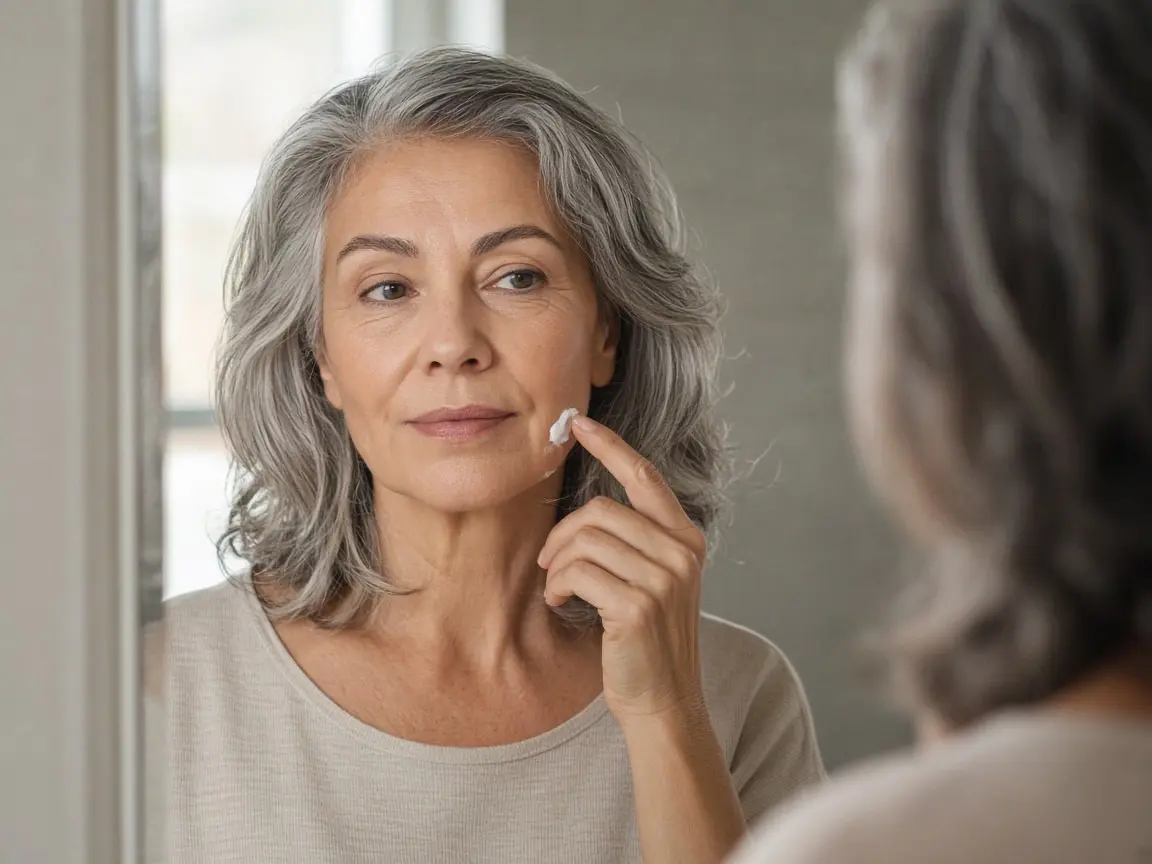
Starting vitamin C the same week as a new retinol, peel, and cleanser makes it impossible to know what caused the vitamin C serum burning. The AAD notes that using several anti-aging products at once can irritate your skin.
Add one new product, give it a few weeks, then consider the next. Our guide on how long to wait after vitamin C can help you space things out.
4. Keep exfoliating acids and retinoids apart
The AAD points out that ingredients like retinol and glycolic acid can irritate skin, particularly sensitive skin. Layering them under or over an acidic vitamin C can add up fast.
A simple fix is vitamin C in the morning and your retinoid or acid at night, on separate schedules. That way, the two never stack on the same patch of skin at the same time.
5. Ease in slowly
There’s no rule that says you must use vitamin C every single day from day one. You might start every other morning and build up as your skin feels comfortable.
Use only what the label recommends. More product doesn’t mean more glow, and the AAD warns that using more than directed can lead to problems like blotchy or overly dry skin.
6. Moisturize and protect your barrier
Moisturizer is your friend here. The review of vitamin C in dermatology notes that stinging, redness, and dryness from vitamin C can easily be treated with a moisturizer.
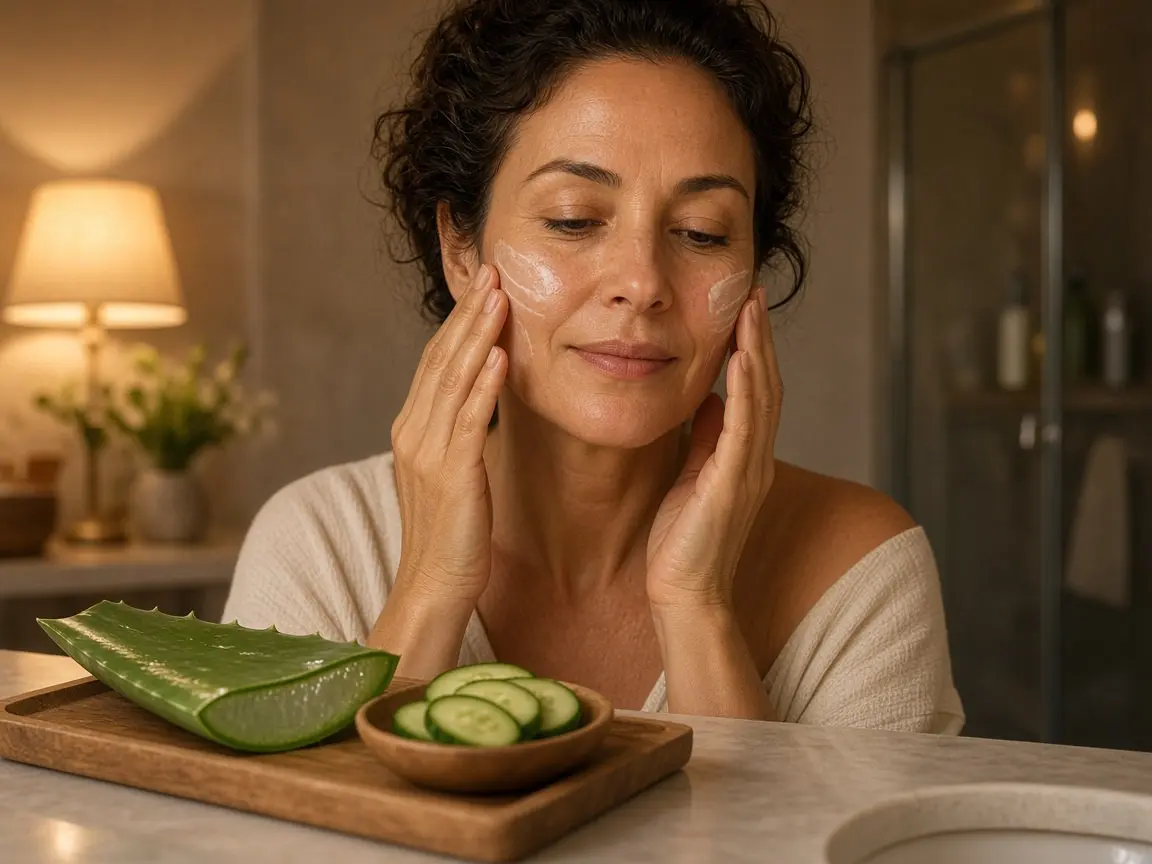
For menopausal skin, the AAD suggests a fragrance-free moisturizer to reduce irritation. It also says a moisturizer with hyaluronic acid or glycerin can be especially helpful for dryness.
7. Choose a gentler, fragrance-free vitamin C
If you’ve ruled everything else out and vitamin C serum burning keeps coming back, the formula itself may just not suit you. Look for fragrance-free products, which the AAD recommends if fragrance is what bothers your skin.
You can also look at a different form of vitamin C. Our guide to the forms of vitamin C walks through the options.
Can a Different Form Stop Vitamin C Serum Burning?
It may help. That pH-below-3.5 rule applies to L-ascorbic acid, and not every vitamin C ingredient works the same way.
The review of topical vitamin C notes that some esterified derivatives, like ascorbyl palmitate and magnesium ascorbyl phosphate, are stable at neutral pH. That means they aren’t tied to the same very acidic formulas.
What about 3-O Ethyl Ascorbic Acid?
3-O Ethyl Ascorbic Acid is another stable vitamin C derivative. A 2019 lab study on 3-O-ethyl-l-ascorbic acid describes it as developed for stability, and it penetrated pig skin from simple solvents including glycerin and 1,2-hexanediol.
Because the very-low-pH requirement was shown for L-ascorbic acid, a derivative formula may be easier for some people to tolerate. Any product can still irritate someone, though, so the patch test still matters.
L-ascorbic acid isn’t “bad,” either. It’s one of the best-studied forms of vitamin C, and plenty of people use it happily. It just isn’t the only way to bring vitamin C into your routine.
A Gentle Routine to Avoid Vitamin C Serum Burning
Here’s a simple, skin-friendly morning order for mature skin:
- Wash with a mild cleanser and pat your face dry
- Apply 1–2 pumps of vitamin C serum
- Follow with a fragrance-free moisturizer
- Finish with broad-spectrum sunscreen, SPF 30 or higher
The AAD recommends a broad-spectrum sunscreen with SPF 30 or higher every day during menopause. It’s the step that protects all your other efforts.
Niacinamide is a nice partner, too. In one study, nicotinamide (niacinamide) increased ceramide production in skin cells, and applying it topically increased ceramides and reduced water loss in dry skin (Tanno et al.).
Much of that research was done in cultured cells, so think of it as promising support rather than a fix. Learn more in niacinamide and vitamin C.
If your skin runs reactive in general, you’ll find more tips in our guide to vitamin C serum for sensitive skin.
When to See a Dermatologist
Book a visit with a board-certified dermatologist if vitamin C serum burning comes with swelling, a rash that lasts, or a reaction that doesn’t ease with rinsing and cool compresses. The AAD also suggests seeing one if a rash lasts or an existing skin condition worsens.
The AAD notes that a dermatologist may use a medical test called patch testing to find out what’s causing your irritation. That’s especially helpful when you can’t pin down the ingredient yourself.
FAQs
Why does my vitamin C serum burn?
Vitamin C serum burning is often linked to low-pH L-ascorbic acid formulas, very high concentrations, fragrance, or layering with other actives. Dry, thinning, or more sensitive skin after menopause may feel it more.
Is it normal for vitamin C serum to tingle?
Some people notice a tingle, but the AAD advises stopping a product that stings, burns, or tingles, because it means the product is irritating your skin. Prescription products are the exception, so check with your dermatologist.
What should I do if vitamin C serum burns my face?
Gently wash it off as soon as you can and stop using it. A cool compress or petroleum jelly can soothe skin, and a severe reaction is worth a dermatologist visit.
Can I keep using vitamin C if it stings?
It’s best to stop and let your skin settle first. Once vitamin C serum burning has fully calmed, patch test, introduce it slowly, or try a gentler, fragrance-free formula with a stable derivative.
Is vitamin C serum burning a sign of an allergy?
Not always. Many reactions are irritation, but redness, itching, and swelling can point to allergic contact dermatitis, so see a dermatologist if they appear.
Which vitamin C is gentlest on sensitive skin?
There’s no single answer for everyone. The very low pH requirement applies to L-ascorbic acid, so stable derivatives like 3-O Ethyl Ascorbic Acid may be easier for some people to tolerate.
Conclusion
Vitamin C serum burning is your skin’s way of saying something in your routine isn’t working for it. Most often, it’s an acidic formula, too many actives at once, fragrance, or a barrier that needs a little extra care.
Rinse and rest, patch test, add one product at a time, and choose a gentler formula if you need to. Mature skin can absolutely enjoy vitamin C; it just likes to be treated kindly.
If you’d like a gentle place to start, try the Trendy Blends 18% Vitamin C Serum. It’s made with 3-O Ethyl Ascorbic Acid, niacinamide, hyaluronic acid, aloe, and cucumber, and it’s fragrance-free.
It comes in a 1 oz airless pump, and 1–2 pumps is all you need. It’s $24.99 with free shipping in 3–4 business days, plus our 60-Day Glow Guarantee with free returns.
Disclaimer
This article is for general education and isn’t medical advice. Any skin care product, including vitamin C serum, can cause irritation or an allergic reaction in some people.
If you have rosacea, eczema, a known allergy, or a severe or lasting reaction, or you’re pregnant or using prescription skin treatments, talk with a board-certified dermatologist first. Results vary from person to person.
References
- Pinnell SR, Yang H, Omar M, Monteiro-Riviere N, DeBuys HV, Walker LC, Wang Y, Levine M. Topical L-ascorbic acid: percutaneous absorption studies. Dermatol Surg. 2001;27(2):137-142.
- Al-Niaimi F, Chiang NYZ. Topical vitamin C and the skin: mechanisms of action and clinical applications. J Clin Aesthet Dermatol. 2017;10(7):14-17.
- Telang PS. Vitamin C in dermatology. Indian Dermatol Online J. 2013;4(2):143-146.
- Iliopoulos F, Sil BC, Moore DJ, Lucas RA, Lane ME. 3-O-ethyl-l-ascorbic acid: characterisation and investigation of single solvent systems for delivery to the skin. Int J Pharm X. 2019;1:100025.
- Tanno O, Ota Y, Kitamura N, Katsube T, Inoue S. Nicotinamide increases biosynthesis of ceramides as well as other stratum corneum lipids to improve the epidermal permeability barrier. Br J Dermatol. 2000;143(3):524-531.
- American Academy of Dermatology. How to maximize results from anti-aging skin care products.
- American Academy of Dermatology. How to test skin care products.
- American Academy of Dermatology. Caring for your skin in menopause.
