
Vitamin C Serum for Dark Circles: What Really Works (and What Doesn’t)
If you are looking for a vitamin C serum for dark circles, it helps to know what is causing yours first. Some circles are brown pigment, some are blood vessels showing through thin skin, and some are simply shadows. Vitamin C can help with the first two, but it won’t fix every kind.
This guide explains the main causes of dark circles, what the research says about vitamin C, how to use a serum safely near the eyes, and the habits that make the biggest difference.
Table of Contents
What Causes Dark Circles Under Your Eyes?
According to Cleveland Clinic, dark circles are a common complaint and usually not a sign of a medical problem. Common causes include:
- Aging: the skin under your eyes loosens and thins, so blood vessels show through more. Hollows called tear troughs can also cast shadows.
- Genetics: dark circles can run in families.
- Hyperpigmentation: sun exposure makes your skin produce more melanin, which can darken the area. Learn more about what hyperpigmentation is.
- Lack of sleep: poor sleep makes skin look paler, so the vessels underneath stand out.
- Allergies and dermatitis: eczema and hay fever can dilate blood vessels and cause “allergic shiners.” Rubbing itchy eyes makes things worse.
- Dehydration and lifestyle: not drinking enough water, stress, heavy drinking and smoking can all play a part.
For a deeper look at every cause and treatment option, see our guide to dark circles under the eyes.
Can a Vitamin C Serum for Dark Circles Really Help?
Cleveland Clinic lists topical creams such as vitamin C among the options that can help lighten the appearance of dark circles. The honest answer is that it depends on your type of circles, and the research is still small.
Brown Circles: Pigment
If your circles look brown, the cause is likely extra melanin. Vitamin C interferes with tyrosinase, the enzyme your skin uses to make melanin, according to a dermatology review. That is why it is widely used to fade dark spots, and the same effect may soften pigment under the eyes over time.
Blue or Purple Circles: Thin Skin
Bluish or purplish circles usually come from blood vessels showing through thin skin. Vitamin C is essential for building collagen, as a review on vitamin C and skin explains, and thicker skin may hide those vessels better.
One small split-face study tested this directly. Fourteen people applied a 10% sodium ascorbate lotion (a form of vitamin C) to one lower eyelid for six months. The treated side showed less change in redness and a trend toward thicker skin. However, a second vitamin C derivative in the same study showed no difference, so the evidence is promising but limited.
Shadows and Hollows: Structure
If your circles are shadows from hollow tear troughs or puffiness, a serum won’t change the structure under the skin. Cleveland Clinic notes that options such as fillers, laser treatments or eyelid surgery are what dermatologists and surgeons use for those.
A Quick Check: What Type Are Yours?
A review of periorbital hyperpigmentation describes a simple test. Look in a mirror in daylight and gently stretch the skin under one eye with a fingertip:
- The color stays the same: it is likely true pigment, the type vitamin C is best suited to.
- The color fades or disappears: it is likely a shadow from a hollow or puffiness, which a serum can’t change much.
- The color spreads out and looks more purple: it is likely vascular, where collagen support and good habits matter most.
Many people have a mix of types, so don’t worry if your result isn’t clear-cut. It simply helps you set realistic expectations before you start.
How Vitamin C Serum Helps the Under-Eye Area
- Helps even out tone: by slowing melanin production, vitamin C can gradually brighten brownish pigment.
- Supports collagen: stronger, thicker skin may make blood vessels less visible over time.
- Antioxidant protection: vitamin C helps neutralize free radicals from UV light, which the Linus Pauling Institute links to photoaging. See what vitamin C serum does for your face.
- Hydration from supporting ingredients: hyaluronic acid and aloe help skin look plumper and smoother, which can soften the look of fine lines around the eyes.
How to Use a Vitamin C Serum for Dark Circles Safely
The skin around your eyes is thinner and more sensitive than the rest of your face. Most vitamin C serums are made for the whole face, so a gentle approach matters.
- Patch test first. Try the serum on a small area, such as your jawline, for a few days before using it near your eyes.
- Cleanse and pat dry. Use a mild cleanser and let your skin dry.
- Apply 1–2 pumps to your face. Spread the serum over your face and neck as usual.
- Use only what is left on your fingertip near your eyes. Gently pat it along the orbital bone with your ring finger. Keep it away from the lash line and eyelids, and never rub.
- Follow with moisturizer or eye cream, then broad-spectrum sunscreen in the morning.
If you notice stinging, redness or watering eyes, keep the serum to the rest of your face. Our tips on vitamin C serum for sensitive skin can help you ease in.
Morning Is a Good Time
Cleveland Clinic recommends applying vitamin C serum in the morning, because its antioxidant protection works in synergy with sunscreen. That pairing matters for dark circles, since sun exposure drives the extra melanin behind brown circles. Here is how to layer vitamin C serum and sunscreen.
Give It Time
Pigment and collagen change slowly. Use your serum every day for at least two to three months before you judge it, and take a photo in the same light each month so you can compare honestly.
Results also depend on what you pair it with. A serum can’t keep up with daily sun exposure, short nights or constant eye rubbing, so the habits below matter just as much. If you see no change at all after three months, your circles may be mostly shadows or blood vessels, and a dermatologist can tell you which treatments are worth trying.
Choosing a Vitamin C Serum for Dark Circles
Not every formula is a good match for the delicate eye area. Look for:
- A stable form of vitamin C. L-ascorbic acid is the most studied form but oxidizes easily and can sting. Derivatives such as 3-O ethyl ascorbic acid were developed to be more stable in a formula.
- No added fragrance. Fragrance is a common irritant, and the skin near your eyes reacts easily.
- Hydrating partners. Hyaluronic acid, aloe and niacinamide support the skin barrier. Read about niacinamide and vitamin C together.
- Airtight packaging. An opaque airless pump protects vitamin C from air and light, so it doesn’t turn orange too soon.
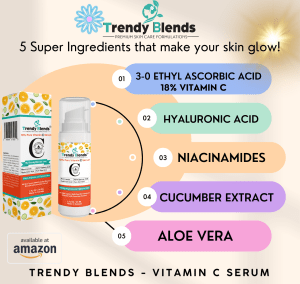
The Trendy Blends 18% Vitamin C Serum checks those boxes. It combines 18% 3-O ethyl ascorbic acid with niacinamide, hyaluronic acid, aloe and cucumber. It is fragrance-free and comes in a 1 oz airless pump. It costs $24.99 with free shipping in 3–4 business days, and it is backed by our 60-Day Glow Guarantee.
Ingredients That Pair Well With Vitamin C
Vitamin C is rarely the only active in an under-eye routine. These ingredients complement it:
- Niacinamide: a form of vitamin B3 that reduced pigmentation in a clinical study by limiting how pigment moves into skin cells. It works by a different route than vitamin C, so the two make a good team.
- Hyaluronic acid: a humectant that draws water into the skin, which helps thin under-eye skin look smoother. See the benefits of vitamin C and hyaluronic acid.
- Caffeine and retinol: Cleveland Clinic notes that eye products with caffeine or retinol can help reduce puffiness. Introduce retinol slowly, at night, and not on the same evening you start any other new product.
- Sunscreen: not an active ingredient in the usual sense, but the most important partner. Without it, sun exposure keeps making new pigment.
Keep it simple. Add one new product at a time and wait two weeks before adding the next, so you know what your skin is reacting to.
A Simple Under-Eye Routine
Here is how it all fits together. Adjust it to your skin, and keep the eye area gentle.
Morning
- Rinse or cleanse with a mild, fragrance-free cleanser.
- Apply 1–2 pumps of vitamin C serum to your face, then pat the leftover on your orbital bone.
- Smooth on a light moisturizer or hydrating eye cream.
- Finish with broad-spectrum SPF 30 or higher, and add sunglasses when you head outside.
Evening
- Remove makeup gently. Hold a soaked cotton pad on your eyes for a few seconds instead of scrubbing.
- Cleanse and pat dry.
- Use your eye cream, or a retinol eye product if your skin tolerates it.
- Finish with moisturizer, then raise your head with an extra pillow if you wake up puffy.
If mornings are rushed, our 3-step morning routine shows how to fit vitamin C into a few minutes.
Daily Habits That Reduce Dark Circles
A serum works best alongside a few simple habits. These come from Cleveland Clinic’s advice on dark circles:
- Sleep at least seven hours. Good sleep keeps skin from looking pale and shadowed.
- Raise your head at night. An extra pillow can stop fluid from pooling under your eyes, which helps with puffiness.
- Use cold compresses. Cold spoons, a cool cloth or chilled tea bags can shrink swollen vessels for a fresher look.
- Wear sunscreen and sunglasses every day to limit the sun-driven pigment behind brown circles.
- Don’t rub your eyes, and treat allergies so itching doesn’t keep you rubbing.
- Drink enough water, limit alcohol and avoid smoking.
- Use concealer for an instant fix while your routine does its work.
Prefer a cream for the eye area? Compare options in our guide to the best eye creams for dark circles.
When to See a Doctor
Dark circles are usually harmless. But if you have a dark circle or swelling under just one eye, Cleveland Clinic advises calling a healthcare provider, since it can signal an underlying condition. A dermatologist can also confirm the cause of your circles and suggest treatments such as peels, prescription lighteners or lasers if a serum isn’t enough.
Frequently Asked Questions
Does vitamin C serum help dark circles?
It can help some types. Vitamin C can fade pigment and supports collagen, so it suits brownish circles and thin under-eye skin best. It does little for shadows from hollows or puffiness, and the research on the eye area is still limited.
How long does vitamin C take to work on dark circles?
Be patient. Changes in pigmentation usually take weeks to months of daily use, and in one small study of vitamin C on the lower eyelids, participants used it for six months.
Can I put vitamin C serum under my eyes?
Many people do, but the skin there is thin and easily irritated. Use only a tiny amount, pat it along the orbital bone, keep it away from the lash line and eyelids, and stop if it stings or turns red.
Should I use vitamin C serum in the morning or at night?
Morning is a good choice, because vitamin C’s antioxidant protection works well alongside sunscreen. Follow it with moisturizer and broad-spectrum SPF.
When should I see a doctor about dark circles?
Dark circles are usually harmless. Cleveland Clinic advises calling a healthcare provider if a dark circle or swelling appears under just one eye, since that may point to an underlying condition.
Conclusion: Brighter Eyes Start With the Right Expectations
A vitamin C serum for dark circles works best on brown pigment and thin skin, and it needs months of steady use. It won’t fill hollows or erase circles you inherited, but paired with sunscreen, good sleep and a gentle touch, it can help your under-eyes look brighter and more rested.
Start slowly, keep it away from your lash line, and give your skin time. If you are ready to try it, the Trendy Blends 18% Vitamin C Serum is a fragrance-free place to start.
