

Vitamin C Serum With Bakuchiol: 7 Smart, Gentle Tips
If retinol has always left your face red and flaky, a vitamin C serum with bakuchiol might sound like the gentle routine you’ve been waiting for. Lots of us over 40 want smoother lines and brighter tone without the peeling.
Bakuchiol is a plant compound often called a natural retinol alternative. Vitamin C is the antioxidant brightener many of us already reach for in the morning.
Here’s what each one does, what the research really shows, and how to use vitamin C serum with bakuchiol in a calm, simple routine.
Table of Contents
Can You Use Vitamin C Serum With Bakuchiol?
Yes, most people can. We found no study showing the two cancel each other out, and skincare guides commonly pair them.
Many guides suggest the easiest plan: vitamin C in the morning and bakuchiol at night. If your skin is calm, you can also layer vitamin C serum with bakuchiol in the same routine.
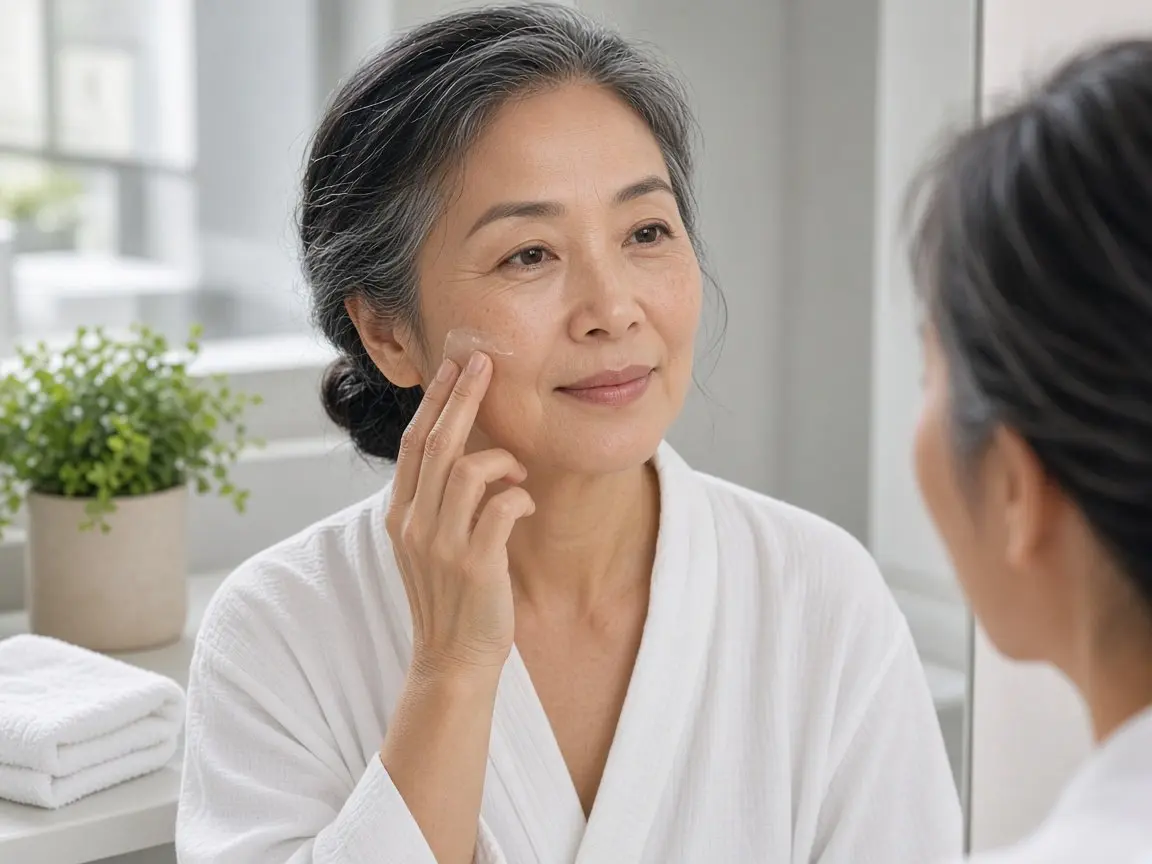
Quick note: our serum doesn’t contain bakuchiol. When we talk about using vitamin C serum with bakuchiol, we mean pairing it with a separate bakuchiol product.
What Bakuchiol Is (and What It Isn’t)
A Plant Compound That Acts a Bit Like Retinol
Bakuchiol comes from the seeds and leaves of Psoralea corylifolia, a plant also called babchi. The plant is used in Chinese and Indian traditional medicine.
It looks nothing like retinol chemically. But in a 2014 study using lab-grown skin models, it produced a gene pattern very similar to retinol’s, including more collagen. The lead author is from a private company, Sytheon Ltd.
That’s why you’ll see it called a “functional analogue” of retinol. It isn’t a retinoid, and it doesn’t have retinol’s track record.
Bakuchiol Isn’t the Same as Babchi Seeds
The whole plant also contains psoralens, compounds used to treat psoriasis and vitiligo. A 2024 case report described a severe phototoxic reaction to the seeds in a child with vitiligo.
Another 2024 case report linked an oral babchi herbal remedy to liver injury. Skincare uses the isolated compound, so skip DIY seed oils and pastes.
Where Vitamin C Fits
Vitamin C is one of the skin’s most powerful antioxidants. A 2017 review says it helps protect against sun-related aging, increases collagen production, and decreases melanin formation.
The same review says clinical studies on topical vitamin C are still limited, and stability is the big challenge. Lab researchers describe 3-O Ethyl Ascorbic Acid, the form in our serum, as a stable vitamin C derivative developed for topical products.
Vitamin C Serum vs Bakuchiol: Different Jobs
When people compare vitamin C serum vs bakuchiol, they’re really comparing an antioxidant brightener with a retinol-like smoothing ingredient. You don’t have to choose.
A 2024 systematic review of anti-aging cosmeceuticals gave retinol and vitamin C a Grade A recommendation for anti-aging. Bakuchiol received a Grade C, meaning the evidence is thinner.
What the Bakuchiol Research Shows
The best-known study is a 2019 randomized, double-blind trial of 44 people. They used 0.5% bakuchiol cream twice daily or 0.5% retinol cream once daily for 12 weeks.
Both groups saw significant decreases in wrinkle surface area and hyperpigmentation, with no statistical difference between them. The retinol group reported more scaling and stinging.
That’s encouraging, but it’s one small trial. A 2024 systematic review of 15 human bakuchiol trials found 12 were open-label with no control group, and 10 tested mixtures, so it’s hard to compare bakuchiol on its own with retinoids.
Is There Research on Vitamin C Serum With Bakuchiol Together?
Only a little. A 2019 report pooled five studies of one night serum containing melatonin, bakuchiol, and a vitamin C derivative, with 103 women treated for 28 to 84 days.
After 12 weeks, wrinkles decreased 11% and firmness rose 8%. One author is from Isdin, a skincare company, and a single combined formula can’t show what each ingredient added.
So pairing vitamin C serum with bakuchiol makes sense on paper, but we found no proof that layering two separate products works better than either alone.
Bakuchiol as a Retinol Alternative After 40
For Sensitive Skin
The AAD says people with skin allergies or dryness are probably not good candidates for retinoids. A 2022 review says bakuchiol hasn’t caused the burning and scaling common with retinoids, which is why it’s often suggested for sensitive skin.
In a 4-week study of 60 women aged 40 to 65 with sensitive skin, including eczema and rosacea, a bakuchiol cleanser and moisturizer were well tolerated. Cheek moisture rose 16%, though it was a short study.
For Menopausal Skin
Menopause can leave skin dry, slack, and thin. According to the AAD’s menopause skin guide, studies show women’s skin loses about 30% of its collagen in the first five years of menopause.
The AAD suggests retinol or peptides to increase collagen. If retinol is too harsh for you, vitamin C serum with bakuchiol may be a gentler option, though bakuchiol has less evidence behind it. Our vitamin C serum for menopause guide has more ideas.
7 Smart, Gentle Tips for Vitamin C Serum With Bakuchiol
1. Patch Test Each Product First
The AAD suggests testing a new product on a quarter-sized spot, like the bend of your elbow, twice daily for seven to 10 days. No red, itchy, or swollen skin? You can move it to your face.
Bakuchiol is usually well tolerated in studies, but it’s not allergy-proof. A 2022 review found one reported case of contact dermatitis.
2. Use Vitamin C in the Morning, Bakuchiol at Night
Many guides suggest this split, and it’s the simplest way to use vitamin C serum with bakuchiol. Vitamin C’s antioxidant role pairs naturally with daytime sunscreen.
Bakuchiol can go on at night, when you’d normally use retinol. In the 2019 trial it was used twice daily, so it isn’t limited to nighttime; just follow your product’s label.
3. Layer Vitamin C Serum With Bakuchiol Thinnest to Thickest
If you use vitamin C serum with bakuchiol in one routine, apply the thinner, watery serum first. Let it dry, then add the bakuchiol, which often comes in an oil or cream.
Don’t mix them in your palm. Each product was formulated on its own.
4. Add One New Product at a Time
The AAD warns that using several anti-aging products at the same time can irritate your skin. When skin is irritated, signs of aging become more noticeable.
Start your vitamin C first, then add bakuchiol after its patch test and a week or two of calm skin. That way you’ll know which one to thank, or blame.
5. Don’t Stack Bakuchiol on Top of Retinol
Bakuchiol is mostly marketed as an alternative to retinol. Some products combine them, but stacking both adds more actives at once. If you already use a retinoid, check our guide to vitamin C and retinol together before adding more actives.
Keep exfoliating acids on separate nights from vitamin C serum with bakuchiol, too.
6. Finish Every Morning With Sunscreen
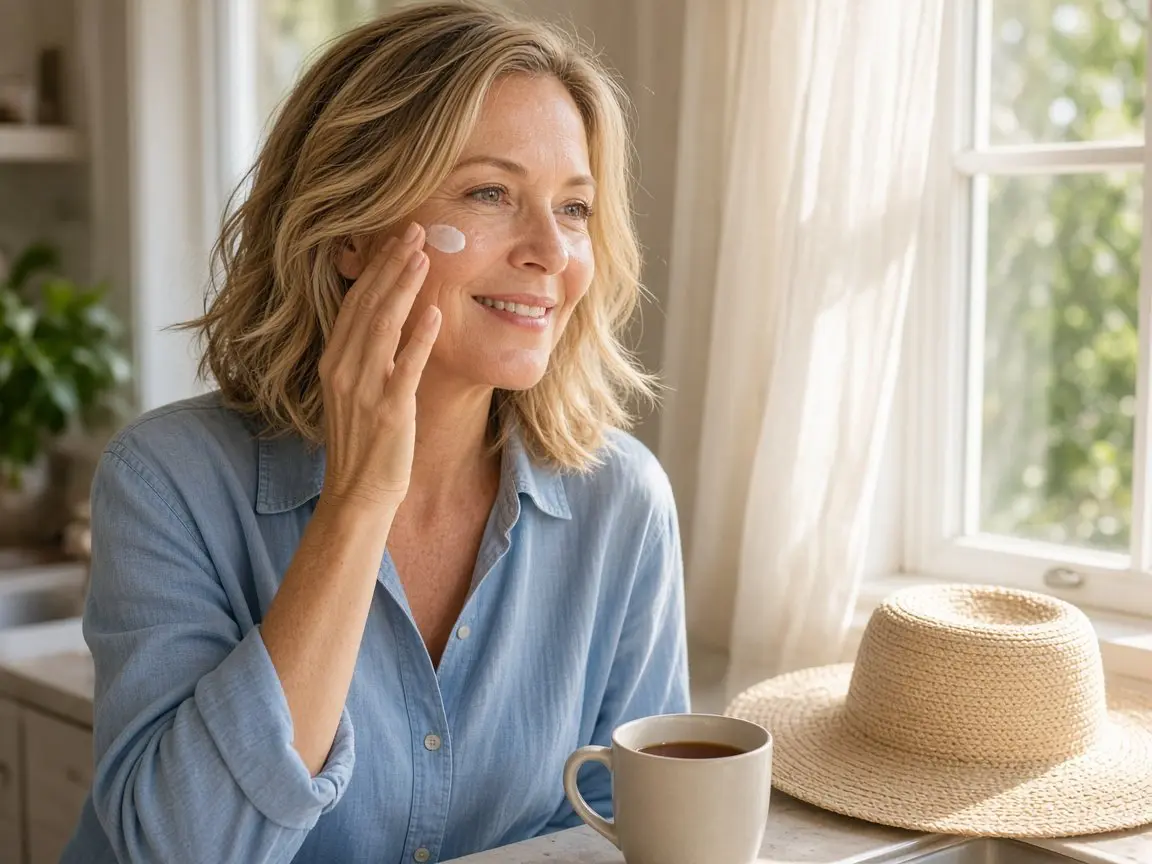
The AAD’s sunscreen tips call for a broad-spectrum, water-resistant SPF 30 or higher, reapplied every two hours outdoors. The AAD adds that a tinted sunscreen with iron oxide better protects against dark spots.
No serum replaces SPF. Our post on vitamin C serum and sunscreen covers the right order.
7. Give It 12 Weeks
Most anti-aging products take at least six weeks to work, and sometimes up to three months, according to the AAD. The bakuchiol trial ran 12 weeks.
Snap a photo in the same window light on day one. Vitamin C serum with bakuchiol rewards patience, not daily mirror checks.
A Simple Routine for Vitamin C Serum With Bakuchiol
Morning
- Cleanse gently and pat dry.
- Apply vitamin C serum.
- Follow with a fragrance-free moisturizer.
- Finish with a broad-spectrum SPF 30 or higher.
Evening
- Wash with a mild cleanser and pat dry.
- Apply your bakuchiol serum or cream.
- Seal in moisture with your night cream.
Once your skin is used to both, you can layer vitamin C serum with bakuchiol in the morning instead. Adjust to how your skin feels.
What About Bakuchiol During Pregnancy?
Here’s the honest answer: we couldn’t find any study of bakuchiol in pregnancy. A PubMed search for “bakuchiol pregnancy” returned zero results.
The AAD says retinoids should be avoided during pregnancy. Bakuchiol isn’t a retinoid, but “plant-based” doesn’t mean proven safe.
The AAD’s pregnancy skin care guide suggests a simple routine and mentions vitamin C in the morning. If you’re pregnant, trying, or breastfeeding, ask your obstetrician before using bakuchiol.
Where Trendy Blends Fits Into Your Routine
Our Trendy Blends 18% Vitamin C Serum covers the vitamin C half. It uses 3-O Ethyl Ascorbic Acid, a stable form of vitamin C, with niacinamide, hyaluronic acid, aloe, and cucumber.
It doesn’t contain bakuchiol, so pair it with a separate bakuchiol product. It’s fragrance-free and comes in a 1 oz airless pump, and 1–2 pumps covers your face.
Being fragrance-free makes it an easy fit for a gentle routine. Our guide to vitamin C serum for sensitive skin has more tips.
If you plan to use our vitamin C serum with bakuchiol, patch test first and start slowly. The serum is $24.99 with free shipping in 3–4 business days, backed by our 60-Day Glow Guarantee with free returns.
When to Check With a Dermatologist
See a dermatologist if any spot worries you. MedlinePlus notes that skin cancers are common in older people, usually on sun-exposed skin, and a provider can tell you if a spot is worrisome.
A dermatologist can also tell you whether a prescription retinoid makes more sense. The AAD notes that for some people in menopause, a retinoid cream can help.
Frequently Asked Questions
Can I use vitamin C serum with bakuchiol?
Yes, most people can use vitamin C serum with bakuchiol. Use vitamin C in the morning and bakuchiol at night, or layer them thinnest to thickest if your skin is calm.
Can you use bakuchiol and vitamin C together in the same routine?
Yes. Apply the watery vitamin C serum first, let it dry, then add bakuchiol. We found no proof that layering two separate products works better than using them apart.
Is bakuchiol as effective as retinol?
In one 12-week trial of 44 people, 0.5% bakuchiol showed no statistical difference from 0.5% retinol for wrinkles and dark spots, with less stinging and scaling. Reviewers say more rigorous studies are needed.
Should I use bakuchiol in the morning or at night?
Either. Bakuchiol was used twice daily in the main trial. Many guides suggest using it at night and saving the morning for vitamin C and sunscreen.
Is bakuchiol safe during pregnancy?
We don’t know. We couldn’t find any pregnancy studies on bakuchiol, so ask your obstetrician first. The AAD says to avoid retinoids while pregnant.
How long does vitamin C serum with bakuchiol take to work?
Plan on about three months. The AAD says most anti-aging products take six weeks to three months, and the main bakuchiol trial lasted 12 weeks.
Conclusion
A vitamin C serum with bakuchiol may be a gentle way to work on dullness and fine lines after 40, especially if retinol never agreed with you. Add one product at a time, keep layers thin, and never skip sunscreen.
The research is promising but still small, so let your skin set the pace. A brighter, smoother complexion builds one patient week at a time.
Medical disclaimer: This article is for general education only and is not medical advice. Talk with a board-certified dermatologist before changing your routine, especially if you’re pregnant, trying to conceive, or breastfeeding, use prescription skin treatments, or have a skin condition.
References
- Dhaliwal S, Rybak I, Ellis SR, et al. Prospective, randomized, double-blind assessment of topical bakuchiol and retinol for facial photoageing. Br J Dermatol. 2019;180(2):289-296. PMID: 29947134.
- Chaudhuri RK, Bojanowski K. Bakuchiol: a retinol-like functional compound revealed by gene expression profiling and clinically proven to have anti-aging effects. Int J Cosmet Sci. 2014;36(3):221-30. PMID: 24471735.
- Fanning JE, McGee SA, Ibrahim OI. Human Clinical Trials Using Topical Bakuchiol Formulations for the Treatment of Skin Disorders: A Systematic Review. J Drugs Dermatol. 2024;23(4):239-243. PMID: 38564402.
- Puyana C, Chandan N, Tsoukas M. Applications of bakuchiol in dermatology: Systematic review of the literature. J Cosmet Dermatol. 2022;21(12):6636-6643. PMID: 36176207.
- Greenzaid J, Friedman A, Sodha P. The Use of Bakuchiol in Dermatology: A Review of In Vitro and In Vivo Evidence. J Drugs Dermatol. 2022;21(6):624-629. PMID: 35674758.
- Draelos ZD, Gunt H, Zeichner J, Levy S. Clinical Evaluation of a Nature-Based Bakuchiol Anti-Aging Moisturizer for Sensitive Skin. J Drugs Dermatol. 2020;19(12):1181-1183. PMID: 33346506.
- Mehta N, Arora V, Verma KK. Severe phototoxic reaction to Psoralea corylifolia seeds in a child with vitiligo. Contact Dermatitis. 2024;90(6):619-621. PMID: 38387032.
- Gandhi HJ, Chandnani S, Jena A, et al. A Rare Cause of Acute on Chronic Liver Failure (ACLF): Bakuchi-Induced Liver Injury. J Clin Exp Hepatol. 2024;14(1):101267. PMID: 38076371.
- Goldberg DJ, Robinson DM, Granger C. Clinical evidence of the efficacy and safety of a new 3-in-1 anti-aging topical night serum-in-oil containing melatonin, bakuchiol, and ascorbyl tetraisopalmitate: 103 females treated from 28 to 84 days. J Cosmet Dermatol. 2019;18(3):806-814. PMID: 30924254.
- Lau M, Mineroff Gollogly J, Wang JY, Jagdeo J. Cosmeceuticals for antiaging: a systematic review of safety and efficacy. Arch Dermatol Res. 2024;316(5):173. PMID: 38758222.
- Al-Niaimi F, Chiang NYZ. Topical Vitamin C and the Skin: Mechanisms of Action and Clinical Applications. J Clin Aesthet Dermatol. 2017;10(7):14-17. PMID: 29104718.
- Iliopoulos F, Sil BC, Moore DJ, et al. 3-O-ethyl-l-ascorbic acid: Characterisation and investigation of single solvent systems for delivery to the skin. Int J Pharm X. 2019;1:100025. PMID: 31517290.
- American Academy of Dermatology. Retinoid or retinol?
- American Academy of Dermatology. Caring for your skin in menopause.
- American Academy of Dermatology. Dermatologist-approved pregnancy skin care.
- American Academy of Dermatology. How to test skin care products.
- American Academy of Dermatology. How to get maximum results from anti-aging skin care products.
- American Academy of Dermatology. How to apply sunscreen.
- MedlinePlus. Aging changes in skin. U.S. National Library of Medicine.
