
Vitamin C Serum After Shower: 7 Smart, Easy Tips
Wondering when to use vitamin C serum after shower—right away, or after your skin settles? Start with a short, warm rinse and a moisturizer on damp skin, not another active ingredient. Once your face feels comfortable again, your usual serum may fit back into the routine—but it is optional, not a fix for a harsh shower.
For skin over 40, a calm shower-to-glow habit matters more than rushing every bottle onto wet skin. This guide separates everyday bath basics from antioxidant marketing, with seven practical ways to protect your glow without pushing irritated skin.
Table of Contents

Can You Use Vitamin C Serum After Shower?
You can consider vitamin C serum after shower if your skin is intact, the water was not scorching, and the product is one you already tolerate.
If your face burns, looks flushed and angry, or feels unusually tight, skip the serum and keep the routine simple. There is no need to apply an active the moment you turn off the water.
The American Academy of Dermatology’s dry-skin tips recommend limiting baths and showers to five to ten minutes in warm water, gently patting dry, and applying a fragrance-free moisturizer while skin is still damp.
Its guidance on skin care in your 60s and 70s also favors warm—not hot—water, short baths or showers, gentle cleansing, and a creamy fragrance-free moisturizer soon after bathing. Those habits support comfort; they are not the same as claiming vitamin C serum after shower repairs every shower-related dry spell.
7 Smart Tips for Vitamin C Serum After Shower
1. Keep the Shower Kind Before Vitamin C Serum After Shower
Leave the serum capped until the shower itself is gentle enough for your skin.
The AAD’s dry-skin advice favors short, warm showers rather than long, hot ones, and it suggests closing the bathroom door to keep steam in. Hot water and long soaks can leave mature skin feeling stripped, which is a poor setup for any active product.
Think of vitamin C serum after shower as a later skincare choice, not your first response to leaving the tub. If you scrubbed with a rough washcloth or used a strongly fragranced body wash on your face, rinse with a gentle cleanser first and wait until comfort returns.
2. Moisturize Damp Skin Before You Reach for Serum
Tightness after bathing is a reason to simplify, not proof that you need a stronger serum.
Dermatologists advise applying moisturizer while skin is still damp after a shower or bath, and using fragrance-free options when dryness is a problem. Creams and ointments often hold moisture better than thin lotions for dry skin, according to the same AAD dry-skin guidance.
If you are deciding between moisturizer and vitamin C serum after shower, choose the moisturizer when your skin feels tight or irritated. You can skip the serum entirely that day. Missing one optional step is preferable to repeatedly applying a product that stings.
3. Let Comfort Guide Timing, Not a Countdown
There is no research-backed rule in these sources that everyone must wait five minutes, fifteen minutes, or until bedtime.
Consider vitamin C serum after shower only when your skin feels normal and the product’s own directions allow it. Waiting until your next regular morning or evening application is a reasonable practical option.
Do not use “it always tingles” as a reason to push through burning. If you notice persistent discomfort, rinse off the product and stop using it. Our guide to vitamin C serum burning explains why irritation deserves attention rather than being treated as a sign of effectiveness.
For an ongoing rash, painful cracks, weeping skin, or symptoms that do not settle, get medical advice. A cosmetic serum is not a substitute for diagnosing the problem.
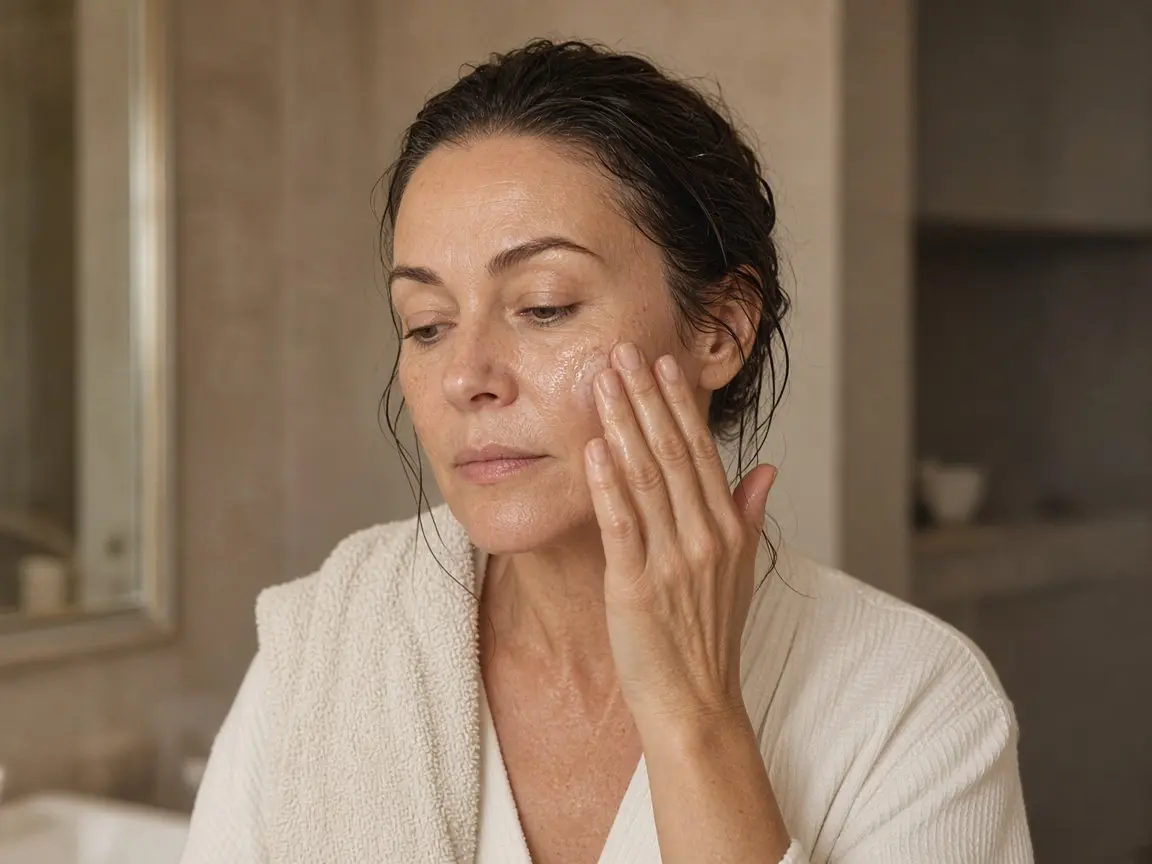
4. Cleanse the Face Gently—Do Not Overwash
A full-body shower is not automatically a second facial scrub.
The AAD’s face-washing guidance recommends lukewarm water, a gentle alcohol-free cleanser, fingertips only, a soft pat dry, and moisturizer when skin feels dry or itchy. Washing up to twice daily—and after heavy sweating—is the usual frame; more scrubbing is not better.
If you already washed your face in the shower with a gentle cleanser, you do not need a second harsh pass before vitamin C serum after shower. Aim for comfort, not a squeaky finish. Avoid cleansing brushes, rough washcloths, or scrubs on skin that already feels stressed.
5. Keep Sunscreen Separate From Antioxidant Claims
A serum is not your daytime sunscreen. The AAD recommends broad-spectrum, water-resistant sunscreen with SPF 30 or higher. Apply it before going outdoors and reapply every two hours outdoors, and immediately after swimming or sweating, following the label.
If you apply vitamin C serum after shower in the morning and then head outside, sunscreen still matters. Shade and protective clothing can also be part of your sun-protection plan. An antioxidant label does not give a product a tested SPF.
For layering on a normal, comfortable-skin day, see our vitamin C serum and sunscreen guide. A steamy bathroom is not a reason to replace established sun protection with an untested skincare shortcut—or to force vitamin C serum after shower into every morning.
6. Choose a Familiar Formula, Not a Shower Experiment
Steamy bathrooms are not the best moment to introduce several new products and then guess which one caused a reaction. If you are considering vitamin C serum after shower, stick with a formula you already know your skin tolerates. Familiar does not mean irritation is impossible, so continue watching how your skin responds.
Before adding a new product, the AAD recommends testing it on a small area twice daily for seven to 10 days. Use the normal amount and follow the product’s directions.
This home test is not the same as a dermatologist’s diagnostic patch testing, nor does it guarantee you will never react.
If your skin is regularly reactive, our sensitive-skin serum guide can help you think through a simpler routine. Persistent sensitivity warrants a conversation with a dermatologist rather than repeated product experiments.
A review of topical vitamin C discusses antioxidant activity, pigmentation, and photoaging applications. It does not establish a post-shower recovery protocol for a consumer facial serum, and it does not prove that bathing makes vitamin C “activate” faster.
7. Match Product Claims to the Actual Formula
Trendy Blends’ 18% Vitamin C Serum uses 3-O Ethyl Ascorbic Acid, a vitamin C derivative—not 18% pure L-ascorbic acid.
The brand’s ingredient information also lists niacinamide, glycerin, sodium hyaluronate, aloe, and cucumber. It is described as fragrance-free and packaged in an airless pump—not a dropper bottle.
If you choose this vitamin C serum after shower, use about 1–2 pumps only as directed on comfortable, intact skin. Fragrance-free does not mean reaction-proof, and a derivative’s percentage should not be read as equivalent to the same percentage of pure ascorbic acid.
The scientific review The Roles of Vitamin C in Skin Health explains vitamin C’s skin biology while discussing delivery and formulation challenges. General vitamin C research is not proof that this particular finished serum has been clinically tested after bathing. No such product-specific trial is claimed here.
If your shower follows a sweaty workout, cleanse first and decide whether serum belongs in the same session at all.

A Simple Shower-Day Plan for Skin Over 40
Keep showers short and warm. Gently cleanse where you need it, pat dry, and moisturize while skin is still a little damp. If you are heading outdoors in daylight, restore sunscreen rather than assuming bathroom steam somehow covered that step.
Later, decide whether vitamin C serum after shower fits how your skin actually feels. Comfortable skin and a familiar formula may make your usual application reasonable. Tight, sore, or reactive skin is a reason to leave it out and seek advice if the problem persists.
You do not need to “catch up” by applying extra serum the next day. Follow the normal product directions. Consistency should mean a sustainable routine, not forcing an active ingredient into every damp moment.
Frequently Asked Questions
Should I Apply Vitamin C Serum Before or After Shower?
After is usually the practical choice if you want clean skin. If you want vitamin C serum after shower, keep the water warm and short, moisturize as needed, and use the serum only when your skin feels comfortable. A serum does not replace sunscreen before daylight outdoor time.
How Long Should I Wait After Showering?
There is no universal evidence-based waiting period in the sources cited here. Moisturize damp skin when you need it, then let comfort and the product directions guide you. Skip serum if your skin stings or looks irritated.
Can Hot Water Make Serum Work Better?
Do not assume it does. Hot water can leave dry skin more uncomfortable, according to dermatologist shower guidance for mature and dry skin. Comfortable skin—not a hotter rinse—is the better setup for any optional active.
Do I Need Serum Right After Every Shower?
No. Choosing vitamin C serum after shower is optional. Many people keep serum for their regular morning or evening routine and let showers stay simple: gentle cleanse, moisturizer, and sunscreen when daylight outdoor time is next.
Is a Stronger Serum Better After Bathing?
Not necessarily. Tolerability and normal product directions matter more than maximizing concentration after a shower. More product or a higher percentage is not an established way to recover from hot water or steam.
Can I Put Serum On Damp Skin Straight From the Shower?
If your skin already tolerates the product and feels comfortable, follow the label. Many people prefer moisturizer on damp skin first, then serum once the face feels settled. If anything stings, rinse and stop.
The Gentle Takeaway
Your post-shower glow starts with simple care: warm water, a short rinse, gentle cleansing, moisturizer on damp skin, and sunscreen when you go outside.
Keep vitamin C serum after shower optional, avoid applying it to irritated skin, and return to a familiar routine when your skin feels comfortable. There is no need to turn a daily shower into a skincare endurance test.
References
1. American Academy of Dermatology. Dermatologists’ top tips for relieving dry skin. https://www.aad.org/public/everyday-care/skin-care-basics/dry/dermatologists-tips-relieve-dry-skin 2. American Academy of Dermatology. How to care for your skin in your 60s and 70s. https://www.aad.org/public/everyday-care/skin-care-basics/care/skin-care-in-your-60s-and-70s 3. American Academy of Dermatology. Face washing 101. https://www.aad.org/public/everyday-care/skin-care-basics/care/face-washing-101 4. American Academy of Dermatology. How to apply sunscreen. https://www.aad.org/public/everyday-care/sun-protection/shade-clothing-sunscreen/how-to-apply-sunscreen 5. American Academy of Dermatology. How to test skin care products. https://www.aad.org/public/everyday-care/skin-care-secrets/prevent-skin-problems/test-skin-care-products 6. Al-Niaimi F, Chiang NYZ. Topical Vitamin C and the Skin: Mechanisms of Action and Clinical Applications. J Clin Aesthet Dermatol. 2017. https://pmc.ncbi.nlm.nih.gov/articles/PMC5605218/ 7. Pullar JM, Carr AC, Vissers MCM. The Roles of Vitamin C in Skin Health. Nutrients. 2017. https://pmc.ncbi.nlm.nih.gov/articles/PMC5579659/
Educational information only; not a diagnosis or personalized treatment plan. Consult a qualified clinician for persistent irritation or a skin condition.
