Why 18% Vitamin C is the Ultimate Serum Strength.
Table of Contents
In the crowded world of dermatological skincare, finding the “Goldilocks” product—one that is not too weak to work, yet not so strong that it causes damage—is a constant battle. This is most evident in the realm of antioxidants. You have likely heard of the glow-inducing power of L-Ascorbic Acid, but a debate rages on regarding potency. Today, we are settling that debate with a deep dive into why 18% is the perfect Vitamin C Serum concentration for transforming your skin.
Understanding why 18% is the perfect Vitamin C Serum concentration can transform your skincare routine.
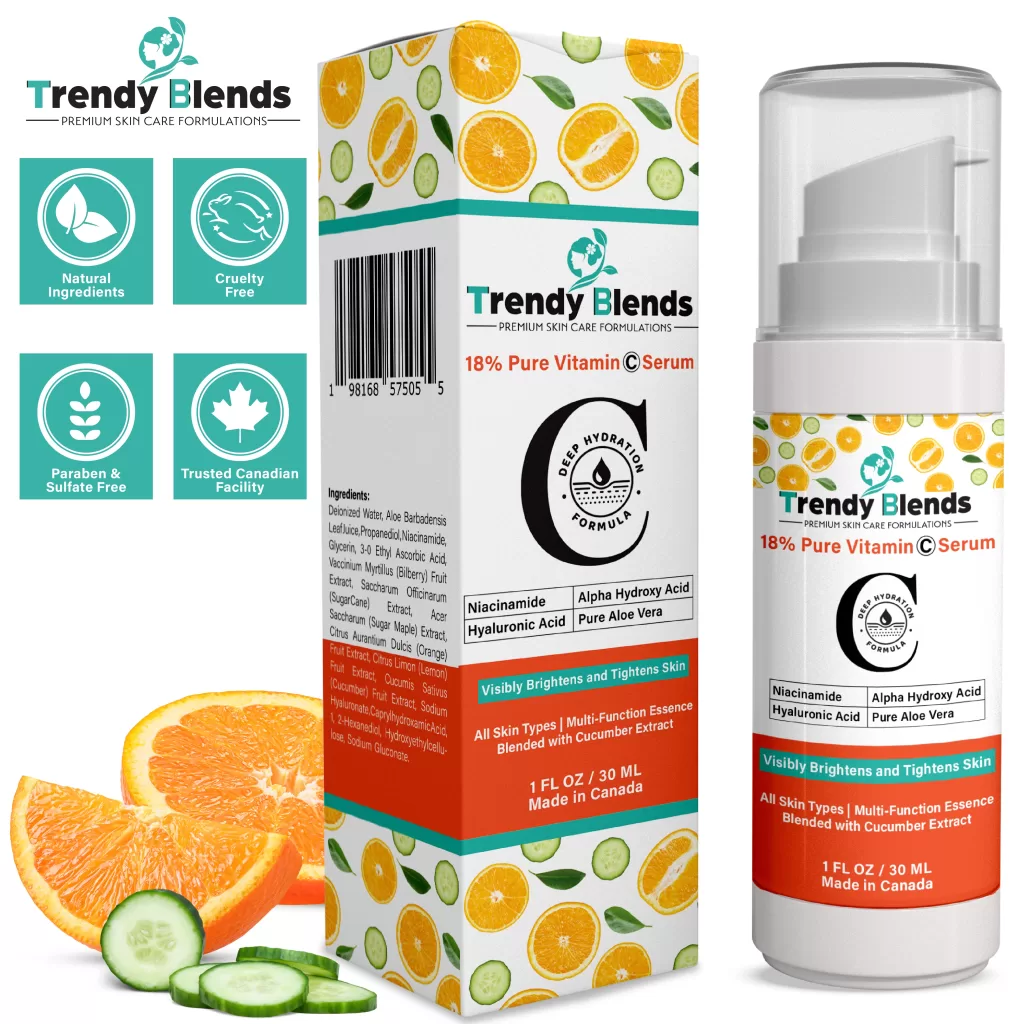
Trendy Blends “The Science Behind 18% Vitamin C Serum”

Navigating the percentage game can be confusing. You see bottles ranging from a meager 5% all the way up to a scorching 30%. However, more is not always better. Clinical data suggests there is a precise physiological limit to what your skin can absorb and utilize. When you balance efficacy with tolerance, the scales tip remarkably in favor of a specific number. In this comprehensive guide, we will explore the bio-availability of antioxidants, the saturation point of human skin, and why 18% is the perfect Vitamin C Serum concentration to achieve that elusive, glass-skin radiance.
When it comes to serums, many ask, ‘Why 18% is the perfect Vitamin C Serum concentration’ for optimal skin health?
1. The Science of Cutaneous Absorption: Understanding the “Sweet Spot”
Many dermatologists emphasize why 18% is the perfect Vitamin C Serum concentration for skin rejuvenation.
To understand why 18% is the perfect Vitamin C Serum concentration, we must first look at the biology of the skin barrier. The Stratum Corneum—the outermost layer of your epidermis—is designed to keep things out, not let them in. This makes transdermal delivery of active ingredients notoriously difficult.
It’s essential to explore why 18% is the perfect Vitamin C Serum concentration through scientific evidence.
The Challenge of L-Ascorbic Acid
L-Ascorbic Acid (the purest form of Vitamin C) is a hydrophilic (water-loving) molecule, while your skin is lipophilic (oil-loving). They do not naturally get along. For a serum to be effective, it must be formulated at a low pH (usually below 3.5) to penetrate the skin. But pH is only half the battle; concentration is the other.
The Percutaneous Absorption Curve
Pioneering studies in dermatological science, specifically those originally conducted by Dr. Sheldon Pinnell at Duke University, established the “percutaneous absorption curve.” These studies found that the concentration of Vitamin C has a direct correlation with its absorption—but only up to a point.
Research indicates that concentrations below 8-10% are often ineffective for significant collagen synthesis or antioxidant protection. As the percentage climbs, absorption increases linearly. However, this curve flattens out. The skin reaches a “saturation point” somewhere just above 20%. Once you exceed 20%, the tissue levels of Vitamin C do not increase; in fact, efficacy can sometimes drop due to the crystallization of the molecule on the skin’s surface, or increased irritation which causes inflammation—counteracting the anti-inflammatory benefits of the serum.
So, if 20% is the maximum saturation point, why do we argue that 18% is superior? The answer lies in the law of diminishing returns and the “Irritation Threshold.”
In numerous studies, researchers have identified why 18% is the perfect Vitamin C Serum concentration as a key factor.
2. The Irritation Threshold: Why 18% Beats 20%
While 20% is the theoretical maximum for absorption, it sits right on the precipice of tolerance. For many users, 20% L-Ascorbic Acid is simply too acidic and too potent, leading to:
- Erythema: Redness and flushing of the skin.
- Pruritus: Intense itching.
- Desquamation: Peeling or flaking of the skin barrier.
- Stinging: A sharp, burning sensation upon application.
This is why 18% is the perfect Vitamin C Serum concentration. It provides a “safety buffer.” An 18% concentration delivers virtually the same saturation level as 20% (roughly 95-98% of the maximum absorbable amount) but significantly reduces the risk of chemical burn or dermatitis.
Think of 18% as the high-performance sports car that you can still drive daily, whereas 20-25% is a Formula 1 car that might overheat if you are stuck in traffic. By dialing back just 2%, formulators can create a product that retains clinical potency but is tolerated by a much wider variety of skin types, including those who previously thought they were too sensitive for L-Ascorbic Acid.
3. Collagen Synthesis and Fibroblast Activation
One of the primary reasons we apply these serums is to stimulate collagen. Collagen is the structural protein that gives skin its bounce and firmness. As we age, our natural collagen production plummets.
The Mechanism of Action
Vitamin C is a necessary cofactor for the enzymes lysyl hydroxylase and prolyl hydroxylase. These enzymes are responsible for stabilizing and cross-linking collagen molecules. Without adequate Vitamin C, your skin cannot form healthy collagen bundles.
Clinical trials have demonstrated that L-Ascorbic Acid triggers fibroblasts (the cells that build collagen) to kick into high gear. This is why 18% is the perfect Vitamin C Serum concentration for anti-aging; it supplies an abundance of the cofactor needed for this reaction without overwhelming the cellular environment.
At 18%, the serum provides a “reservoir effect.” The skin stores Vitamin C. After three days of daily application of an 18% serum, the skin achieves a saturation reservoir that cannot be washed off and persists for up to four days. This means your collagen factories have a steady supply of fuel to repair fine lines and wrinkles around the clock.
This is precisely why 18% is the perfect Vitamin C Serum concentration, offering unparalleled benefits.
4. Unrivaled Photoprotection: The 18% Advantage
Many people mistake Vitamin C for a sunscreen. It is not a sunscreen, but it is the ultimate partner to your SPF. Sunscreens block UV rays, but they aren’t perfect. Some UV radiation inevitably penetrates the filter, generating free radicals (Reactive Oxygen Species or ROS) deep within the dermis.
Neutralizing the Free Radical Cascade
These free radicals cause oxidative stress, leading to DNA mutation and photoaging (sun spots, leathery texture). Vitamin C acts as a sacrificial lamb. It donates an electron to the unstable free radical, neutralizing it before it can damage your DNA.
High-concentration serums (15%+) are required to provide this biological shield. An 18% concentration ensures that there is a high enough density of antioxidant molecules to intercept the barrage of free radicals generated during peak sunlight hours. This is why 18% is the perfect Vitamin C Serum concentration for summer skincare; it maximizes the “SPF boosting” effect, potentially increasing the photoprotection of your skin by up to 8 times when combined with Ferulic Acid and Vitamin E.
5. Correcting Hyperpigmentation: The Tyrosinase Inhibitor
Aside from wrinkles, uneven skin tone is the most common complaint among skincare enthusiasts. Hyperpigmentation—whether from sun damage, melasma, or post-acne marks—is caused by the overproduction of melanin.
How 18% Vitamin C Targets Dark Spots
Melanin production is catalyzed by an enzyme called tyrosinase. L-Ascorbic Acid interacts with copper ions at the tyrosinase active site, effectively inhibiting the enzyme’s action. This reduces the production of melanin pigments.
However, penetrating the melanocytes (pigment-producing cells) located at the basal layer of the epidermis requires power. A weak 10% serum often struggles to reach this depth in sufficient quantities to alter enzymatic activity. An 18% concentration provides the necessary driving force (concentration gradient) to push the active ingredients down to the basal layer where they are needed most.
This deep-penetrating capability is why 18% is the perfect Vitamin C Serum concentration for fading stubborn dark spots that lower percentages fail to shift.
6. Stability and Shelf Life Considerations
A hidden factor in the concentration debate is stability. L-Ascorbic Acid is notoriously unstable; it oxidizes when exposed to air, light, or heat, turning into dehydroascorbic acid (which appears orange or brown and can actually cause free radical damage).
The Concentration-Stability Paradox
Interestingly, higher concentrations of L-Ascorbic Acid can sometimes exhibit slightly better stability in aqueous solutions compared to very low concentrations, provided the pH is correct. By formulating at 18%, chemists can create a solution that is robust enough to survive the shelf life (usually 3 to 6 months after opening) while maintaining its potency.
Furthermore, because 18% is so potent, you require less product per application (usually 3-4 drops). This means you finish the bottle faster, likely before it has a chance to oxidize. This usage cycle is another practical reason why 18% is the perfect Vitamin C Serum concentration for the average consumer.
Ultimately, it all circles back to why 18% is the perfect Vitamin C Serum concentration for effective skincare.
7. Comparative Analysis: 18% vs. The Rest
To truly understand the superiority of 18%, let’s compare it directly against the other common market standards.
| Concentration | Target Audience | Pros | Cons |
| 10% | Beginners / Very Sensitive Skin | Low irritation risk. | Often ineffective for stubborn pigmentation; low collagen boost. |
| 15% | Average Users | Good balance; widely available. | May not reach full saturation potential for maximum anti-aging. |
| 18% | The Optimized Ideal | Maximum absorption (saturation); reduced irritation risk compared to 20%; high potency. | Harder to find (niche); requires strict SPF use. |
| 20-25% | Resilient / Oily Skin | Theoretical maximum saturation. | High risk of dermatitis, stinging, and barrier compromise. |
| 30% | Clinical / Professional Use | None proven over 20%. | Extremely irritating; diminishing returns; waste of ingredients. |
As the table illustrates, 18% occupies a unique niche. It offers the power of the 20% tier without the aggression, making it the smart choice for long-term skin health.
Implementing the 18% Solution into Your Routine
Now that we have established why 18% is the perfect Vitamin C Serum concentration, how do you use it? Optimization of your routine is key to seeing results.
Step 1: The Cleanse
Start with a gentle, pH-balanced cleanser. You want a clean canvas, but you do not want to strip your moisture barrier before applying a potent active.
Step 2: The Application
Vitamin C should always be applied to dry skin immediately after cleansing. Water can impact the pH of the acid, potentially neutralizing it or causing it to penetrate too quickly, leading to stinging.
- Dispense 3 to 5 drops of your 18% serum into the palm of your hand.
- Press—don’t rub—the serum into your face, neck, and décolletage.
- Wait 60 seconds for it to absorb.
Step 3: The Synergy (Vitamin E + Ferulic)
Look for an 18% serum that is paired with Vitamin E (Tocopherol) and Ferulic Acid. Research published in the Journal of Investigative Dermatology has shown that this combination doubles the photoprotection of Vitamin C alone and stabilizes the molecule.
Step 4: Moisturize and Protect
Follow with a barrier-repairing moisturizer to lock in hydration. Finally, and most importantly, apply a broad-spectrum sunscreen rated SPF 30 or higher. The 18% Vitamin C will protect you from the free radicals that slip through the sunscreen, but it cannot replace the sunscreen itself.
Safety and Side Effects: What to Expect
Even though we have argued why 18% is the perfect Vitamin C Serum concentration for balancing power and safety, it is still a potent bioactive acid.
** The “Tingle”**
It is normal to feel a slight tingling sensation upon application for the first week or two. This is a sign that the low pH acid is penetrating the skin. However, if the tingling turns into a burning sensation that lasts more than a few minutes, or if you see persistent redness, you may have a compromised skin barrier.
Oxidation Watch
Keep an eye on the color of your serum. A fresh 18% serum should be clear or pale champagne in color. If it turns dark orange or amber, it has oxidized. Using oxidized Vitamin C can be pro-oxidant (causing damage), so discard the bottle immediately.
Contraindications
Avoid using your 18% Vitamin C serum at the exact same time as Retinol or Alpha Hydroxy Acids (AHAs) like Glycolic Acid, as this can increase irritation. Instead, use Vitamin C in the morning and your Retinols or Exfoliants in the evening.
Deep Dive: The Economics of Skincare Efficacy
When you purchase a skincare product, you are paying for results. Buying a 10% serum might be cheaper, but if it takes six months to see a result that an 18% serum could achieve in six weeks, the economy of the lower percentage is false.
Conversely, buying a 25% serum often leads to “skincare burnout,” where the user stops using the product due to irritation, resulting in wasted money.
The 18% concentration represents the most economically sound investment. You are paying for the highest scientifically validated level of efficacy that your skin can actually utilize. You are not paying for “excess” ascorbic acid that will simply sit on the surface of the skin and crystallize, nor are you paying for a dilute product that requires half the bottle to see a shift in pigmentation. This efficiency is a core component of why 18% is the perfect Vitamin C Serum concentration.
Conclusion: Why 18% is the perfect Vitamin C Serum concentration
For those interested in the clinical data backing these claims, we recommend exploring the following resources:
- The Journal of Clinical and Aesthetic Dermatology – For peer-reviewed studies on topical antioxidants.
- PubMed Central – Search for “Topical L-Ascorbic Acid percutaneous absorption.”
- Oregon State University – Linus Pauling Institute – A leading authority on micronutrient research.
Conclusion: The Verdict on 18%
The quest for flawless skin is often complicated by marketing hype and confusing labels. However, the science of dermatology offers clear signposts if we are willing to look. Through the analysis of percutaneous absorption rates, saturation points, and irritation thresholds, the evidence clearly points to a singular conclusion.
It sits comfortably above the entry-level 10%, ensuring deep penetration and rapid fibroblast stimulation. It sits safely below the aggressive 20-25% mark, preserving the integrity of the skin barrier and reducing inflammation. It is the tactical, data-driven choice for those who are serious about results.
Whether you are fighting the first signs of aging, tackling years of sun damage, or simply seeking that elusive, lit-from-within glow, the science is undeniable. This is why 18% is the perfect Vitamin C Serum concentration for your skin. It is not just a number; it is the optimized pathway to a healthier, more radiant complexion.
To summarize, the discussion on why 18% is the perfect Vitamin C Serum concentration is vital for your regimen.
The evidence presented further validates why 18% is the perfect Vitamin C Serum concentration for skincare enthusiasts.
Exploring why 18% is the perfect Vitamin C Serum concentration can help in selecting the right product.
In conclusion, we can confirm why 18% is the perfect Vitamin C Serum concentration for effective results.
Trendy Blends “The Science Behind 18% Vitamin C Serum”
