Vitamin C Serum Benefits: What the Science Says (2026)
Table of Contents
Vitamin C Serum Benefits: 7 Research-Backed Reasons to Add It to Your Routine
7 Proven Vitamin C Serum Benefits for Skin Over 40 (and Why the Form You Choose Matters)
Quick answer: For skin over 40, the biggest vitamin C serum benefits are antioxidant protection against sun and pollution, backup for your sunscreen, collagen support, smoother-looking fine lines, faded dark spots, and a brighter, more even tone. The catch? Vitamin C only helps if it’s still active when it reaches your skin. That’s why we built our serum around 3-O Ethyl Ascorbic Acid, a stable form of vitamin C that holds up in water-based formulas, has been shown in lab studies to move into skin, and calms down melanin production in cell research. Results are real but gradual. Think 8 to 12 weeks of steady, every-morning use, always with SPF.
Here’s what the research actually says, where the evidence is strong, where it’s still early, and how to get the most from your bottle.
Why Vitamin C Matters More After 40
Healthy skin naturally holds high levels of vitamin C. Those levels drop in aged and sun-damaged skin, and every day of UV and pollution uses up more. Add the collagen loss that speeds up around menopause, and you can see why so many of us start noticing dullness, spots, and crepey texture all at once.
A topical serum is one way to top that reserve back up. But not every vitamin C reaches your skin in working order.
The Stability Problem (and How 3-O Ethyl Ascorbic Acid Solves It)
L-ascorbic acid (LAA) is the classic, pure form, and it’s the one most of the older clinical trials used. It works. It’s also famously fragile. It oxidizes on contact with air, light, and heat, which is why so many LAA serums turn orange in the bottle. To get into skin, it also has to be formulated at a very acidic pH, below 3.5, which is part of why some people find it stingy.
3-O Ethyl Ascorbic Acid is vitamin C with a small ethyl group attached at the spot that normally breaks down first. That tweak makes a big difference:
- It’s more stable. Researchers comparing the two found the ethylated form was more stable in water and more heat-stable than plain ascorbic acid, while still showing significant antioxidant activity.
- It doesn’t need an ultra-low pH. One stability study found it held up best at about pH 5.5 and normal warm temperatures, a far gentler range than LAA requires.
- It gets into skin. A UCL School of Pharmacy team described it as a stable vitamin C derivative and showed it penetrating skin in lab tests from several common skincare solvents, including glycerol and 1,2-hexanediol (both of which you’ll find in our formula). In a follow-up using human skin samples, about 58% of the applied dose permeated over 24 hours. A 2026 study in volunteers found it in the outer layer of skin after a serum was applied, concentrated near the surface.
Let’s be honest about the big picture too. The large body of clinical trials on wrinkles, collagen, and melasma used L-ascorbic acid, and most of the research on 3-O Ethyl Ascorbic Acid so far comes from lab, cell, and skin-sample studies rather than long human trials. A 2026 systematic review abstract made the same point from the other side: vitamin C results depend on the derivative’s chemistry, stabilization, vehicle, pH, and delivery, not just the name on the label. In other words, L-ascorbic acid isn’t the only route to vitamin C benefits. A stable, well-delivered form is a smart one, especially if your skin doesn’t love acidic serums.
7 Proven Vitamin C Serum Benefits for Your Face
1. Everyday Antioxidant Protection
Vitamin C is one of the skin’s key antioxidants. It mops up the free radicals that UV light and pollution create, the ones that chip away at collagen, lipids, and DNA. A review in the Journal of Clinical and Aesthetic Dermatology calls it “one of the most powerful antioxidants in the skin”, and notes that it helps recycle vitamin E, too.
3-O Ethyl Ascorbic Acid brings its own antioxidant credentials. It shows strong free-radical scavenging in lab testing, and in skin-cell studies it boosted the cells’ own antioxidant defenses and lowered inflammatory proteins after UVA exposure. One comparison even found its protective, regenerative effect on UVA-stressed skin cells was stronger than ascorbic acid’s. These are cell studies, not faces, but they point in a good direction.
2. Backup for Your Sunscreen (Never a Replacement)
Vitamin C doesn’t block UV, but it can help skin handle the damage that gets through. In a well-known study, a serum of 15% L-ascorbic acid, vitamin E, and ferulic acid doubled photoprotection, from roughly 4-fold to 8-fold. A follow-up in human skin found the same blend reduced UV-induced damage, including thymine dimers, a type of DNA damage linked to skin cancer.
Those studies tested a specific LAA formula, so we won’t pretend they prove the same numbers for ours. What they show is the principle: antioxidants on your skin add a layer of defense under your SPF. You still need broad-spectrum sunscreen every day, rain or shine.
3. Collagen Support When You Need It Most
Your body can’t make collagen without vitamin C. It’s a required helper for the enzymes that build and stabilize collagen fibers. In a placebo-controlled study in postmenopausal women, topical vitamin C raised levels of collagen types I and III in the dermis. The effect was biggest in women who got the least vitamin C from their diet.
That trial used ascorbic acid. For 3-O Ethyl Ascorbic Acid, the early signal comes from cell research: in UVA-stressed skin cell cultures, it helped restore growth-factor and protective protein levels in fibroblasts, the cells that make collagen. Promising, and we’ll keep watching for human data.
4. Softer-Looking Fine Lines and Sun Damage
Several small, double-blind trials back vitamin C’s smoothing effects:
- 3 months, 19 people: Daily topical ascorbic acid improved fine wrinkling, roughness, laxity, and sallowness compared with a placebo serum.
- 12 weeks, half-face: A vitamin C serum significantly improved wrinkling, and biopsies showed signs of new collagen.
- 6 months: A 5% vitamin C cream led to visible improvement in photoaged skin, with fewer deep furrows.
Our formula pairs vitamin C with niacinamide, which has its own wrinkle research. In a 12-week split-face study of 50 women, 5% niacinamide reduced fine lines, spots, red blotchiness, and yellowing, and improved elasticity. Hyaluronic acid adds a hydration plump: 0.1% HA creams improved skin hydration and elasticity over 60 days.
Keep expectations kind and realistic. These ingredients refine the look of fine lines and texture. They won’t erase deep wrinkles.
5. Fades Dark Spots and Age Spots
This is where 3-O Ethyl Ascorbic Acid really shines in the research. It’s best known as a tyrosinase inhibitor, meaning it slows the enzyme your skin uses to make melanin. A 2021 study in Free Radical Biology & Medicine went further, showing it reduced melanin production in pigment cells, calmed the UV signals that switch melanin on, and lowered pigmentation in a zebrafish model. The authors concluded it’s an effective brightening agent for topical use.
On the clinical side, a 2023 systematic review found topical vitamin C has depigmenting effects in sun-damaged skin and melasma, with the reminder that it takes long-term use. Niacinamide pitches in by reducing the transfer of pigment to skin cells. For more ways to tackle dark spots, the AAD’s tips are a great read.
6. Gentle Support for Melasma
Melasma often flares around perimenopause and is notoriously stubborn. In a 16-week split-face trial, 5% ascorbic acid was compared with 4% hydroquinone, the classic prescription lightener. Patients preferred hydroquinone, but colorimetry showed no statistically significant difference between the two, and side effects were far less common with vitamin C (6.2% vs. 68.7%). That’s encouraging for anyone who wants a gentler option. Still, melasma is best managed with a dermatologist, and vitamin C works best as one part of the plan.
7. Brighter, More Even, “Glass-Skin” Glow
When you ease oxidative stress, discoloration, and roughness at the same time, skin simply looks more awake. Reviews describe improvements in dull, uneven, and sallow skin, and sallowness was one of the measures that improved in the 3-month trial above. Glow is usually the first thing you’ll notice, often within a few weeks. Spots and lines take longer.
Does Vitamin C Serum Actually Work?
Yes, with honest caveats. Many trials are small, short, and use different formulas, and the 2023 review found only a handful of solid RCTs. Research on 3-O Ethyl Ascorbic Acid is newer and mostly comes from the lab. Here’s what gives any vitamin C serum its best shot:
- A stable form that stays active in the bottle and on your skin.
- Smart delivery, with solvents and humectants that help it penetrate.
- Packaging that limits air and light.
- Consistency, daily for at least 8 to 12 weeks.
- Daily sunscreen. No brightening ingredient can keep up with unprotected sun.
How to Choose a Vitamin C Serum for Mature Skin
Look at the Form, Not Just the Percentage
A high number on the label means little if the vitamin C has oxidized. 3-O Ethyl Ascorbic Acid is a good pick for mature, dry, or easily irritated skin because it stays stable without a harsh, low-pH base. L-ascorbic acid is still an option if your skin tolerates acidic formulas. Curious why we chose 18%? Here’s why 18% is our sweet-spot concentration.
Check the Supporting Cast
Niacinamide, hyaluronic acid, and glycerin make a vitamin C serum kinder to dry, thinning skin. And if you’ve heard niacinamide and vitamin C “cancel each other out,” relax. That worry came from old, high-heat lab conditions, and the two are generally fine together.
Packaging That Protects
You don’t need a dark dropper bottle. In fact, droppers let air in every time you open them. An airless pump keeps air and fingers out of the formula, which helps any vitamin C stay fresh. Store it somewhere cool and out of direct sun.
Read the Ingredient List
Fragrance-free is a plus for sensitive and menopausal skin. You can see every ingredient in our serum on our full ingredient list.
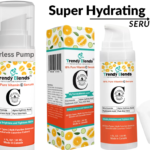
Our formula: The Trendy Blends 18% Vitamin C Serum combines 18% 3-O Ethyl Ascorbic Acid with niacinamide and hyaluronic acid, plus soothing aloe and cucumber, in a fragrance-free airless pump. It’s cruelty-free, paraben-free, and backed by a 60-day money-back guarantee.
For a deeper dive, read why most vitamin C serums fail and why 3-O Ethyl Ascorbic Acid is the solution.
How to Use Vitamin C Serum (Step by Step)
- Patch test first. Try a little on your inner arm or behind your ear for a few days to check for a reaction.
- Cleanse and pat your skin dry.
- Apply one to two pumps to your face, neck, and chest, skipping the eye area.
- Give it a minute to sink in.
- Moisturize. Mature skin loves a richer cream on top.
- Finish with broad-spectrum SPF 30+ every single morning.
Morning or Night?
Morning is ideal, so the antioxidant protection is working while you’re out in sun and pollution. But consistency beats timing. If nights fit your routine better, that’s fine too.
Layering With Other Actives
- Retinol: Vitamin C in the morning, retinol at night is the easy, low-irritation split. Our vitamin C and retinol layering guide walks through it.
- AHAs, BHAs, and benzoyl peroxide: Use them at a different time of day, or on alternate days, to keep irritation down.
- Niacinamide and hyaluronic acid: Already in the bottle, and happy together.
Wondering when you’ll see changes? Here’s our vitamin C results timeline.
Possible Side Effects
Topical vitamin C is generally well tolerated. In the melasma trial above, only 1 of 16 people had side effects on vitamin C. Because 3-O Ethyl Ascorbic Acid doesn’t rely on a very acidic base, many people find it gentler than classic LAA serums. Still, any skincare can cause:
- Mild tingling, redness, or dryness, especially at first
- Breakouts in some people, often from the overall formula rather than the vitamin C
- Rarely, a true allergy. A small number of allergic contact dermatitis cases linked to 3-O Ethyl Ascorbic Acid have been reported, which is exactly why patch testing matters.
To keep things comfortable: start every other day, apply to dry skin, and follow with moisturizer. Stop and see a dermatologist if you get persistent burning, swelling, hives, or a spreading rash. If you have eczema, rosacea, or a compromised barrier, check with your dermatologist first.
Frequently Asked Questions
What does vitamin C serum do for skin over 40?
It gives skin antioxidant protection against sun and pollution, supports collagen, softens the look of fine lines, fades dark spots, and brightens dull, uneven tone. Results build gradually over two to three months of daily use.
Is 3-O Ethyl Ascorbic Acid as good as L-ascorbic acid?
They’re different tools. L-ascorbic acid has the most clinical trials, but it’s unstable and needs a very acidic formula. 3-O Ethyl Ascorbic Acid is far more stable, works at a gentler pH, and has been shown in lab studies to penetrate skin, fight free radicals, and reduce melanin production. Human trials on it are still limited, so we describe the evidence as promising rather than definitive.
How long does vitamin C serum take to work?
Many people notice brighter skin within a few weeks. Dark spots and fine lines usually need 8 to 12 weeks, and most clinical studies measure results at 12 weeks to 6 months.
Can I use vitamin C serum with niacinamide?
Yes. The old warning about mixing them came from high-heat lab conditions that don’t match real skincare. Our serum includes both, and niacinamide brings its own research for spots, redness, and fine lines.
Does vitamin C serum help with age spots and dark spots?
Research suggests it does. 3-O Ethyl Ascorbic Acid inhibits tyrosinase, the enzyme behind melanin, and a systematic review found topical vitamin C has depigmenting effects in sun-damaged skin and melasma. Daily sunscreen is essential for any spot treatment to work.
Should I use vitamin C serum in the morning or at night?
Morning is best, so its antioxidant protection works alongside your sunscreen. Night use is fine if that’s what fits your routine. Using it consistently matters most.
Can vitamin C serum replace sunscreen?
No. Vitamin C helps skin defend against UV damage, but it doesn’t block UV rays. Always follow it with broad-spectrum SPF 30 or higher.
Does my vitamin C serum need a dark dropper bottle?
No. What matters is limiting air and light. An airless pump protects the formula from air every time you use it, and a stable form like 3-O Ethyl Ascorbic Acid is much less prone to oxidizing than L-ascorbic acid. Store it somewhere cool and out of direct sun.
The Bottom Line
Vitamin C is one of the most rewarding ingredients you can add after 40: antioxidant defense, sunscreen backup, collagen support, softer lines, fewer spots, and that glow you’ve been missing. The trick is choosing a form that stays active. 3-O Ethyl Ascorbic Acid gives you that stability without a harsh, acidic base, and the research on its penetration, antioxidant power, and melanin control keeps growing. Use it every morning, follow with SPF, and give it a good three months. Your skin will thank you, one blend at a time.
Ready to try it? Meet the Trendy Blends 18% Vitamin C Serum.
This article is for educational purposes and isn’t a substitute for personalized medical advice. If you have a skin condition, talk to a board-certified dermatologist.