
Vitamin C Serum Breakouts: 7 Proven Fixes for Clear Skin.
Table of Contents
Vitamin C serum breakouts can feel so unfair. You start a serum to brighten and firm your skin, and a week later there’s a little cluster of bumps along your jaw.
So is it the serum? Is it “purging”? Or is something else going on?
Here’s the reassuring news. Vitamin C itself is rarely the villain, and once you know what’s really behind those spots, they’re usually easy to fix.

Are Vitamin C Serum Breakouts Real, or Is It Purging?
Let’s start with the word everyone uses: purging.
Purging happens when an ingredient speeds up how fast your skin sheds and renews its cells. Clogs that were already forming under the surface get pushed up faster, so you see a temporary wave of spots.
The ingredients known for this are the turnover boosters. Think retinoids, exfoliating acids like glycolic and salicylic acid, and benzoyl peroxide.
Vitamin C works differently. It’s an antioxidant that helps defend skin from UV and pollution stress, supports collagen, and helps fade dark spots.
A dermatology review of topical vitamin C and the skin describes its antioxidant, anti-aging, and brightening roles. Speeding up cell turnover isn’t one of them.
So true purging from vitamin C is unlikely. That doesn’t mean vitamin C serum breakouts are imaginary, though.
They’re real for plenty of people. They just usually come from something other than the vitamin C.
Why Skin Breaks Out After 40, Serum or Not
This part surprises a lot of women. Breakouts don’t always retire when we hit our 40s.
The American Academy of Dermatology’s page on adult acne explains that acne can continue into your 40s and 50s, and it can even show up for the first time as an adult. Dermatologists call this adult-onset acne, and the AAD notes it’s most common among women going through menopause.
Fluctuating hormones around perimenopause and menopause are a common trigger. Stress is another, because it can nudge oil glands into overdrive.
Why does that matter here? Because timing can fool us.
If you start a new serum during a stressful month or a hormonal shift, it’s easy to blame the bottle for what your body was already doing. Plenty of so-called vitamin C serum breakouts are really just coincidence.
If menopause is reshaping your skin, our menopause skincare guide is a good next read.
What Really Causes Vitamin C Serum Breakouts
When a serum truly is the trigger, vitamin C serum breakouts usually trace back to one of these five things.
Heavy, pore-clogging bases
Some vitamin C products are built on rich oils or thick, occlusive textures. On oily or congested skin, that base can clog pores even when the vitamin C is perfectly fine. A surprising number of vitamin C serum breakouts start right here.
Irritation from very acidic formulas
Classic L-ascorbic acid is well studied, but it typically needs a very low pH to stay stable. On thinner, drier, or sensitive mature skin, that acidity can sting. Irritated skin can then flare with red bumps that look a lot like acne, and those get mistaken for vitamin C serum breakouts all the time.
A serum that has oxidized
Vitamin C can break down when it’s exposed to air, light, and heat. A serum that’s turned dark orange or brown has lost potency, and old product is never something you want on reactive skin. If yours has darkened, it’s time for a fresh one.
Too many new actives at once
This one is incredibly common. You start vitamin C the same week as a new retinol, a peel, and a new moisturizer. Now there’s no way to know which one caused the vitamin C serum breakouts, if any of them did.
Fragrance or an ingredient allergy
The AAD notes that ingredients such as preservatives can trigger allergic contact dermatitis, which leaves skin red, itchy, and swollen. Fragrance is another frequent culprit. An allergic rash isn’t acne, but in the mirror it can feel like the same problem.
Purging vs. Breakout: How to Tell the Difference
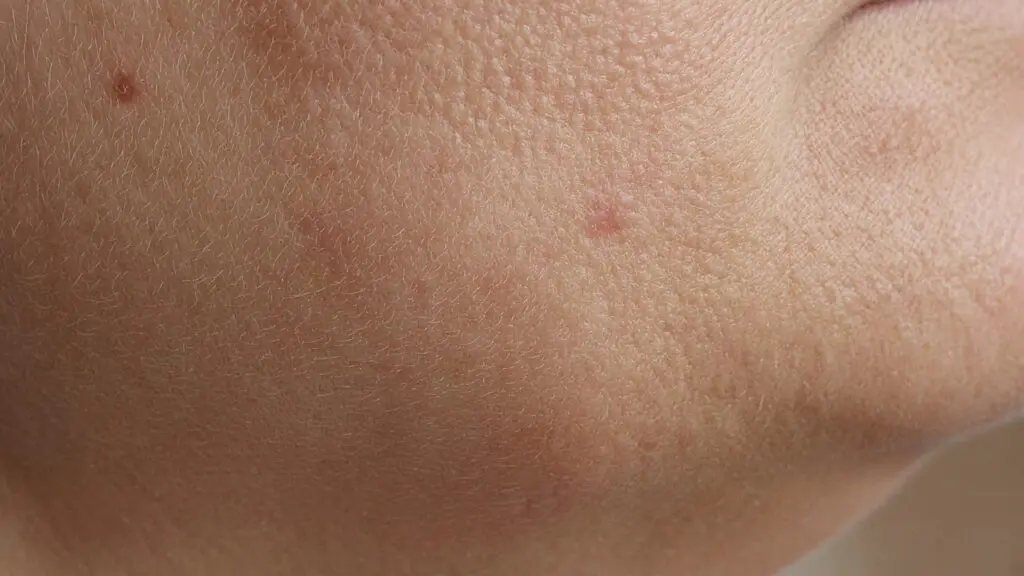
Not sure what you’re looking at? These clues help you sort true vitamin C serum breakouts from a purge or a reaction.
- Where the spots show up: A purge usually appears where you already tend to break out. A reaction often shows up in new places, like your cheeks when you normally only get chin spots.
- What they look like: Purging tends to bring familiar whiteheads and small pimples. Itchy, burning, or rash-like bumps point to irritation or allergy.
- What you started: If the only new thing is a vitamin C serum, true purging is unlikely, because vitamin C isn’t a turnover booster.
- How long it lasts: A purge from a retinoid or acid should calm down as your skin adjusts. Spots that keep spreading or getting angrier are a sign to stop.
If your bumps itch, sting, or burn, treat that as a reaction rather than a purge. Pause the new product.
Can Vitamin C Actually Help Acne-Prone Skin?
Here’s the twist. The right vitamin C may actually be on your side.
In a randomized, double-blind trial of 5% sodium ascorbyl phosphate lotion for acne, 50 people used either the vitamin C lotion or a plain base for 12 weeks. The vitamin C group improved more on every measure the researchers tracked, with side effects similar to the plain lotion.
That study used a different vitamin C derivative at a lower strength than our serum, so it isn’t proof about any one product. Still, it shows vitamin C and clear skin are not enemies, and that vitamin C serum breakouts aren’t a given.
Niacinamide has its own encouraging research.
In a study of 4% nicotinamide gel versus clindamycin gel, 76 people with inflammatory acne were treated for 8 weeks. The nicotinamide gel worked about as well as the antibiotic gel. Nicotinamide is another name for niacinamide.
Our formula pairs vitamin C with niacinamide for exactly that reason. You can read more in our guide to niacinamide and vitamin C together.
Why 3-O Ethyl Ascorbic Acid is a gentler choice
3-O Ethyl Ascorbic Acid is a stable form of vitamin C. It doesn’t need the harsh, very acidic formula that pure L-ascorbic acid relies on, which is a big part of why it feels comfortable on mature and reactive skin.
In lab research on a serum with 3-O Ethyl Ascorbic Acid, the formula supported collagen production in skin cells and reduced melanin in pigmented skin models. It’s early-stage lab work, not a large clinical trial, but it’s a promising picture for brightening without the burn.
7 Proven Fixes for Vitamin C Serum Breakouts
Try these in order. Most people find vitamin C serum breakouts settle after the first two or three.
1. Patch test before it goes on your face
The AAD’s guide on how to test skin care products recommends applying a new product to a quarter-sized spot, such as the inside of your arm, twice a day for seven to 10 days. No redness, itching, or swelling? You’re likely good to go.
2. Add one new product at a time
The AAD’s advice on getting the most from anti-aging products is simple: start with one product, because several at once can irritate skin. Give vitamin C a couple of weeks on its own before adding anything else. That’s the easiest way to stop guessing about vitamin C serum breakouts.
3. Use 1 to 2 pumps, not more
More serum doesn’t mean faster results. The AAD warns that applying more than directed can cause clogged pores and blotchy skin. One to two pumps covers your face and neck.
4. Choose a stable, lightweight formula
A water-based serum with a stable vitamin C is far less likely to cause vitamin C serum breakouts than a heavy, oily one. Our serum is fragrance-free, built around 3-O Ethyl Ascorbic Acid, and sealed in an airless pump that limits the air exposure that breaks vitamin C down. You can check every ingredient on the product page.
5. Space out retinoids and acids
If you use a retinoid or an exfoliating acid, keep it at night and save vitamin C for the morning. Our vitamin C and retinol layering guide shows an easy weekly schedule that helps prevent vitamin C serum breakouts caused by overload.
6. Check your moisturizer and sunscreen too
Sometimes the serum gets blamed for what’s layered on top of it. The AAD’s acne skin care tips suggest looking for sunscreen labeled “non-comedogenic” or “won’t clog pores.” Our guide to non-comedogenic moisturizers can help you pick a partner product.
7. Hands off, and give it time
The AAD notes that picking or squeezing makes acne take longer to clear and raises the risk of scars and dark marks. It also says acne treatments can take several weeks to a few months to show a difference. Be patient with your skin while vitamin C serum breakouts settle.

A Simple Morning Routine for Breakout-Prone Mature Skin
Keep it short and gentle. Your skin will thank you.
- Cleanse with a mild, non-abrasive cleanser and pat dry
- Apply 1 to 2 pumps of vitamin C serum and press it in with your fingertips
- Follow with a lightweight, non-comedogenic moisturizer
- Finish with broad-spectrum SPF 30 or higher
At night, cleanse, then use your retinoid or acid on its scheduled nights, followed by moisturizer. Keeping actives apart like this is one of the simplest ways to avoid vitamin C serum breakouts in the first place.
When to Stop and See a Dermatologist
Stop using any new product right away if you notice swelling, intense itching, burning, or a spreading rash. Gently rinse it off and let your skin calm down.
It’s also time to book a board-certified dermatologist if your breakouts are painful, deep, or leaving marks. The same goes for vitamin C serum breakouts that keep coming back after you’ve paused the product. Adult acne is very treatable, and you don’t have to figure it out alone.
FAQ: People Also Ask
Does vitamin C serum cause breakouts?
Vitamin C itself rarely causes acne. Most vitamin C serum breakouts come from a heavy base, an irritating low-pH formula, an oxidized product, fragrance, or starting several new products at once.
Does vitamin C cause purging?
Not usually. Purging comes from ingredients that speed up cell turnover, like retinoids and exfoliating acids. Vitamin C is an antioxidant, so true purging from it is unlikely.
How long do vitamin C serum breakouts last?
If you stop the product that caused them, irritation-related spots usually start calming within days to a couple of weeks. Acne that keeps going for weeks after you stop is worth showing to a dermatologist.
Should I stop using vitamin C if I break out?
If the bumps itch, burn, or show up in new places, pause it. Once your skin settles, patch test again and reintroduce it slowly, with nothing else new in your routine.
Can vitamin C serum clog pores?
The vitamin C itself isn’t known to clog pores. A thick, oil-heavy formula can, though, which is why a lightweight, water-based serum is a safer pick for congested skin.
Is vitamin C good for acne-prone mature skin?
It can be. A controlled trial found a 5% vitamin C derivative improved acne, and niacinamide has helpful research too. A stable, fragrance-free serum makes a gentle fit for skin over 40.
Conclusion
Vitamin C serum breakouts are real, but vitamin C is rarely the true cause. Hormones, heavy formulas, oxidized product, fragrance, and too many new actives are much more likely to be behind those bumps.
Patch test first, add one product at a time, keep actives apart, and give your skin a few weeks. Most mature skin settles beautifully once the routine is simple.
If you want a gentle, stable vitamin C for your morning routine, try the Trendy Blends 18% Vitamin C Serum with 3-O Ethyl Ascorbic Acid, niacinamide, hyaluronic acid, aloe, and cucumber.
It’s fragrance-free, comes in a 1 oz airless pump, ships free in 3 to 4 business days, and is backed by our 60-Day Glow Guarantee with free returns. Questions? Just email Info@mytrendyblends.com.
Disclaimer
This article is for general education and isn’t medical advice. Any skin care product, including vitamin C serum, can cause irritation or a reaction in some people.
If you have persistent or severe acne, rosacea, eczema, a known allergy, or you’re pregnant or on prescription skin treatments, please talk with a board-certified dermatologist first. Results vary from person to person.
References
- Al-Niaimi F, Chiang NYZ. Topical vitamin C and the skin: mechanisms of action and clinical applications. J Clin Aesthet Dermatol. 2017;10(7):14-17.
- Woolery-Lloyd H, Baumann L, Ikeno H. Sodium L-ascorbyl-2-phosphate 5% lotion for the treatment of acne vulgaris: a randomized, double-blind, controlled trial. J Cosmet Dermatol. 2010;9(1):22-27.
- Shalita AR, Smith JG, Parish LC, Sofman MS, Chalker DK. Topical nicotinamide compared with clindamycin gel in the treatment of inflammatory acne vulgaris. Int J Dermatol. 1995;34(6):434-437.
- Zerbinati N, Sommatis S, Maccario C, et al. The anti-ageing and whitening potential of a cosmetic serum containing 3-O-ethyl-l-ascorbic acid. Life (Basel). 2021;11(5):406.
- American Academy of Dermatology. Adult acne.
- American Academy of Dermatology. How to test skin care products.
- American Academy of Dermatology. How to maximize results from anti-aging skin care products.
- American Academy of Dermatology. Acne: tips for managing.
