
If you’ve ever wondered why your vitamin C serum let you down, 3-O Ethyl Ascorbic Acid might be the answer you’ve been looking for. Maybe your last bottle turned orange in a month. Maybe it stung so much you quit after a week.
You’re not alone, and it’s not your skin’s fault.
Vitamin C really is one of the best ingredients for skin over 40. The trouble is usually the form of vitamin C, the formula around it, and the packaging. Let’s walk through what goes wrong, and what a gentler, more stable option looks like.
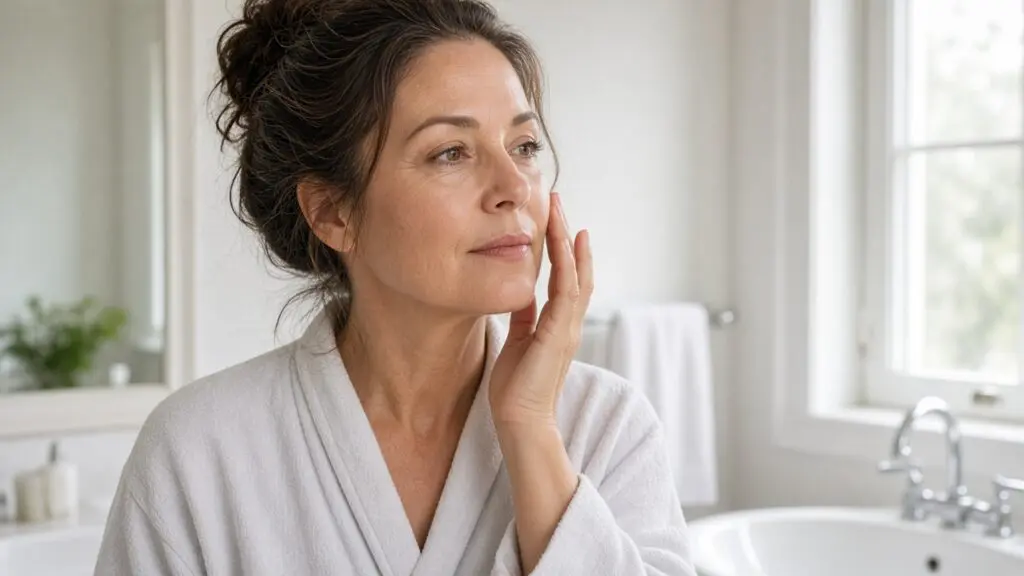
The Promise of Vitamin C for Skin Over 40
There’s a reason vitamin C is in so many routines. A dermatology review of topical vitamin C and the skin describes its key roles.
- Antioxidant defense: It helps neutralize free radicals from UV and pollution.
- Collagen support: Vitamin C is needed to make collagen, which helps skin look firmer.
- Brightening: It helps fade the look of dark spots and uneven tone.
For mature skin, that’s a lovely trio. Collagen naturally declines with age, and years of sun often show up as spots and dullness.
So why do so many of us end up disappointed?
Why Most Vitamin C Serums Fail: 4 Common Reasons
Most of the time, vitamin C serums don’t fail because vitamin C doesn’t work. They fail because the formula can’t deliver it well, or because it’s too uncomfortable to use every day.
1. Instability and Oxidation
One of the main reasons most vitamin C serums fail is instability.
L-ascorbic acid, the classic form of vitamin C, is the most studied form. It’s also fragile. Air, light, and heat can break it down, and the serum often turns yellow, then orange, then brown.
A review of ascorbic acid and its derivatives explains that this instability is a big formulation challenge, which is why chemists developed more stable forms. If you’ve seen your serum darken, our guide on why vitamin C serum turns orange covers what’s happening.
2. A Low pH That Stings
To get into the skin, L-ascorbic acid needs a very acidic formula. A classic study on L-ascorbic acid absorption found it needed a pH below 3.5 to penetrate well.
That acidity is fine for some people. But thinner, drier, or sensitive mature skin often answers with stinging, redness, or flaking.
And here’s the thing: a serum you dread putting on is a serum you’ll stop using. Consistency is what brings results.
3. Penetration Problems
Pure L-ascorbic acid loves water, and the outer layer of skin is built to keep things out. That’s part of why formulas lean on a low pH to push it in.
When the formula isn’t right, much less vitamin C reaches the skin than the label suggests.
4. Packaging and Formula Choices
Clear bottles, wide openings, and lots of air exposure all speed up breakdown. Some formulas also pile on fragrance, which can bother reactive skin.
Put all four together and it’s easy to see why so many bottles end up half used at the back of the cabinet.
What Is 3-O Ethyl Ascorbic Acid?
3-O Ethyl Ascorbic Acid is a modified form of vitamin C. A small ethyl group is attached to the vitamin C molecule, which makes it much more stable than L-ascorbic acid.
Researchers studying 3-O Ethyl Ascorbic Acid delivery to the skin describe it as a stable derivative that can be delivered into the skin, so you can use it without the very low pH L-ascorbic acid needs.
Want to see how it stacks up against other forms? Our breakdown of vitamin C derivatives compares the most common ones.
Why 3-O Ethyl Ascorbic Acid Is Easier to Live With
Here’s what makes 3-O Ethyl Ascorbic Acid such a friendly choice for mature skin:
- Stable: It resists oxidation much better than L-ascorbic acid, so your serum stays fresh longer.
- Gentle: It doesn’t need a stinging, low-pH formula, which is great news for sensitive skin.
- Brightening support: In a lab study of a cosmetic vitamin C serum, researchers saw antioxidant activity, collagen support, and reduced melanin in skin cell models.
To be fair, lab results aren’t the same as results on your face. But together, stability and comfort mean you’re far more likely to use it every single day.
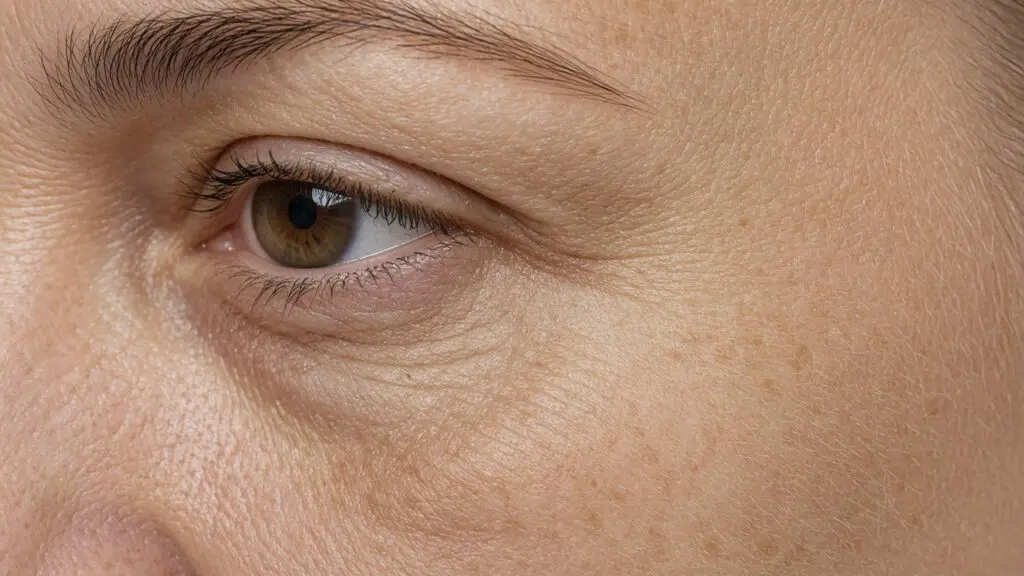
3-O Ethyl Ascorbic Acid vs. L-Ascorbic Acid
Neither form is “bad.” L-ascorbic acid is the most studied form of vitamin C and works well for many people. 3-O Ethyl Ascorbic Acid is simply a gentler, more stable route. Here’s a simple side-by-side:
| Feature | 3-O Ethyl Ascorbic Acid | L-Ascorbic Acid |
|---|---|---|
| Stability | Resists oxidation much better | Breaks down with air, light, and heat |
| Formula pH | No very low pH needed | Needs a low pH (below about 3.5) |
| Comfort | Generally well tolerated | Can sting sensitive skin |
| Research | Newer, growing research | The most studied form |
| Best for | Daily use, mature and sensitive skin | Resilient skin that tolerates acidity |
If your skin tends to react, our guide to vitamin C serum for sensitive skin has more tips.
How We Formulated Our 18% Vitamin C Serum
We built Trendy Blends 18% Vitamin C Serum around 18% 3-O Ethyl Ascorbic Acid because we wanted vitamin C that’s stable and gentle enough for everyday use. Curious why we picked that strength? Here’s why 18% is our sweet spot.
We kept the rest of the formula simple and supportive:
- Niacinamide: Helps with the look of pores, redness, and uneven tone, and supports the skin barrier.
- Hyaluronic acid: Draws in moisture for a plumper, more hydrated look.
- Aloe and cucumber: Soothing botanicals that help skin feel calm and comfortable.
Niacinamide and vitamin C make a great team, too. Our niacinamide and vitamin C guide explains why.
It’s fragrance-free and comes in a 1 oz airless pump that keeps air out between uses. Just 1–2 pumps is all you need.
What to Expect
Everyone’s skin is different. With daily use and sunscreen, a vitamin C serum like ours can help:
- Brighten the look of dull, tired skin
- Fade the look of dark spots and uneven tone over time
- Support firmer-looking skin as part of a steady routine
Give it at least 8 to 12 weeks. Our vitamin C results timeline shows what each stage tends to look like.
How to Use 3-O Ethyl Ascorbic Acid for Best Results
A few simple habits make all the difference:
- Patch test first. The AAD suggests testing a new product on a small area for several days before using it all over.
- Apply in the morning. After cleansing, press 1–2 pumps onto your face and neck.
- Follow with moisturizer and SPF. Vitamin C helps defend against free radicals, but sunscreen does the heavy lifting. Here’s how to layer vitamin C and sunscreen.
- Keep retinol for night. If you use a retinoid, our vitamin C and retinol layering guide shows how to split them.
- Be patient. The AAD notes that anti-aging products take time, often weeks to months, so stick with one routine.
Even a stable serum appreciates a cool, dry spot away from direct sun.

The Future of Vitamin C in Skincare
Skincare is moving toward ingredients that work in real life, not just in the lab. 3-O Ethyl Ascorbic Acid is a great example. It brings vitamin C’s brightening and antioxidant benefits in a form that’s easier to use consistently.
As more of us read ingredient labels, demand for stable, gentle formulas will keep growing. L-ascorbic acid will always have its place, since it’s the most studied form. It just isn’t the only way to get vitamin C’s benefits.
That’s the thinking behind our serum: real vitamin C benefits without sacrificing comfort, made with mature and sensitive skin in mind.
Frequently Asked Questions
Is 3-O Ethyl Ascorbic Acid real vitamin C?
Yes. 3-O Ethyl Ascorbic Acid is a vitamin C derivative, meaning vitamin C with a small chemical change that makes it more stable. It’s designed to bring vitamin C’s benefits to the skin.
Is 3-O Ethyl Ascorbic Acid better than L-ascorbic acid?
Not better, just different. L-ascorbic acid is the most studied form. 3-O Ethyl Ascorbic Acid is more stable and doesn’t need a very low pH, so many people with sensitive or mature skin find it easier to use.
Can I use 3-O Ethyl Ascorbic Acid every day?
Yes, that’s one of its biggest perks. Most people use 1–2 pumps each morning, followed by moisturizer and sunscreen.
Will 3-O Ethyl Ascorbic Acid turn orange?
It resists oxidation much better than L-ascorbic acid. Good packaging helps too, which is why our serum comes in an airless pump. Here are the signs a vitamin C serum has oxidized.
Can I use it with niacinamide and retinol?
Yes. Our serum already pairs it with niacinamide. If you use retinol, apply vitamin C in the morning and retinol at night.
How long until I see results?
Some people notice a brighter look within a few weeks. For dark spots and firmness, give it 8 to 12 weeks of daily use with sunscreen.
Final Thoughts
Vitamin C remains one of the most powerful ingredients in skincare, but the form it takes matters. L-ascorbic acid paved the way and is still the most studied. Its instability and sting just make it hard for many of us to stick with.
A stable, gentle form like 3-O Ethyl Ascorbic Acid makes daily use so much easier, and daily use is where the glow comes from.
Ready to try it? Trendy Blends 18% Vitamin C Serum is $24.99, ships free in 3 to 4 business days, and comes with our 60-Day Glow Guarantee with free returns.
Questions? Email us at Info@mytrendyblends.com.
Disclaimer
This article is for general education and isn’t medical advice. Any skin care product can cause irritation in some people.
If you have a skin condition, a known allergy, or you’re pregnant or using prescription treatments, please check with a board-certified dermatologist first. Results vary.
References
- Al-Niaimi F, Chiang NYZ. Topical vitamin C and the skin: mechanisms of action and clinical applications. J Clin Aesthet Dermatol. 2017;10(7):14-17.
- Stamford NP. Stability, transdermal penetration, and cutaneous effects of ascorbic acid and its derivatives. J Cosmet Dermatol. 2012;11(4):310-317.
- Pinnell SR, Yang H, Omar M, et al. Topical L-ascorbic acid: percutaneous absorption studies. Dermatol Surg. 2001;27(2):137-142.
- Iliopoulos F, Sil BC, Moore DJ, Lucas RA, Lane ME. 3-O-ethyl-l-ascorbic acid: characterisation and investigation of single solvent systems for delivery to the skin. Int J Pharm X. 2019;1:100025.
- Zerbinati N, Sommatis S, Maccario C, et al. The anti-ageing and whitening potential of a cosmetic serum containing 3-O-ethyl-l-ascorbic acid. Life (Basel). 2021;11(5):406.
- American Academy of Dermatology. How to test skin care products.
- American Academy of Dermatology. How to maximize results from anti-aging skin care products.