Is THD Ascorbate Better Than L-Ascorbic Acid? 7 Pro Secrets.
Table of Contents
The Great Vitamin C Debate: An Introduction
Welcome back, glow getters and skincare junkies, to another deep dive into the science of radiance! If you have ever wandered the aisles of Sephora or scrolled endlessly through Instagram, you know Vitamin C is the holy grail of brightening. It is the gold standard for defending your skin against pollution, UV damage, and the dreaded dullness that creeps in after a long week. But not all Vitamin C serums are created equal, and the ingredient lists can be downright confusing.
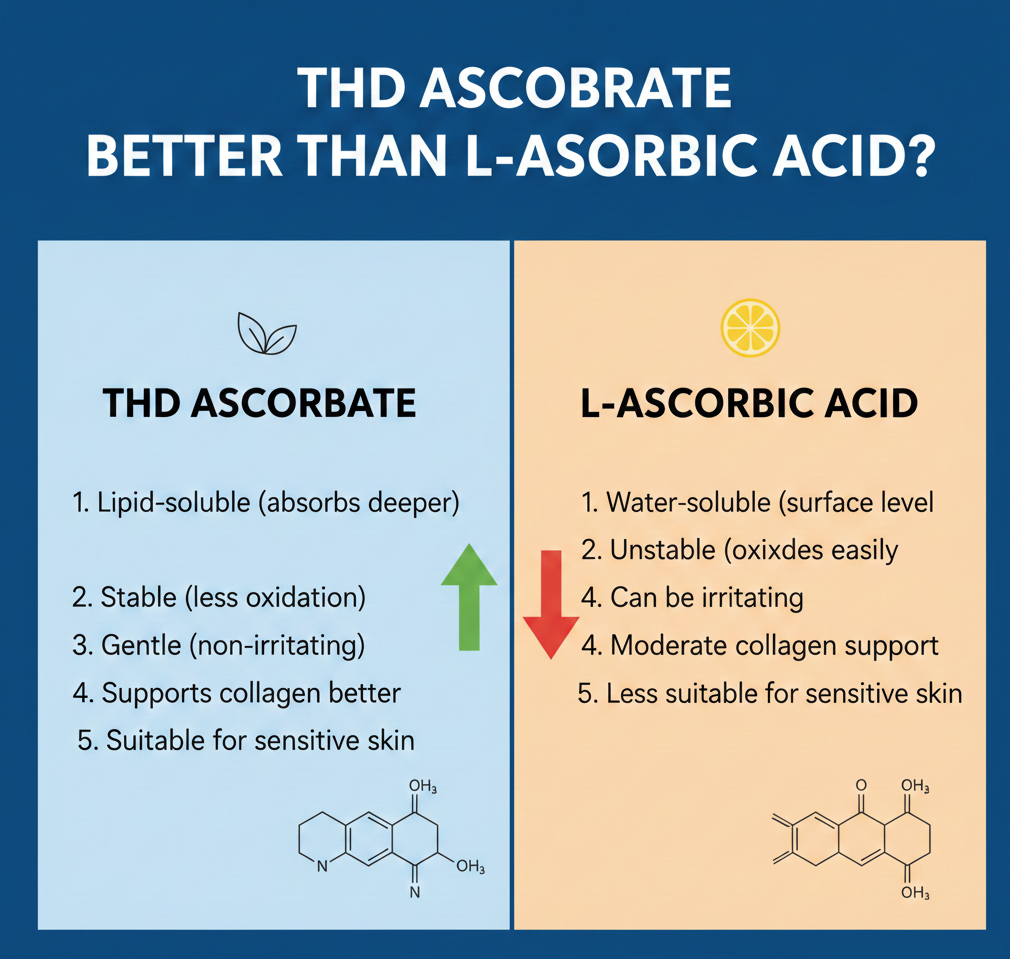
Lately, there has been a massive buzz surrounding a new contender in the ring, challenging the reigning champion. Everyone is asking the same burning question: Is THD ascorbate better than L-ascorbic acid? It is a battle between the tried-and-true classic and the modern, high-tech innovator.
In this ultimate guide, we are going to strip away the marketing fluff and look at the cold, hard chemistry. We will explore stability, penetration, irritation levels, and which molecule actually delivers that glass-skin finish. Grab your jade roller and a green tea, because we are about to get serious about your glow up.
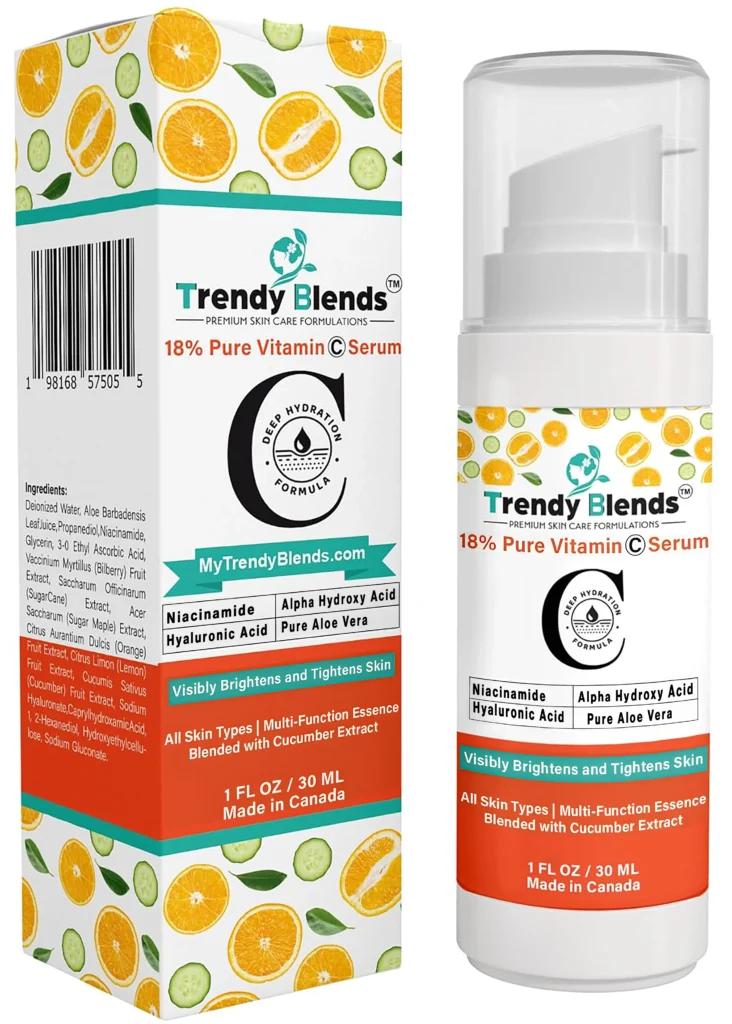
Stop waiting weeks for a glow that should happen in days. While other serums use “derivatives” like THD Ascorbate that have to be converted by your skin (losing potency along the way), our L-ascorbic acid formula goes straight to work.
The L-AA Advantage:
- Pure Potency: It’s the only form of Vitamin C skin can use immediately.
- Maximum Brightening: Faster results on dark spots and hyperpigmentation.
- Collagen Power: More effective at stimulating the proteins that keep skin firm.
Don’t settle for a “maybe” glow. Choose the gold standard, Choose Trendy Blends.

Understanding the “Gold Standard”: L-Ascorbic Acid
Let’s start with the OG, the heavy hitter, the one you likely already have sitting on your vanity. L-ascorbic acid is the purest, most biologically active form of Vitamin C available on the market today. When you read clinical studies about Vitamin C boosting collagen or fading sun spots, they are almost always talking about this specific molecule.
Because it is water-soluble, it works on the surface and the upper layers of the skin to neutralize free radicals instantly. It is incredibly potent and starts working the moment it touches your face, without needing your skin to convert it into anything else. This makes it a favorite for dermatologists who want guaranteed, rapid results for their patients.
However, L-ascorbic acid is a bit of a diva when it comes to formulation and stability. It requires a very low pH (usually below 3.5) to penetrate the skin barrier effectively, which can be a recipe for stinging and redness. If you have ever applied a serum and felt that spicy tingle, that was likely the low pH of L-ascorbic acid at work.
Despite its temperamental nature, the results it delivers are undeniable and backed by decades of research. It sets the bar high, which is why every other derivative is constantly compared to it. To truly understand if newer forms are superior, we have to respect the power of the original.
Enter the Challenger: THD Ascorbate
Now, let’s introduce the new “It Girl” of the skincare world: Tetrahexyldecyl Ascorbate, or THD ascorbate for short. This is not your grandmother’s Vitamin C; it is a lipid-soluble (oil-soluble) form that has been chemically modified to be smarter and more stable. Unlike its water-soluble cousin, THD ascorbate loves fat, which is great news because your skin’s barrier is made of… you guessed it, lipids!
This affinity for oil allows THD ascorbate to slip past the skin’s defensive barrier with ease, penetrating much deeper into the dermis. Once it is deep inside, your skin’s natural enzymes convert it into pure L-ascorbic acid, releasing the magic exactly where you need it most. It is like a Trojan horse for antioxidants, sneaking the goods in before unleashing the glow.
Because it is oil-soluble, it does not require that harsh, acidic pH to work effectively. It can be formulated at a neutral pH, making it infinitely gentler on the moisture barrier and sensitive skin types. This unique property is why so many luxury brands are pivoting to THD ascorbate for their high-end formulations.
We are seeing a shift where stability and comfort are becoming just as important as raw potency. THD ascorbate offers a promising solution for those who have been burned (literally) by traditional serums. Read more about the benefits of THD Ascorbate at Medik8.
Round 1: The Stability Struggle
One of the biggest heartbreaks in beauty is buying an expensive Vitamin C serum, only to watch it turn a gross, rusty orange color within weeks. This is the phenomenon of oxidation, and it is the Achilles’ heel of L-ascorbic acid. Because it is so unstable, exposure to light, air, or heat causes it to degrade rapidly, rendering it useless and potentially pro-oxidant.
L-ascorbic acid is like a fresh sliced apple left on the counter; it browns quickly and loses its nutritional value. Brands try to fight this by packaging it in dark, opaque bottles or adding stabilizing ferulic acid, but the clock starts ticking the second you open it. You basically have to race against time to finish the bottle before it spoils.
THD ascorbate, on the other hand, is incredibly shelf-stable and resistant to oxidation. It can sit in your bathroom cabinet for months without changing color or losing its efficacy. This stability means you get the full potency of the product from the first drop to the very last.
For the consumer, this translates to better value for money and less product waste. You don’t have to store your THD serum in the fridge or hide it in a dark box. In the battle of shelf life, THD ascorbate is the clear, undisputed winner.
Round 2: Penetration Power
Effectiveness in skincare often comes down to delivery systems; it doesn’t matter how good an ingredient is if it just sits on top of your face. L-ascorbic acid is water-soluble, which poses a significant challenge because the skin’s outer layer is lipid-rich and waterproof. It repels water, making it difficult for L-ascorbic acid to get down to the deeper layers where collagen production happens.
To force L-ascorbic acid into the skin, chemists have to lower the pH drastically, shocking the barrier to let the molecules in. It works, but it is a brute-force method that can compromise your skin health over time. It is effective, but it requires a very specific chemical environment to succeed.
THD ascorbate bypasses this issue entirely by mimicking the skin’s own lipid structure. Studies suggest that THD ascorbate can penetrate the skin better than L-ascorbic acid, reaching the dermis more efficiently. Learn about clinical penetration rates at NIH.
Because it penetrates so well, it can effectively target deep-seated pigmentation and collagen degradation. It doesn’t need a low pH to pave the way, allowing it to glide in smoothly. When it comes to getting into the skin, THD ascorbate works smarter, not harder.
Round 3: The Irritation Factor
If you have sensitive skin, rosacea, or a compromised barrier, you probably cringe at the thought of applying potent acids. L-ascorbic acid is notorious for causing stinging, burning, itching, and flushing in reactive skin types. The low pH required for its absorption is essentially an exfoliation process that can be too much for delicate complexions.
Many people give up on Vitamin C entirely because they think their skin just “doesn’t like it.” In reality, their skin likely hates the acidity, not the vitamin itself. This irritation can actually lead to inflammation, which is the opposite of what we want when treating aging and pigmentation.
THD ascorbate is a breath of fresh air for sensitive skin because it is usually formulated at a pH of 5.0 to 6.0. This is right in the sweet spot of the skin’s natural pH, minimizing the risk of irritation significantly. You get all the brightening benefits without the stinging side effects.
This gentle nature allows users to apply it daily, which is key for seeing long-term results. Consistency is everything in skincare, and you are far more likely to stick with a product that feels soothing. Check out VETTED Dermlab’s guide on sensitive skin options.
Round 4: Collagen Synthesis and Anti-Aging
We all want that plump, youthful bounce to our skin, and collagen is the structural protein that provides it. L-ascorbic acid is essential for the biosynthesis of collagen; without it, the process halts. It acts as a cofactor for the enzymes that stabilize and cross-link collagen fibers, making it a non-negotiable for anti-aging.
For years, skeptics wondered if derivatives like THD ascorbate could actually trigger this same process. The good news is that recent research indicates THD ascorbate also promotes collagen synthesis effectively. Once it converts to L-ascorbic acid in the skin, it performs the exact same biological function.
Some studies even suggest that because THD penetrates deeper, it might stimulate collagen production even better than the pure form. It reaches the fibroblasts in the dermis more easily, potentially leading to firmer skin over time. Both forms are powerful tools for keeping fine lines and wrinkles at bay.
Whether you choose the classic or the modern version, you are investing in your skin’s future elasticity. The key difference is the pathway they take to stimulate those cells. Both are valid, powerful anti-aging strategies.
Round 5: Fighting Hyperpigmentation
Dark spots, sun damage, and melasma are some of the hardest skin concerns to treat. Vitamin C works by inhibiting tyrosinase, the enzyme responsible for producing melanin pigment. L-ascorbic acid has a long track record of successfully fading discoloration and evening out skin tone.
It works rapidly to brighten the surface, giving that immediate “glow” that we all crave. However, for stubborn, deep-set pigment like melasma, surface treatment isn’t always enough. You need an ingredient that can reach the melanocytes where the pigment is actually being made.
This is where THD ascorbate’s penetration capabilities really shine. By diving deeper, it can inhibit pigment production at the source more effectively for some users. Read what Dr. Whitney Bowe says about THD for pigment.
Many users report that THD ascorbate provides a more uniform brightening effect without the redness that can worsen melasma. It tackles the issue without triggering the inflammation that often accompanies aggressive treatments. For pigmentation, the gentle, deep approach is often the winning strategy.
Is THD ascorbate better than L-ascorbic acid?
Now we arrive at the core question that brought you here: Is THD ascorbate better than L-ascorbic acid? The answer is nuanced, but for the modern skincare enthusiast, the scales are tipping toward THD. While L-ascorbic acid is more potent in a test tube, THD ascorbate is often more effective in the real world.
Why do we say this? Because a product you can use every day without irritation is infinitely better than a potent one you use once a week. THD ascorbate offers superior stability, meaning you aren’t applying oxidized, useless orange water to your face. It offers superior penetration, meaning the active ingredient actually gets to where it needs to go.
L-ascorbic acid is still an incredible ingredient, specifically for oily, resistant skin types that want a quick fix. But for the vast majority of people—especially those with dry, sensitive, or mature skin—THD ascorbate offers a better user experience. It combines luxury, efficacy, and science in a way the older molecule simply cannot.
Ultimately, “better” is subjective, but if “better” means stable, gentle, and deeply penetrating, then THD takes the crown. It represents the evolution of skincare technology. It is the upgrade your routine has been waiting for.
Skin Type Matchmaker: Which One is For You?
If you have Oily or Acne-Prone Skin, L-ascorbic acid might still be your best friend. The water-based formulas tend to be lighter and less clogging than the oil-based THD formulas. Plus, the acidic pH can help keep bacteria in check on the skin’s surface.
If you have Dry or Dehydrated Skin, THD ascorbate is undoubtedly the superior choice. Its lipid base helps to nourish and reinforce your moisture barrier while delivering antioxidants. It won’t strip your skin or leave it feeling tight and parched like acidic serums can.
For Sensitive or Rosacea Skin, steer clear of L-ascorbic acid and run straight to THD ascorbate. The lack of acidity means you can finally enjoy the benefits of Vitamin C without the flare-ups. See the comparison at Agent Nateur.
For Mature Skin, THD ascorbate is generally preferred due to its deep penetration and moisturizing properties. Mature skin tends to be drier and thinner, making the gentle, nourishing profile of THD ideal. It plumps and protects simultaneously.
The Art of Layering: Mixing with Actives
One of the biggest headaches with L-ascorbic acid is how hard it is to mix with other active ingredients. You generally shouldn’t mix it with Retinol or AHAs/BHAs because the combined acidity causes major irritation. This forces you to split your routine into complicated AM and PM rituals.
THD ascorbate plays much nicer with others in the sandbox. Because it isn’t acidic, it can often be layered with Retinols or exfoliating acids without causing a chemical burn. This allows for a more streamlined, powerful routine where you can target multiple concerns at once.
However, always patch test and consult your dermatologist before mixing potent actives. Even though THD is gentle, layering too many things can still overwhelm the skin. But generally speaking, it offers much more flexibility than its predecessor.
You can layer THD ascorbate under your sunscreen in the morning for double protection against UV rays. In the evening, it can sit comfortably under a moisturizer or facial oil. It is the versatile team player every routine needs.
Packaging: Why It Still Matters
Even though THD ascorbate is more stable, packaging is still a crucial indicator of quality. L-ascorbic acid must be in an opaque, airless pump or a dark dropper bottle to survive even a few weeks. If you see L-ascorbic acid in a clear jar, put it back on the shelf immediately.
THD ascorbate is more forgiving, but you still want to protect your investment. Look for opaque bottles or pumps that minimize air exposure to keep the formula pristine. Just because it can survive light exposure doesn’t mean you should test it unnecessarily.
Airless pumps are generally the gold standard for all antioxidant serums. They prevent oxygen from entering the bottle every time you dispense product. This ensures that the last drop is just as fresh as the first.
Don’t be fooled by pretty, clear glass packaging on Instagram. Light is the enemy of all antioxidants, period. Smart packaging equals smart skincare.
The Price Tag: Cost vs. Value
Let’s talk money, honey, because skincare is an investment. Generally, L-ascorbic acid serums can be found at a wide range of price points, from drugstore bargains to luxury splurges. The raw ingredient is relatively cheap to manufacture, though stabilizing it costs money.
THD ascorbate is a more expensive raw ingredient to produce and source. Consequently, serums featuring high concentrations of THD tend to be in the mid-to-luxury price range. You rarely find a high-quality THD serum in the bargain bin.
However, you have to factor in the “spoilage tax” of L-ascorbic acid. If you throw away half a bottle of L-ascorbic acid because it oxidized, you effectively doubled the price. THD ascorbate is usable to the very end, offering better long-term value.
Think of it as buying a high-quality silk blouse versus a fast-fashion tee. The initial cost is higher, but it lasts longer and performs better. Your face is worth the upgrade.
Common Myths Debunked
Myth: “If it doesn’t tingle, it isn’t working.” Truth: Tingle usually means irritation, not efficacy. THD ascorbate works silently and gently. Pain is not a requirement for beauty.
Myth: “Higher percentage is always better.” Truth: 20% L-ascorbic acid causes more irritation than 10%, often with diminishing returns. THD ascorbate is effective at much lower percentages because it penetrates better. Don’t just chase the highest number on the box.
Myth: “THD ascorbate is not ‘real’ Vitamin C.” Truth: It converts to real Vitamin C in your skin. It is a precursor, a delivery system that ensures the active gets where it needs to go. It is just as “real” in its final effect.
Myth: “You can’t use Vitamin C in the summer.” Truth: You absolutely should! It boosts your sunscreen’s protection. Just ensure you are wearing SPF over it. Read more myths at SkinCeuticals.
Pro Tips for Maximum Radiance
- The Double Cleanse: Ensure your skin is thoroughly cleansed before applying THD ascorbate. Oil-soluble ingredients penetrate best on clean skin free of surface grime.
- Wait it Out: Give your serum 60 seconds to sink in before applying moisturizer. This allows the lipid absorption to begin without dilution.
- Neck and Hands: Don’t stop at your jawline! Your neck and the backs of your hands show aging first. THD is gentle enough for these delicate areas.
- Pair with Vitamin E: Look for formulas that include Vitamin E (Tocopherol). It works synergistically with Vitamin C to boost antioxidant protection.
FAQ: Your Burning Questions Answered
Q: Can I use THD ascorbate if I am pregnant? A: Generally, Vitamin C is considered safe for pregnancy, but always consult your doctor. THD is gentle, which is a bonus for sensitive pregnancy skin.
Q: How long does it take to see results? A: You might see a glow immediately due to hydration. For pigment fading and collagen benefits, give it 8 to 12 weeks of consistent use.
Q: Can I use it with Niacinamide? A: Yes! The old myth that they cancel each other out has been debunked. They are a power couple for brightening. Live Tinted explains serum selection well.
Q: Does THD ascorbate exfoliate? A: No, it is not an acid like L-ascorbic acid. If you want exfoliation, you will need to add a separate AHA or BHA product.
Q: Is it vegan? A: THD ascorbate itself is a synthetic molecule derived from natural sources, usually vegan. Always check the full product label to be sure. Graydon Skincare offers great vegan insights.
Conclusion: The Verdict
So, is THD ascorbate better than L-ascorbic acid? For the vast majority of us living busy lives with varied skin concerns, the answer is a resounding yes. The combination of stability, deep penetration, and zero irritation makes it the modern choice for smart skincare.
While we will always respect L-ascorbic acid for paving the way, it is time to embrace the innovation. THD ascorbate allows you to chase that glow without the sting, the spoilage, or the stress. It transforms your skincare routine from a chemistry experiment into a luxurious ritual.
If you are ready to upgrade your glow, look for serums that highlight Tetrahexyldecyl Ascorbate on the label. Your skin barrier will thank you, and your mirror will show the difference. Stay glowing, stay beautiful, and keep asking the hard questions!
For further reading and product breakdowns, check out the resources linked above from our favorite trusted experts.
