Collagen-Boosting Serum for Oily Skin: The Ultimate Guide
Choosing a collagen-boosting serum for oily skin can feel like a trade-off. You want firmer, smoother skin, but many anti-aging products feel heavy and greasy, and some clog pores. The good news is that the ingredients with the best evidence for collagen come in light, water-based formulas that suit oily skin well.
This guide explains why oily skin still needs collagen support, which ingredients to look for and avoid, how to fit a serum into an oily-skin routine, and what results to realistically expect.
Table of Contents.
Oily skin friends, tell us in the comments if you’re scared of heavy anti-aging creams!
We get it. The struggle to find products that don’t turn you into a greaseball is real. That’s why we wrote the ultimate guide to Collagen-Boosting Serums for Oily Skin.

Why Oily Skin Still Needs Collagen Support
Collagen is the protein that gives skin its structure and firmness. Your body makes less of it as you age, and UV light breaks down what you have. Vitamin C is essential for building stable collagen, as a review on vitamin C and skin health explains, and it is also an antioxidant that helps limit sun-related damage.
Oily skin often looks less dry and may show fine lines later, but extra sebum doesn’t block UV rays or rebuild collagen. The American Academy of Dermatology (AAD) names sun exposure, tanning and smoking as major drivers of premature skin aging, whatever your skin type.
Oily skin also tends to get harsh treatment. Drying cleansers, scrubs and stacked acne products can irritate skin, and the AAD notes that a face wash that is too harsh can actually trigger more oil. A good routine for oily skin is gentle, light and consistent. Learn more about the benefits of collagen.
What to Look for in a Collagen-Boosting Serum for Oily Skin
Before you look at active ingredients, check three basics:
- Texture: a water-based serum or gel absorbs quickly and leaves little residue. Rich creams and oil-based treatments are usually better for dry skin.
- Labels: the AAD recommends products labeled “oil-free” and “noncomedogenic” if your skin is oily, since they are formulated not to clog pores.
- Packaging: ingredients such as vitamin C and retinol break down with air and light. Opaque, airtight packaging, ideally an airless pump, keeps them working longer.
Then look for at least one ingredient with real evidence for collagen or skin firmness.
Serum or Moisturizer: Do You Need Both?
A serum and a moisturizer do different jobs. A serum for oily skin is a thin, concentrated layer designed to deliver active ingredients such as vitamin C, retinoids or peptides. A moisturizer adds and holds in water and protects the skin barrier.
Most people with oily skin do best with both: a collagen-boosting serum for oily skin first, then a light, oil-free moisturizer on top. If your skin is very oily, a gel moisturizer or a moisturizer with SPF in the morning keeps things light. The AAD stresses that moisturizer is still important if you use drying acne treatments.
Key Ingredients That Support Collagen
1. Vitamin C
Vitamin C is a cofactor for the enzymes that build collagen, and topical use has clinical support. In a six-month, double-blind study, a 5% vitamin C cream improved the appearance of sun-damaged skin and its surface texture compared with a placebo cream. The Linus Pauling Institute also describes how vitamin C helps protect skin from UV-related oxidative damage.
L-ascorbic acid is the most studied form, but it oxidizes easily. Stable derivatives such as 3-O ethyl ascorbic acid were developed to hold up better in a formula. Cleveland Clinic recommends using vitamin C in the morning, because it works in synergy with sunscreen.
2. Retinoids
Retinoids, including retinol, are among the best-studied anti-aging ingredients. In a 24-week trial, retinol lotion significantly improved fine wrinkles and increased markers of collagen production compared with a placebo lotion.
Retinoids are also used to treat acne, which makes them a natural fit for oily, breakout-prone skin. They can irritate at first, so dermatologists quoted by the AAD suggest a gentle formula every other night, building up slowly, and sun protection during the day.
3. Peptides
Peptides are short chains of amino acids. Some, called signal peptides, are designed to prompt skin cells to make more collagen. A review of topical peptides found studies supporting several of them for aging skin, though many trials are small. Peptides are generally gentle, so they are a good option if retinoids irritate your skin.
4. Niacinamide
Niacinamide, a form of vitamin B3, is especially useful for oily skin. In a placebo-controlled trial, a moisturizer with 2% niacinamide lowered sebum production in some participants. In another 12-week study, 5% niacinamide reduced fine lines, red blotchiness and dark spots, and improved skin elasticity.
Read more about pairing niacinamide with vitamin C.
5. Hyaluronic Acid
Hyaluronic acid doesn’t build collagen, but it is a humectant that draws water into the skin, so it hydrates without adding oil. Well-hydrated skin looks plumper and smoother, which softens the look of fine lines. It is a common partner in collagen serums for that reason.
Ingredients and Textures to Avoid
Pore-clogging potential depends on the whole formula, not just one ingredient, so labels and your own skin’s response matter most. As a rule of thumb for oily skin:
- Heavy oils and butters in leave-on face products can feel greasy and may clog pores in some people.
- Harsh, alcohol-based or oil-based cleansers: the AAD advises against them for oily skin because they irritate.
- Gritty scrubs: scrubbing irritates skin and can make oiliness worse.
- Too many actives at once: a strong acid, a retinoid and benzoyl peroxide on the same night can leave skin red and flaky.
If a product causes new breakouts or stinging, stop it and simplify. Persistent irritation can be a sign of a damaged skin barrier.
Realistic Benefits of a Collagen-Boosting Serum for Oily Skin
With the right ingredients and consistent use, here is what you can reasonably expect:
- Firmer-looking skin over time, from ingredients that support collagen, such as vitamin C and retinoids.
- Fewer visible fine lines, as shown for retinol and niacinamide in clinical studies.
- Smoother texture, thanks to hydration and, with retinoids, faster cell turnover.
- Less shine, if the serum contains niacinamide.
- More even tone, since vitamin C and niacinamide can help fade dark spots, including marks left by breakouts.
- Antioxidant protection when vitamin C is used under daily sunscreen.
- Hydration without grease, from lightweight humectants such as hyaluronic acid.
Results build slowly. A collagen-boosting serum for oily skin shows hydration benefits within days, but collagen-related changes take months.
Choosing a Serum for Oily Skin by Concern
Oily skin isn’t one-size-fits-all. Match your serum for oily skin to your main concern:
- Oily and acne-prone: a retinoid at night is the strongest choice, since it targets both breakouts and signs of aging. Add niacinamide or vitamin C in the morning.
- Oily but sensitive: start with gentler options such as niacinamide, peptides or a stable vitamin C derivative, and introduce a retinoid later, slowly. Our guide to vitamin C serum for sensitive skin has more tips.
- Combination skin: apply a light serum all over, then use a richer moisturizer only where you are dry, such as the cheeks.
- Mature and oily: combine morning vitamin C and nightly retinoid use with daily sunscreen. Hydration matters more with age, so don’t skip moisturizer.
How to Patch Test a New Serum
Before you put a new serum on your whole face, apply a small amount to the same spot, such as along the jawline, for a few days. If you see no redness, itching or new breakouts, you can start using it more widely. This is especially worth doing if you have acne-prone or sensitive skin.
Mistakes to Avoid
- Using too much. More of a serum for oily skin doesn’t mean faster results and can leave a tacky film on oily skin. A thin layer is enough.
- Expecting overnight change. Collagen builds slowly. Judging a serum after a week leads to constant product switching.
- Skipping sunscreen. Without daily sun protection, UV damage keeps breaking down the collagen your serum is helping to support.
- Storing it badly. Keep serums with vitamin C or retinol closed, cool and out of direct light.
- Starting everything at once. If your skin reacts, you won’t know which product caused it.
How to Use a Collagen-Boosting Serum for Oily Skin
A simple routine works best. Introduce one new product at a time and give each a few weeks.
Morning Routine
- Cleanse with a gentle, oil-free cleanser and lukewarm water. Pat dry.
- Apply vitamin C serum. With the Trendy Blends serum, 1–2 pumps cover your face and neck. Let it absorb for a minute.
- Moisturize with a light, oil-free gel or lotion. The AAD still recommends moisturizer for oily skin.
- Apply sunscreen. The AAD recommends broad-spectrum SPF 30 or higher every day. A moisturizer with SPF can combine steps 3 and 4.
Evening Routine
- Cleanse to remove sunscreen, oil and makeup.
- Apply a retinoid or peptide serum. Start a retinoid every other night and build up slowly.
- Moisturize. The AAD notes that moisturizer helps skin tolerate drying acne treatments such as retinoids.
Need a simpler version? Our basic skincare routine for oily skin has just three steps, and you can see how vitamin C and retinol work together.
Layering With Acne Treatments
If you already use acne products, keep the routine balanced. Salicylic acid or benzoyl peroxide can stay in your routine, but avoid using them on the same night you start a new retinoid. If your skin becomes dry or irritated, cut back to every other day, and ask a dermatologist how to combine prescription treatments.
A simple way to split the work: keep vitamin C and sunscreen in the morning, and alternate your retinoid with your other acne treatment at night. Many people with oily skin find this schedule easier to tolerate than using everything every day. Once your skin has adjusted for a few weeks, you can slowly increase how often you use each product. If you are unsure, a board-certified dermatologist can tailor the plan to your skin and your acne.
What to Expect: A Realistic Timeline
- First week: skin feels more hydrated and comfortable. Some tingling is possible when you start retinoids or vitamin C.
- Weeks 2–4: if your serum contains niacinamide, you may notice less shine. A retinoid may cause mild dryness while your skin adjusts.
- Months 2–3: texture looks smoother and tone more even.
- Months 3–6: collagen-related changes such as softer fine lines appear gradually. The vitamin C and retinol studies above ran for about six months.
Take a photo in the same light each month to track progress honestly. For a closer look at vitamin C, see our vitamin C results timeline.
Common Myths About Collagen and Oily Skin
- “Oily skin doesn’t need moisturizer.” False. The AAD advises moisturizing oily skin after cleansing, using an oil-free formula.
- “Oily skin doesn’t age.” It may look less dry, but UV damage breaks down collagen in every skin type.
- “Anti-aging products always cause breakouts.” Lightweight, non-comedogenic serums are designed for oily skin, and retinoids even treat acne.
- “Scrubbing removes oil for good.” Harsh washing irritates skin, and the AAD notes it can trigger more oil.
Habits That Protect Your Collagen
A serum works best alongside a few daily habits. The AAD recommends:
- Daily sunscreen, broad-spectrum SPF 30 or higher, on all exposed skin.
- No tanning beds, which emit UV rays that speed up skin aging.
- Not smoking. Smoking greatly speeds up skin aging and causes wrinkles and a sallow complexion.
- Plenty of fruits and vegetables, which a few studies suggest may help prevent damage that leads to premature aging, and less sugar and refined carbohydrates.
- Gentle cleansing, since irritation speeds up skin aging.
Where Trendy Blends Vitamin C Serum Fits In
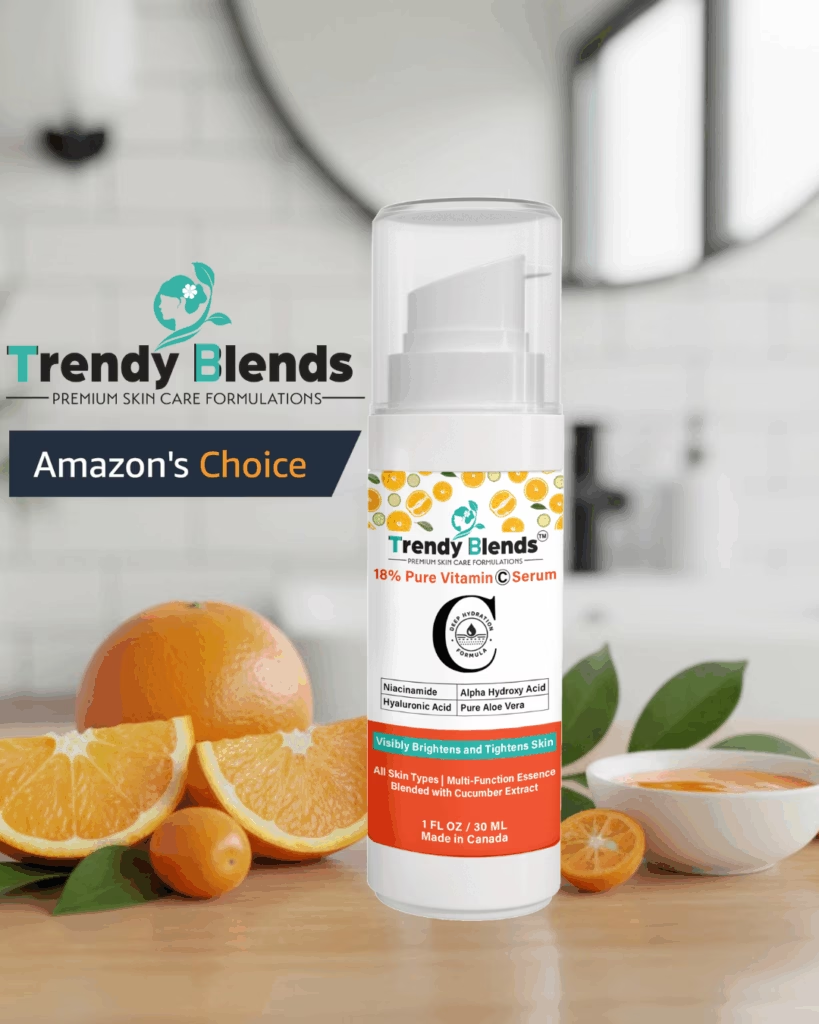
The Trendy Blends 18% Vitamin C Serum was made to sit lightly on the skin. It combines 18% 3-O ethyl ascorbic acid, a stable form of vitamin C, with niacinamide, hyaluronic acid, aloe and cucumber. That pairs collagen support from vitamin C with niacinamide for shine and hyaluronic acid for oil-free hydration.
It is fragrance-free and comes in a 1 oz airless pump. Use 1–2 pumps each morning before your moisturizer and sunscreen. It costs $24.99 with free shipping in 3–4 business days and is backed by our 60-Day Glow Guarantee. Wondering how it compares to other options? See our vitamin C serum vs. retinol comparison.
Frequently Asked Questions
What is the best collagen-boosting serum for oily skin?
Look for a lightweight, water-based, oil-free serum with an ingredient that supports collagen, such as vitamin C, a retinoid or peptides. Niacinamide is a helpful extra for shine, and hyaluronic acid adds hydration without oil.
Does oily skin age more slowly?
Oily skin may look less dry, but it is not protected from the main cause of skin aging: the sun. UV exposure breaks down collagen in every skin type, so oily skin still needs daily sunscreen and collagen support.
Can I use vitamin C and retinol if I have oily, acne-prone skin?
Yes, for most people. Use vitamin C in the morning under sunscreen and a retinoid at night, starting every other night. Retinoids also help with acne, but they can irritate at first, so build up slowly.
Will a collagen serum clog my pores?
Not if you choose well. Pick a product labeled oil-free and non-comedogenic, introduce it on its own, and give it a few weeks before adding anything else.
How long does a collagen-boosting serum take to work?
Hydrating ingredients make skin look smoother within days, but collagen changes take months. In clinical studies, vitamin C and retinol were tested for about six months.
How much vitamin C serum should I use?
With the Trendy Blends serum, 1–2 pumps cover your face and neck. Apply it to clean, dry skin in the morning, then moisturizer and sunscreen.
Conclusion: Light Textures, Proven Ingredients
The best collagen-boosting serum for oily skin is light, oil-free and non-comedogenic, and it contains at least one ingredient with real evidence, such as vitamin C, a retinoid or peptides. Niacinamide and hyaluronic acid are smart extras for shine and hydration.
Use vitamin C in the morning under sunscreen, a retinoid or peptide serum at night, and give your routine several months. Oily skin can be firm, smooth and balanced at the same time. It just needs the right textures and a little patience.
