Vitamin C Serum With Salicylic Acid: 7 Smart, Gentle Tips
If your nose and chin still collect blackheads after 40, a vitamin C serum with salicylic acid might be the combo you keep seeing online.
Salicylic acid is the pore-clearing acid in many acne cleansers. Vitamin C is the antioxidant serum many of us already reach for each morning.
Here’s what each one does, what the research really shows, who should skip salicylic acid, and how to use vitamin C serum with salicylic acid without drying out thinner, mature skin.
Table of Contents
Can You Use Vitamin C Serum With Salicylic Acid?
Yes, most people can. We found no study showing the two cancel each other out, and the American Academy of Dermatology (AAD) says salicylic acid works best on whiteheads and blackheads because it unclogs pores and exfoliates the skin.
The easy approach is a split: vitamin C in the morning and salicylic acid at night. Once your skin is used to both, some people use vitamin C serum with salicylic acid in the same routine.
Quick note: our serum doesn’t contain salicylic acid. When we talk about vitamin C serum with salicylic acid, we mean pairing it with a separate BHA cleanser, toner, or treatment.
Why Pores and Breakouts Still Show Up After 40
In a survey of 1,013 adults, 26.3% of women in their 40s and 15.3% of women 50 and older said they had acne. The answers were self-reported, not checked by a doctor.
The AAD says adult-onset acne is most common among women going through menopause, and shifting hormones during perimenopause can set off breakouts.
A 2013 expert review adds that adult women more often get closed comedones, the small skin-colored bumps, and that older skin tends to be more easily irritated.
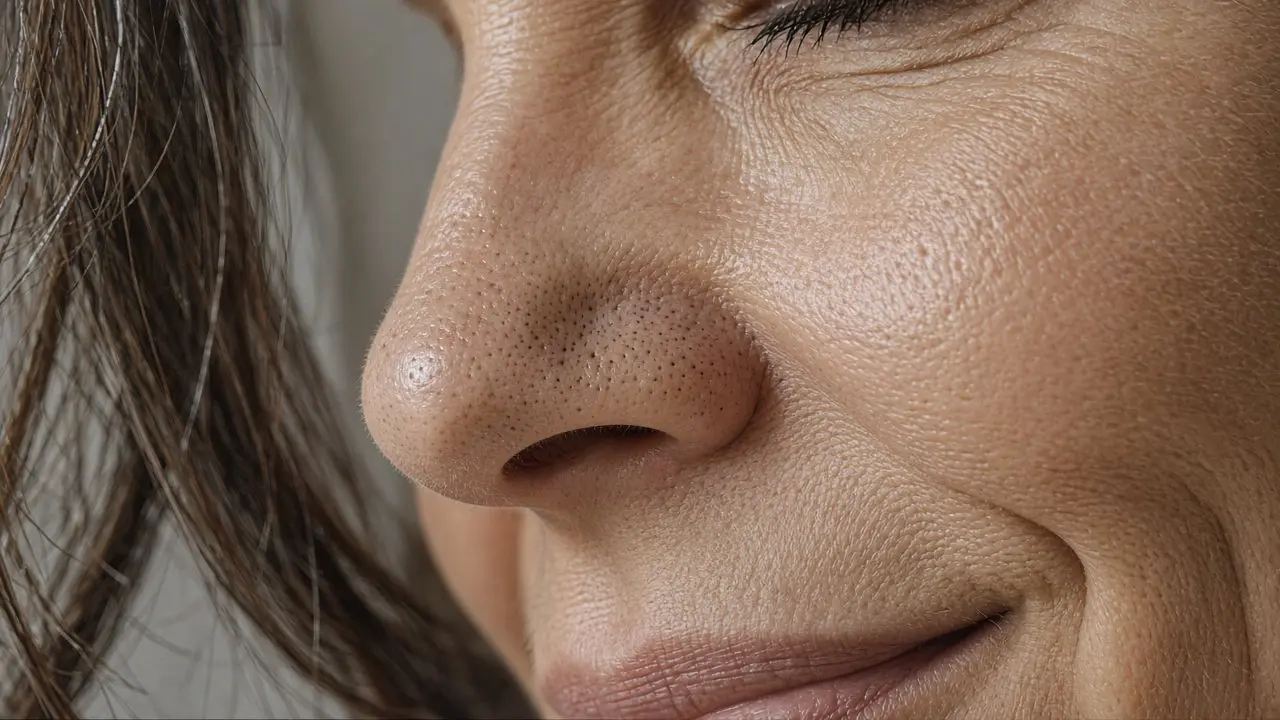
Pores change too. The AAD’s guide to large pores says pores look larger as skin loses firmness with age and sun damage.
What Salicylic Acid and Vitamin C Each Do
Salicylic Acid: The Pore-Clearing BHA
Salicylic acid is the most common beta hydroxy acid (BHA) in cosmetics, according to the FDA. You may also see related ingredients such as willow extract.
A 2015 review explains that salicylic acid is lipid-soluble, so it mixes with the oils inside hair follicles. It also notes that salicylic acid reduces sebum secretion in people with acne.
Where Vitamin C Fits
Vitamin C is one of the skin’s most powerful antioxidants. A 2017 review says it helps protect against sun-related aging, increases collagen production, and decreases melanin formation.
That review also says clinical studies on topical vitamin C are still limited, and stability is the big challenge. Lab researchers describe 3-O Ethyl Ascorbic Acid, the form in our serum, as a stable vitamin C derivative developed for topical products.
There’s a small acne angle too. In a 2010 trial of 50 people, a 5% lotion with sodium ascorbyl phosphate, another vitamin C form, beat a plain lotion for acne over 12 weeks.
How Strong Is the Salicylic Acid Evidence?
Honestly, it’s modest. A 2020 Cochrane review of 49 trials says the clinical benefit of salicylic acid for acne is unclear, and its salicylic acid comparisons rested on low- or very low-quality evidence.
Most people in those trials were 12 to 30 years old, so data on 40-plus skin is thin. Mayo Clinic also says studies showing salicylic acid’s effectiveness are limited.
Still, the AAD’s 2024 acne guidelines give topical salicylic acid a conditional recommendation.
Is There Research on Vitamin C Serum With Salicylic Acid Together?
Not on two at-home products. We found no trial testing a vitamin C serum with salicylic acid layered from separate bottles.
The closest is a 2017 study of 50 women with melasma. All had 30% salicylic acid peels every two weeks for two months, and one group also had vitamin C injected into the skin. Both groups improved, and burning was the only side effect noted.
That’s an in-office treatment, not a serum routine. So vitamin C serum with salicylic acid makes sense on paper, but we couldn’t find a trial of the two-product routine.
7 Smart, Gentle Tips for Vitamin C Serum With Salicylic Acid
1. Patch Test Before Your Face
MedlinePlus suggests applying a new salicylic acid acne product to one or two small areas for 3 days first. If there’s no reaction or discomfort, use it as directed.
The AAD’s patch test is longer: a quarter-sized spot, like the bend of your elbow, twice daily for seven to 10 days.
2. Start With a Cleanser, Not a Peel
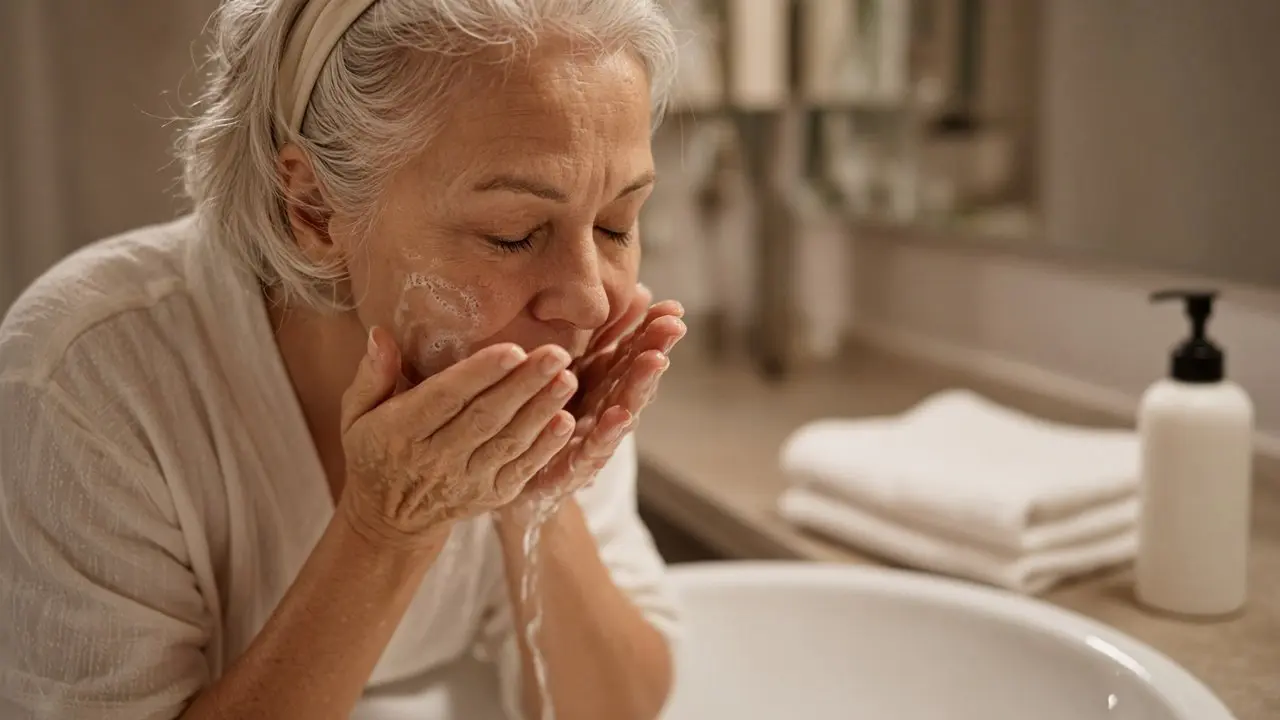
The AAD says some salicylic acid cleansers are gentle enough to use every day. A wash-off cleanser is an easy first step for vitamin C serum with salicylic acid on mature skin.
Save leave-on toners and pads for later. The AAD warns that irritating astringents, toners, and exfoliants can dry skin and make acne look worse.
3. Split Vitamin C Serum With Salicylic Acid Between Morning and Night
Use vitamin C in the morning and salicylic acid at night. If the acid dries you out, the AAD suggests a mild cleanser in the morning and the salicylic acid cleanser at bedtime.
Later, if your skin stays calm, you can try vitamin C serum with salicylic acid in the same routine. Go back to the split if you notice stinging.
4. Go Slow on Thinner, Drier Skin
The National Institute on Aging says the outer layer of skin gets thinner with age, and menopause can leave skin thinner and drier.
MedlinePlus notes salicylic acid may dry or irritate skin at first. It suggests using it less often, then building up as your skin adjusts.
The AAD says exfoliating can be drying, so follow with a fragrance-free moisturizer.
5. Don’t Stack Exfoliants
MedlinePlus says not to use abrasive cleansers, alcohol-based products, benzoyl peroxide, sulfur, or tretinoin on skin you treat with salicylic acid unless your doctor says so. Your skin may become very irritated.
Mayo Clinic adds other peeling agents to that list, so skip glycolic acid on the same night. Our guide to vitamin C and glycolic acid covers that pairing separately.
If you have a darker skin tone, the AAD advises avoiding strong chemical exfoliation, which can lead to dark spots. Keep your vitamin C serum with salicylic acid routine gentle and spaced out.
6. Wear Sunscreen Every Morning
The FDA’s BHA guidance says to use sun protection if you use a BHA product. It also says to stop and talk to your doctor if you get irritation or prolonged stinging.
In one small study of 14 people, 2% salicylic acid didn’t increase sun sensitivity, while 10% glycolic acid did. Sunscreen still matters, since the AAD says sun damage makes pores look more noticeable.
Choose a broad-spectrum, water-resistant SPF 30 or higher every day, even when it’s cold or raining. No vitamin C serum with salicylic acid replaces it.
7. Give It Six to Eight Weeks
The AAD’s adult acne advice is to use one acne product for 6 to 8 weeks without adding another. If it works for you, expect fewer breakouts in 4 to 8 weeks and clearing around 16 weeks.
MedlinePlus adds that acne may look worse during the first few days. Snap a photo on day one, then be patient with your vitamin C serum with salicylic acid plan.
A Simple Routine for Vitamin C Serum With Salicylic Acid
Morning
- Wash with a mild, non-comedogenic cleanser.
- Apply vitamin C serum.
- Follow with a light, fragrance-free moisturizer.
- Finish with broad-spectrum SPF 30 or higher.
Evening
- Wash with your salicylic acid cleanser, or use your BHA treatment after a gentle wash.
- Pat dry and moisturize.
- Skip other exfoliants that night.
Have very oily skin? Our post on vitamin C serum for oily skin covers lightweight textures. If you think your serum is behind new bumps, read vitamin C serum breakouts.
Who Should Skip Salicylic Acid or Ask First
Aspirin or Salicylate Allergy
MedlinePlus says to tell your doctor if you’re allergic to salicylic acid, and to mention it if you take aspirin. Some salicylic acid product labels say not to use them if you’re allergic to salicylates or aspirin.
Salicylic acid is closely related to aspirin. True contact allergy to it is rare, according to a 2015 review.
Stop and get emergency help for hives, throat tightness, trouble breathing, feeling faint, or swelling of the eyes, face, lips, or tongue.
Pregnancy and High-Strength Peels
If you could still get pregnant, this matters. The AAD’s pregnancy acne page says salicylic acid is generally considered safe for a limited time, but you should talk with your obstetrician or dermatologist first.
The AAD also says to limit salicylic acid at high doses (over 2%) during pregnancy. A 2015 review says salicylic acid peels aren’t recommended in pregnancy, so ask before any peel.
Had a peel recently? See our guide to vitamin C serum after a chemical peel before adding acids back.
Large Areas and Health Conditions
MedlinePlus says not to apply salicylic acid to large areas, under a bandage, or on broken or irritated skin unless your doctor says to. Tell your doctor if you have diabetes or blood vessel, kidney, or liver disease.
Salicylic acid poisoning from skin products is rare, but it can happen.
Where Trendy Blends Fits Into Your Routine
Our Trendy Blends 18% Vitamin C Serum covers the vitamin C half. It uses 3-O Ethyl Ascorbic Acid, a stable form of vitamin C, with niacinamide, hyaluronic acid, aloe, and cucumber.
It doesn’t contain salicylic acid, so for a vitamin C serum with salicylic acid routine, pair it with a separate BHA product. It’s fragrance-free and comes in a 1 oz airless pump, and 1–2 pumps covers your face.
The serum is $24.99 with free shipping in 3–4 business days, backed by our 60-Day Glow Guarantee with free returns.
When to See a Dermatologist
The AAD says large, painful pimples deep in the skin, or acne that leaves scars, need a dermatologist. Store-bought products are unlikely to clear these.
Mayo Clinic suggests asking about prescription options if nonprescription products haven’t helped after several weeks.
Frequently Asked Questions
Can I use vitamin C serum with salicylic acid?
Yes, most people can use vitamin C serum with salicylic acid. Start with vitamin C in the morning and salicylic acid at night, and patch test each product first.
Can I use vitamin C serum with salicylic acid and niacinamide?
Our serum already contains niacinamide, so you’d simply add a separate salicylic acid product. Add one new product at a time, and give each one 6 to 8 weeks before judging it.
Is salicylic acid good for oily skin?
It can help. Salicylic acid is lipid-soluble and unclogs pores, and a review notes it reduces oil in people with acne. Pair it with a light, non-comedogenic moisturizer.
Should I use salicylic acid in the morning or at night?
Night works well if you use vitamin C in the morning. If salicylic acid dries your skin, the AAD suggests a mild cleanser in the morning and the salicylic acid cleanser before bed.
Can salicylic acid irritate mature skin?
It can. It may cause dryness, irritation, or stinging, especially at first. Older skin tends to be more easily irritated, so start slowly and moisturize.
How long does it take to see results?
Give it 6 to 8 weeks. If it works for you, the AAD says to expect fewer breakouts in 4 to 8 weeks and clearing around 16 weeks.
Conclusion
A vitamin C serum with salicylic acid can be a simple way to care for clogged pores and dull tone after 40. Patch test, start with a cleanser, split morning and night, skip other exfoliants, and never skip sunscreen.
The research on vitamin C serum with salicylic acid is real but modest, so let your skin set the pace. Clearer, calmer skin builds one gentle week at a time.
Medical disclaimer: This article is for general education only and is not medical advice. Talk with a board-certified dermatologist before changing your routine, especially if you’re pregnant, trying to conceive, or breastfeeding, are allergic to aspirin, use prescription skin treatments, or have a skin condition.
References
- Collier CN, Harper JC, Cafardi JA, et al. The prevalence of acne in adults 20 years and older. J Am Acad Dermatol. 2008;58(1):56-9. PMID: 17945383.
- Dréno B, Layton A, Zouboulis CC, et al. Adult female acne: a new paradigm. J Eur Acad Dermatol Venereol. 2013;27(9):1063-70. PMID: 23302006.
- Arif T. Salicylic acid as a peeling agent: a comprehensive review. Clin Cosmet Investig Dermatol. 2015;8:455-61. PMID: 26347269.
- Al-Niaimi F, Chiang NYZ. Topical Vitamin C and the Skin: Mechanisms of Action and Clinical Applications. J Clin Aesthet Dermatol. 2017;10(7):14-17. PMID: 29104718.
- Iliopoulos F, Sil BC, Moore DJ, et al. 3-O-ethyl-l-ascorbic acid: Characterisation and investigation of single solvent systems for delivery to the skin. Int J Pharm X. 2019;1:100025. PMID: 31517290.
- Woolery-Lloyd H, Baumann L, Ikeno H. Sodium L-ascorbyl-2-phosphate 5% lotion for the treatment of acne vulgaris: a randomized, double-blind, controlled trial. J Cosmet Dermatol. 2010;9(1):22-7. PMID: 20367669.
- Liu H, Yu H, Xia J, et al. Topical azelaic acid, salicylic acid, nicotinamide, sulphur, zinc and fruit acid (alpha-hydroxy acid) for acne. Cochrane Database Syst Rev. 2020;5(5):CD011368. PMID: 32356369.
- Reynolds RV, Yeung H, Cheng CE, et al. Guidelines of care for the management of acne vulgaris. J Am Acad Dermatol. 2024;90(5):1006.e1-1006.e30. PMID: 38300170.
- Balevi A, Ustuner P, Özdemir M. Salicylic acid peeling combined with vitamin C mesotherapy versus salicylic acid peeling alone in the treatment of mixed type melasma: A comparative study. J Cosmet Laser Ther. 2017;19(5):294-299. PMID: 28388246.
- Kornhauser A, Coelho SG, Hearing VJ. Applications of hydroxy acids: classification, mechanisms, and photoactivity. Clin Cosmet Investig Dermatol. 2010;3:135-42. PMID: 21437068.
- Madan RK, Levitt J. A review of toxicity from topical salicylic acid preparations. J Am Acad Dermatol. 2014;70(4):788-792. PMID: 24472429.
- MedlinePlus. Salicylic Acid Topical. U.S. National Library of Medicine.
- U.S. Food and Drug Administration. Beta Hydroxy Acids.
- National Institute on Aging. Skin Care and Aging.
- American Academy of Dermatology. What can treat large facial pores?
- American Academy of Dermatology. Adult acne.
- American Academy of Dermatology. Adult acne treatment dermatologists recommend.
- American Academy of Dermatology. Acne: Tips for managing.
- American Academy of Dermatology. How to safely exfoliate at home.
- American Academy of Dermatology. How to test skin care products.
- American Academy of Dermatology. Is any acne treatment safe to use during pregnancy?
- American Academy of Dermatology. Dermatologist-approved pregnancy skin care.
- DailyMed. Salicylic acid 3% liquid (dandruff relief) drug label: allergy alert. U.S. National Library of Medicine.
- Mayo Clinic. Acne: Diagnosis and treatment.
- Mayo Clinic. Salicylic acid (topical route): Precautions.
